Start a Cyber Risk Management Services Business in Dubai

Topic Summary
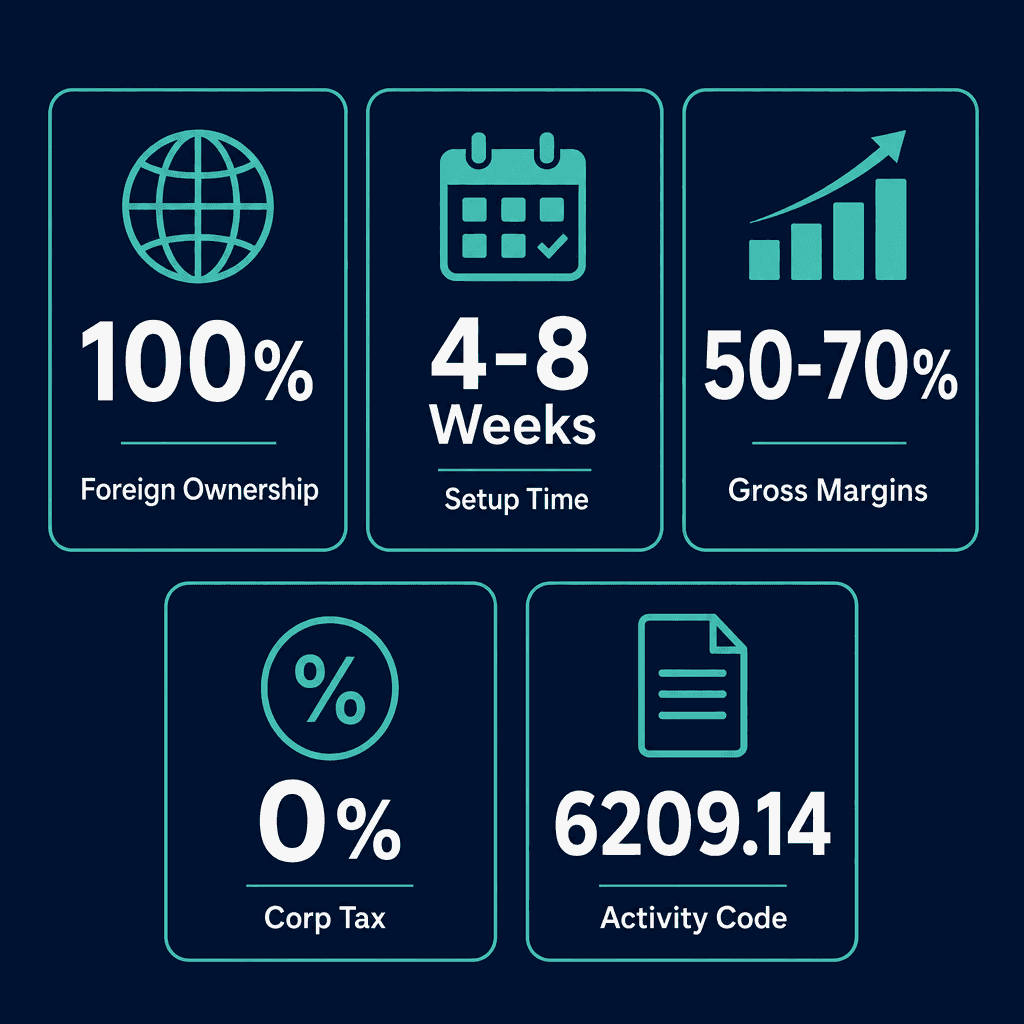
Dubai South Offers 100% Foreign Ownership
Entrepreneurs setting up under activity code 6209.14 at Dubai South Business Hub Free Zone retain full ownership with no local sponsor required. This makes it one of the most accessible entry points for international cybersecurity professionals entering the UAE market.
License Covers the Full Cyber Risk Lifecycle
The Business License under activity code 6209.14 authorises services ranging from threat modelling and vulnerability analysis to incident response planning and compliance advisory. This broad scope allows firms to serve clients across the entire engagement cycle without needing multiple licenses.
UAE Policy Creates Built-In Client Demand
The UAE National Cybersecurity Strategy mandates risk frameworks across government and regulated industries, generating a steady pipeline of compliance-driven work for private sector providers. The UAE Cybersecurity Council actively encourages private firms to support national resilience goals.
Advisory Margins Run Between 50 and 70 Percent
Cyber risk management is a high-margin professional services category, with gross margins typically ranging from 50 to 70 percent. Combined with zero corporate tax on qualifying free zone income, the financial case for setting up in Dubai South is compelling.
GCC and MENA Clients Are Reachable From Day One
A Dubai South license permits cross-border service delivery to clients across the GCC, MENA region, and internationally. Banking, insurance, government, and healthcare sectors throughout the Gulf face growing regulatory pressure to demonstrate cyber risk governance, creating a large and accessible market.
Setup Timeline Is Relatively Fast at 4 to 8 Weeks
From document submission to license issuance, businesses can typically be operational within four to eight weeks. This short timeline allows consultants and advisory firms to begin client acquisition quickly after committing to the jurisdiction.
Define Your Service Scope Carefully Before Applying
Activities such as developing proprietary cybersecurity software or providing telecommunications infrastructure fall outside activity code 6209.14 and may require separate licenses. Clearly defining your service boundaries during the application process prevents costly ambiguity later.
As cyber threats escalate across the Middle East, Dubai has emerged as the region's most strategically positioned hub for businesses delivering cyber risk management services. Whether you are an independent consultant, a managed security service provider, or a corporate risk advisory firm, the opportunity to establish a credible, compliant, and commercially viable operation in the UAE has never been more compelling.
This guide covers everything you need to know about launching a cyber risk management services company under activity code 6209.14 at Dubai South Business Hub Free Zone, from license scope and setup costs to compliance requirements and market opportunity.
Key Stats at a Glance
Activity Code: 6209.14 | Category: ICT | License Type: Business License
Free Zone: Dubai South Business Hub Free Zone
Foreign Ownership: 100 per cent permitted, no local sponsor required
Typical Setup Timeline: 4 to 8 weeks from document submission to license issuance
Advisory Service Gross Margins: 50 to 70 per cent
Corporate Tax: Zero on qualifying free zone income
Cross-Border Service Delivery: GCC, MENA, and international clients permitted
Dubai's Cyber Risk Market: Why Now and Why Here
The UAE is among the most targeted nations in the Middle East for cyberattacks, with enterprises across financial services, healthcare, and critical infrastructure facing increasingly sophisticated threats. The cost of cybercrime to UAE businesses runs into billions of dirhams annually, and demand for professional cyber risk management services is growing at a pace that outstrips local supply.
Dubai South occupies a unique position as a logistics, aviation, and fintech corridor, making it a natural gateway for ICT service providers seeking access to high-value enterprise clients. The zone's proximity to Al Maktoum International Airport and the Expo City district adds further commercial weight for businesses targeting regional and international contracts.
At the policy level, the UAE National Cybersecurity Strategy has created a favourable regulatory climate by mandating risk frameworks across government and regulated industries, effectively generating a sustained pipeline of compliance-driven demand. The UAE Cybersecurity Council actively encourages private sector service providers to support national resilience objectives.
The GCC client base spans banking, insurance, government agencies, and healthcare, all of which face regulatory pressure to demonstrate robust cyber risk governance. For a Dubai South-based consultancy, this translates into a large, accessible, and relatively underserved market.
What the Cyber Risk Management Services License Covers
Activity code 6209.14 sits within the ICT category and is issued as a Business License by Dubai South Business Hub Free Zone. It is aligned with the International Standard Industrial Classification (ISIC) framework, ensuring that the permitted activities are internationally recognised and clearly defined for client-facing engagements.
Under this license, a business is authorised to provide cyber risk assessments, vulnerability analysis, threat modelling, incident response planning, and compliance advisory services. These activities cover the full lifecycle of a cyber risk engagement, from initial scoping and gap analysis through to remediation roadmaps and ongoing risk monitoring support.
Services that fall outside this specific activity code, such as the development and sale of proprietary cybersecurity software products or the provision of telecommunications infrastructure, may require separate licenses or additional regulatory approvals. It is important to define your service scope clearly during the application process to avoid ambiguity.
The license is particularly well suited to independent cybersecurity consultancies, managed security service providers, IT audit firms, and corporate risk advisers who primarily deliver professional services rather than physical products. Businesses targeting GCC financial institutions, healthcare operators, and government contractors will find the activity scope closely aligned with typical client requirements.
Setup Costs, Steps, and Timeline
The total first-year cost of establishing a cyber risk management services company at Dubai South Business Hub Free Zone varies depending on the office arrangement and visa allocation selected. As an indicative figure, a basic package incorporating the license fee, registration costs, and a flexi-desk arrangement typically falls in the range of AED 15,000 to AED 25,000. Visa costs are calculated separately and depend on the number of employment visas allocated to the license, with each visa adding approximately AED 3,000 to AED 5,000 in government fees.
Facility options include flexi-desk arrangements, shared office spaces, and dedicated private offices. A flexi-desk satisfies the minimum physical presence requirement for most ICT licenses and is the most cost-effective starting point for a lean consultancy operation. Businesses anticipating team growth or requiring client-facing meeting facilities can upgrade to a dedicated office within the free zone.
The setup process follows a clear sequence. You begin with name reservation, followed by submission of the license application and supporting documents to the Dubai South Free Zone Authority. Upon approval, the license is issued and visa allocation is confirmed. The typical timeline from submission of complete documents to license issuance is four to eight weeks, with name reservation and initial approval often completed within a few business days.
Crucially, Dubai South Business Hub Free Zone permits 100 per cent foreign ownership, meaning there is no requirement to appoint a local Emirati sponsor or partner. This makes the structure particularly attractive for international entrepreneurs and overseas firms seeking a wholly owned UAE presence.
Key Documents Required
Passport copies for all shareholders and directors
Curriculum vitae for each shareholder and director, demonstrating relevant professional background
A business plan or detailed activity description outlining the services to be provided
A no-objection letter from the current visa sponsor if the applicant already holds a UAE residence visa
Licensing, Compliance, and Regulatory Requirements
The Dubai South Free Zone Authority acts as the primary licensing and regulatory body for businesses operating within the zone. It oversees the issuance, renewal, and compliance monitoring of all business licenses, including those in the ICT category. Licenses must be renewed annually, and businesses are expected to maintain accurate records of their activities and corporate structure.
For businesses handling client data as part of their risk assessment or advisory engagements, the UAE Federal Decree-Law No. 45 of 2021 on Personal Data Protection sets out binding obligations regarding data collection, processing, storage, and transfer. Compliance with this law is mandatory regardless of whether clients are based in the UAE or overseas, and service agreements should reflect these obligations clearly.
The UAE Cybersecurity Council may require notification or consultation for engagements involving critical national infrastructure sectors. If your business intends to serve clients in banking or financial services, the Central Bank of the UAE may impose additional due diligence requirements. Similarly, engagements with healthcare providers may attract oversight from the Ministry of Health and Prevention.
Ongoing compliance obligations include annual license renewal, maintenance of a valid registered address within the free zone, and adherence to any sector-specific regulatory requirements that apply to your client base.
Commercial Opportunity and Profit Potential
Cyber risk management consultancies in the GCC typically operate on a combination of project-based fees and ongoing retainer arrangements. Project fees for risk assessments and compliance audits can range from AED 30,000 to AED 200,000 or more depending on client size and scope, while monthly retainers for managed risk advisory services commonly fall between AED 10,000 and AED 50,000 per client.
Gross margins for advisory and assessment services typically sit between 50 and 70 per cent, reflecting the knowledge-intensive and low-overhead nature of professional services delivery. Retainer-based engagements offer more predictable recurring revenue and stronger client relationships over time, making them commercially preferable as a business matures.
A Dubai South free zone entity can deliver services to clients across the GCC, wider MENA region, and internationally without restriction. The re-export of ICT services is permitted without additional customs duties, and there are no restrictions on profit repatriation, allowing founders to move earnings freely to their home country or reinvest internationally.
The free zone structure also provides a zero corporate tax environment on qualifying income, reinforcing the financial case for establishing in Dubai South rather than operating through an offshore arrangement or mainland entity with higher overhead and taxation exposure.
Related Activities
Data Management & Cyber Security Services Business License
IT Infrastructure Management Business
Cyber Security Consultancy Business License
Frequently Asked Questions