Waste Paper Trading License in Dubai

Topic Summary
Dubai's Ports Make It a Natural Hub
Jebel Ali Port is one of the world's busiest container ports, giving waste paper traders direct access to markets across South Asia, East Africa, and the Middle East. This logistical advantage makes Dubai an ideal base for sourcing, consolidating, and re-exporting recyclable commodities.
Activity Code 4669.74 Covers Broad Trading Rights
The Waste Paper Trading License authorises wholesale buying, selling, importing, exporting, re-exporting, and brokering of waste paper and cardboard. Traders can also store and consolidate consignments within licensed premises or approved warehouses.
100% Foreign Ownership Is Permitted
Businesses setting up under this license at Dubai South Business Hub Free Zone can retain full foreign ownership with no local sponsor required. This makes it an attractive option for international recycling companies and commodity traders entering the region.
Initial Approval Can Take Just Days
The minimum setup timeline for initial approval is approximately three to five working days, making this one of the faster routes to establishing a trading presence in the UAE. Flexi-desk and shared workspace options also reduce the overhead of getting started.
Government Policy Actively Supports This Sector
The UAE's circular economy agenda and its Net Zero by 2050 commitment have created a regulatory environment that encourages responsible recyclable material trading. This policy backdrop adds long-term stability and credibility to businesses operating in the waste paper space.
A Wide Range of Businesses Can Qualify
The license suits everyone from first-time circular economy entrepreneurs to established paper mills, packaging manufacturers, and logistics firms adding commodity trading to their operations. Its flexibility makes it accessible across different business sizes and experience levels.
Global Demand for Recycled Fibre Is Rising Fast
Manufacturers across Asia, Europe, and the Middle East are increasingly seeking cost-effective, sustainable raw materials, driving accelerating demand for recycled fibre. Dubai's position between paper-producing markets in Europe and consuming markets in Asia and Africa places traders at the centre of this growing flow.
Global demand for recycled fibre is accelerating as manufacturers across Asia, Europe, and the Middle East seek cost-effective, sustainable raw materials. Dubai sits at the centre of this shift, handling millions of tonnes of recyclable commodities every year through its world-class ports and logistics corridors. For entrepreneurs and established businesses looking to capitalise on this opportunity, obtaining a Waste Paper Trading License in Dubai is a practical, well-supported route into one of the region's fastest-growing commodity sectors.
This guide covers everything you need to know about Activity Code 4669.74, the Trading License category available at Dubai South Business Hub Free Zone, including what the license covers, who it suits, setup costs, compliance requirements, and why Dubai is exceptionally well-positioned for waste paper trade.
The UAE Waste Paper Market: Context and Opportunity
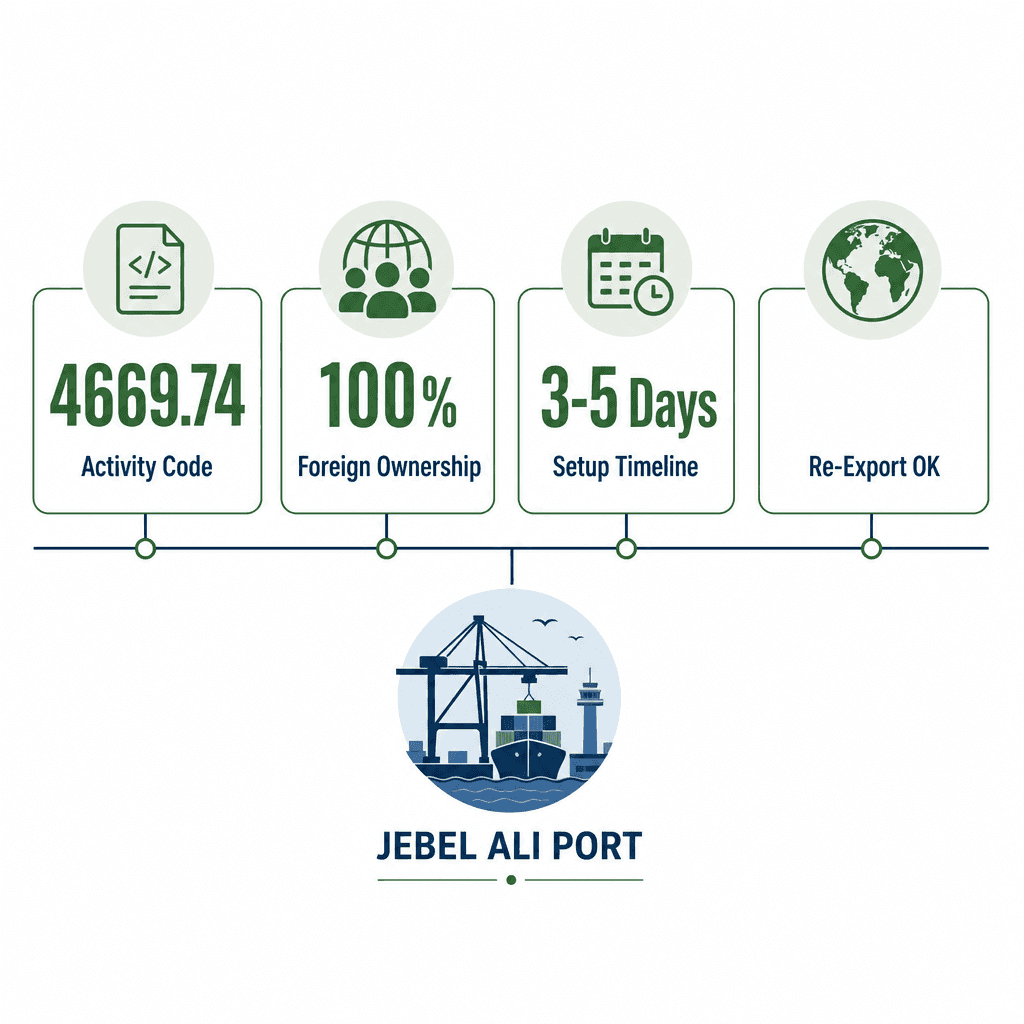
The UAE generates substantial volumes of paper and cardboard waste annually, driven by its large retail, hospitality, and logistics sectors. At the same time, the country's strategic location between paper-producing markets in Europe and consuming markets across South Asia, East Africa, and the broader Middle East creates a natural trading hub. Dubai's Jebel Ali Port is one of the busiest container ports in the world, making it an ideal base for sourcing, consolidating, and re-exporting waste paper commodities.
The UAE government's circular economy agenda and its Net Zero by 2050 commitment have further elevated the profile of recyclable material trading, creating a regulatory environment that actively supports responsible waste commodity businesses.
What the Waste Paper Trading License Covers
Under Activity Code 4669.74, a Waste Paper Trading License authorises the holder to engage in the wholesale trading of waste paper and related recyclable paper products. Permitted activities typically include:
Buying and selling waste paper, cardboard, and paper-based recyclables
Importing and exporting waste paper in bulk or containerised form
Re-exporting waste paper to international markets
Brokering and facilitating waste paper transactions between suppliers and buyers
Storing and consolidating waste paper consignments within licensed premises or approved warehouses
The license falls under the Trading category and is classified within the broader wholesale trade of other non-food commodities, consistent with international ISIC classifications for this activity.
Waste Paper Trading License: Key Facts
Activity Code: 4669.74
License Type: Trading License
Category: Trading (Wholesale of Other Non-Food Commodities)
Free Zone: Dubai South Business Hub
Foreign Ownership: Up to 100%
Minimum Setup Timeline: Approximately 3 to 5 working days for initial approval
Re-export Permitted: Yes
Physical Office Required: Flexi-desk or shared workspace options available
Who Is This License Suited To?
The Waste Paper Trading License is appropriate for a wide range of business profiles, including:
International recycling companies seeking a regional trading hub
Paper mills and packaging manufacturers looking to secure raw material supply chains
Commodity traders diversifying into recyclable materials
Logistics and freight businesses adding value through commodity trading
Entrepreneurs entering the circular economy sector for the first time
Setup Costs and Steps
Setting up at Dubai South Business Hub Free Zone is designed to be straightforward. Costs vary depending on the package selected, the size of the operation, and whether physical warehouse space is required. Typical cost components include the license fee, registration fee, establishment card, and any applicable visa fees for shareholders or employees.
The general setup process involves the following steps:
Select the activity (4669.74) and confirm the license type with the free zone authority
Submit the application along with shareholder documents, passport copies, and a business plan if required
Receive initial approval, typically within three to five working days
Sign the license agreement and pay the applicable fees
Receive the trade license and proceed with bank account opening and visa applications
It is advisable to work with a registered business setup consultant to ensure all documentation meets the free zone authority's requirements and to avoid delays.
Licensing and Compliance Requirements
Waste paper trading is subject to specific regulatory considerations in the UAE, particularly around the import and export of waste materials. License holders should be aware of the following:
Compliance with UAE Federal Law on waste management and environmental protection
Adherence to Basel Convention requirements for transboundary movement of waste materials where applicable
Obtaining relevant permits from the Ministry of Climate Change and Environment for certain waste categories
Maintaining accurate records of consignments for customs and environmental audits
Ensuring that warehouse or storage facilities meet health, safety, and environmental standards
Why Dubai Is Well-Positioned for Waste Paper Trade
Dubai offers a combination of infrastructure, regulatory support, and geographic advantage that few locations can match for commodity trading:
Port access: Jebel Ali Port provides direct connectivity to over 150 ports worldwide, making import and re-export highly efficient
100% foreign ownership: Free zone licenses allow full foreign ownership with no requirement for a local partner
Tax environment: Free zone businesses benefit from zero corporate tax on qualifying income and zero customs duties on imports and re-exports within the zone
Proximity to key markets: Dubai is within a short shipping distance of South Asia, East Africa, and the broader MENA region, all of which are significant consumers of waste paper
Established logistics ecosystem: A mature network of freight forwarders, customs brokers, and warehousing providers supports efficient commodity handling
Related Activities
Paper & Bulk Paper Wholesale Trading Trading License
Trading of Waste Plastic Trading License
Frequently Asked Questions