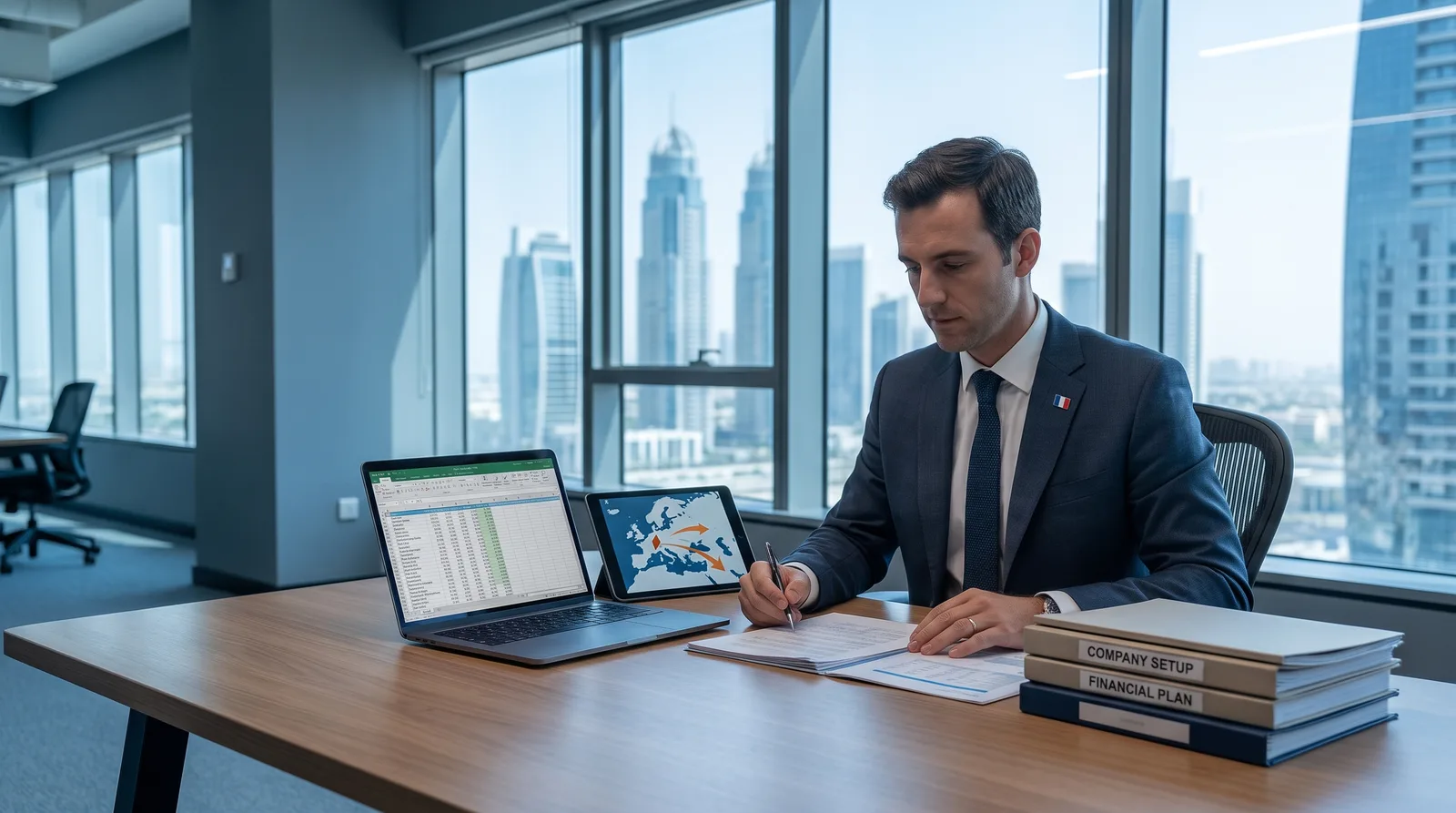
French Brands Entering the UAE Retail Market: What to Prepare and What It Costs
Topic Summary
Trade and Re-Export Route Explained
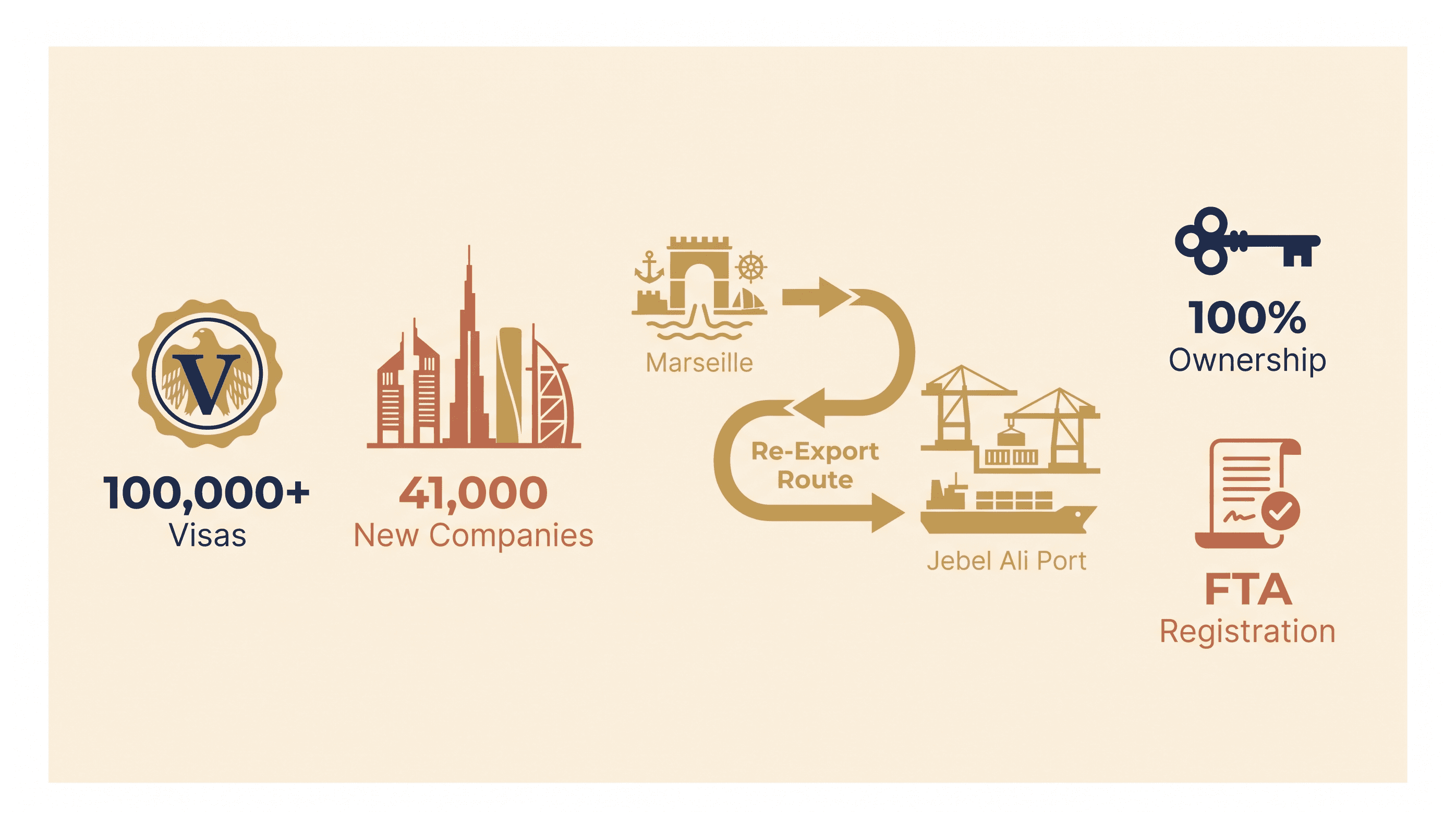
French brands typically use a DSBH free zone trading license to import, warehouse, and re-export goods across the Gulf without needing a local partner. This structure pairs customs registration with FTA compliance while keeping 100% foreign ownership.
Settle French Tax Matters First
Founders should confirm tax residency with the DGFiP and address potential exit tax exposure on shares before relocating. Coordinating timelines between French deregistration and UAE licensing prevents costly double taxation disputes.
Pick the Right Business Activities
Activity codes determine exactly what a company can trade, store, and re-export, so choosing correctly upfront avoids delays and extra fees. Cosmetics, fashion, and food brands each require distinct activity descriptions matched to their product category.
Follow the Dubai Setup Sequence
Setting up a Dubai company involves a defined sequence of licensing, customs, and banking steps that French founders must follow in order. Skipping or reordering steps, like closing French accounts too early, commonly causes delays.
Secure Visas and Emirates IDs
A DSBH license can be paired with a residency visa package, allowing founders and staff to obtain Emirates IDs under the same company. This visa step typically follows licensing and is essential for long-term operations in the UAE.
Register for VAT and Customs
French brands must register with the FTA within set windows and align customs procedures with Jebel Ali and Al Maktoum operations. Proper registration ensures smooth re-export activity and legal tax compliance in the UAE.
Understand Real Costs and Timelines
Setting up a DSBH-based trading company involves specific licensing, warehousing, and customs costs that vary by activity type. Understanding these costs and expected timelines upfront helps founders budget accurately before committing to the UAE market.
In 2026, more than 100,000 Golden Visas have been issued across the UAE, with French nationals among the fastest-growing applicant groups chasing retail footholds here [1]. French brands entering the UAE retail market face a genuinely different playbook than opening a boutique in Lyon. You're dealing with 41,000 new Dubai Chamber member companies registered in a single recent year, a customs system built around Jebel Ali and Al Maktoum, and a tax authority (the FTA) that expects registration within set windows. Add French exit tax rules on the other side, and the paperwork stacks up fast. This guide walks you through the trade and re-export route via a Dubai South Business Hub (DSBH) company: licensing, activities, customs, warehousing, and what it actually costs.
What Is the Trade and Re-Export Route for French Brands Entering the UAE Retail Market
French brands entering the UAE retail market typically use a free zone trading license to import, warehouse, and re-export goods across the Gulf. This route pairs a DSBH company with customs registration through the Federal Tax Authority (FTA), letting founders sell locally or forward stock regionally without a mainland partner.
Why Re-Export Suits French Retail Brands
Proximity to Al Maktoum International Airport and Jebel Ali Port cuts logistics time dramatically compared with shipping direct from Marseille. Free zone ownership means you keep 100% control of the company, no local partner required for this structure. And starting with re-export sidesteps the complexity of setting up full local distribution on day one. Picture a Parisian skincare label stocking inventory near Jebel Ali, then shipping onward to Saudi retailers within days rather than weeks.
Where DSBH Fits the Structure
A single DSBH license can cover trading and light storage activities under one roof. That setup pairs naturally with a residency visa package, so you and a staff member can both hold Emirates IDs tied to the same company. The activities list you choose determines exactly what you can legally sell or store, which is why picking the right codes upfront matters more than most founders expect.
What French Founders Must Settle at Home First
Before relocating a retail brand, French founders should confirm tax residency status with the DGFiP (Direction Générale des Finances Publiques) and understand potential French exit tax exposure on shares or business assets. Settling this early avoids double taxation disputes once UAE company documents and bank accounts are active.
Exit Tax and Share Transfers
French exit tax can apply to significant shareholdings moved abroad.
DGFiP filings need to be current before you depart.
Document valuation dates carefully with your French accountant.
A founder holding shares in a French SAS (Société par Actions Simplifiée) should structure the transfer before applying for a UAE license, not after.
Coordinating Timelines Between Jurisdictions
French deregistration steps run parallel to UAE license issuance, not before it. Close French bank accounts only after your UAE account is fully open, never the reverse. It's worth having your French and Dubai advisors talk directly rather than relaying instructions through you (this alone prevents most of the delays we see).
Choosing Business Activities for Dubai Free Zone French Retail Ventures
Activity codes decide what a dubai free zone french retail company can legally trade, store, and re-export. Founders should select general trading or specific product-category activities up front, since amendments later cost time and fees and can delay customs registration.
Matching Activities to Product Categories
Cosmetics, fashion, and food brands each need distinct activity descriptions on the license. Broad trading activities give multi-brand portfolios more flexibility to expand later. And the activity you pick directly affects what warehousing approvals you can get near the airport and port zones. Review the full list of business activities before locking in your application, since a fashion label wanting to cover both accessories and ready-to-wear lines usually needs the general trading category rather than a narrow one.
Reviewing Options Before Filing
Compare activity lists before submitting any paperwork.
Confirm activities support your intended Jebel Ali warehousing plans.
Ask about amendment fees before you file, not after.
If you're planning to expand into a general trading license later, it's cheaper to scope it correctly the first time.
Step-by-Step Guide to Setting Up a Dubai Company for French Founders
Setting up a dubai company for french founders in retail follows a clear sequence: reserve a name, select activities, submit a license application, register for tax, arrange warehousing, then apply for residency visas. Most stages run in parallel once documents are notarized and translated.
Step 1: Reserve Name and Confirm Activities
Reserve your trade name before the full application.
Match activities to the trading category chosen earlier.
Confirm the name doesn't clash with existing registrations.
Step 2: Submit License Documents
Prepare passport copies and notarized French documents.
Include a short business plan with product categories.
DSBH reviews the file and issues the trade license.
Step 3: Register for VAT and Customs
FTA registration follows Federal Decree-Law No. 47 of 2022.
A customs code activates import and re-export rights.
Errors in commodity codes cause most delays here.
Step 4: Arrange Warehousing Near Al Maktoum or Jebel Ali
Storage proximity shortens transit time on re-export orders.
Warehousing contracts must match your license activity scope.
Book warehousing early, capacity near the port tightens seasonally.
Visa and Identity Steps After Licensing
Once a license is issued, founders apply through the ICP (Federal Authority for Identity, Citizenship, Customs and Port Security) for entry permits, complete medical and biometric steps with the GDRFA (General Directorate of Residency and Foreigners Affairs), then receive an Emirates ID. This sequence typically completes within two to three weeks once the company file is active.
Key Facts: License, Customs, and Visa Steps for French Retail Founders
Feature | Step | Typical Timeline |
|---|---|---|
Trade license issuance | DSBH reviews and approves file | 3 to 5 business days |
VAT registration via FTA | Submit turnover and activity data | 1 to 2 weeks |
Customs code activation | Register via Dubai Trade portal | 2 to 4 business days |
Warehousing agreement near Jebel Ali | Sign lease matching license scope | 1 to 3 weeks |
Entry permit via ICP | Apply once license is active | 3 to 7 business days |
Emirates ID issuance via GDRFA | Biometrics and medical completed | 7 to 10 business days |
Entry Permit and Status Change
The ICP issues your initial entry permit tied to the company license. If you're already in the UAE on another visa, status change happens onshore without leaving. Founders relocating from France should read our Moving to Dubai from France guide for the full relocation timeline.
Medical Test and Emirates ID
The GDRFA coordinates your biometric and medical appointments once the entry permit lands. Your Emirates ID arrives shortly after visa stamping completes. One French founder we worked with completed biometrics within four days of license issuance, which is faster than most expect.
How long does UAE residency take for French retail founders?
Most French founders complete entry permit, medical, biometrics, and Emirates ID issuance within two to three weeks. Timing depends on document readiness and appointment availability at GDRFA centres.
Tax and Customs Steps for VAT and Re-Export
Federal Decree-Law No. 47 of 2022 governs corporate tax obligations, while separate VAT registration through the FTA applies to most trading companies. Re-export shipments through Jebel Ali or Al Maktoum require a customs code and correct commodity classification to avoid delays.
VAT Registration Timing
Registration typically completes within one to two weeks once your license and bank details are ready. Thresholds determine whether registration is mandatory or voluntary for your revenue level. Check current guidance on the Federal Tax Authority portal before filing.
Customs Code and Commodity Codes
Your commodity codes must match the goods described on your license activity exactly. Mismatches here cause the most common re-export delays we see with French cosmetics and fashion shipments. Double-check codes against your product catalogue before submitting through Dubai Trade.
Key Facts on Costs and Timelines for French Brands Entering the UAE Retail Market
Costs for french brands entering the uae retail market typically include license fees, activity fees, warehousing contracts, and visa packages. Total timelines from application to trading readiness usually run three to six weeks depending on document readiness and warehousing negotiations.
Typical Cost Components
License and activity fees vary by product category.
Warehousing near Jebel Ali is a separate line item.
Visa packages are priced per person, not per company.
Run your own numbers on the cost calculator before committing to a specific activity mix.
Realistic Timeline Expectations
Document readiness from France shortens the whole process considerably. Notarized papers translated in advance save you a full week easily. Running tax and visa steps in parallel, rather than one after the other, saves French founders roughly two additional weeks on average.
Wrapping Up
French brands entering the UAE retail market succeed fastest when the license, activities, customs registration, and warehousing near Al Maktoum and Jebel Ali get planned together, not guessed at one step at a time. Sort your DGFiP filings and exit tax position at home first, then let your license and customs steps run in parallel on the Dubai side.
Review the available business activities and run your numbers on the cost calculator before filing your application.
References
Frequently Asked Questions