Starting a Dubai Trading Company From France: Setup Cost, Route and Timeline

Topic Summary
What Is Starting a Dubai Trading Company From France and Why It Matters
Starting a Dubai trading company from France means registering a free zone entity to import, export or re-export goods through UAE ports. It suits French founders wanting EU-Gulf trade links, warehousing near Jebel Ali, and a licensed structure recognised under Federal Decree-Law No. 47 of 2022.
Step-by-Step Route to Set Up Your Trading License
Step-by-Step Route to Set Up Your Trading License
Customs, VAT and the Federal Decree-Law Every French Founder Must Know
Federal Decree-Law No. 47 of 2022 sets 9% corporate tax above AED 375,000 profit, while the FTA administers 5% VAT on taxable trade. Re-export shipments through Jebel Ali and Al Maktoum often qualify for customs duty suspension when goods leave UAE territory.
Warehousing and Logistics Options Near Al Maktoum and Jebel Ali
Bonded storage near Jebel Ali port, air cargo handling via Al Maktoum, short-term flex warehousing for seasonal stock, integrated customs clearance on-site, and direct trucking links to mainland distribution hubs cover most trading needs.
Visas, Emirates ID and Residency Steps After Licensing
Once licensed, founders apply for an entry permit through the ICP (Federal Authority for Identity, Citizenship, Customs and Port Security), complete a medical test and Emirates ID biometrics, then finalize residency status with the GDRFA (General Directorate of Residency and Foreigners Affairs). Most French founders finish this within two to three weeks after the license is issued.
What French Exit Tax Means Before You Relocate
French exit tax applies to founders holding substantial shareholdings who relocate their tax residency outside France. The DGFiP (Direction Générale des Finances Publiques) requires a declaration before departure, and deferred capital gains tax may apply depending on shareholding value and holding period.
Setup Cost Breakdown for Starting a Dubai Trading Company From France
A Dubai trading license typically starts around AED 12,500, with warehousing, visas and customs registration adding to total cost. French founders should budget for license fees, Emirates ID processing, bonded storage rental and initial customs code registration before shipping goods.
In 2025, over 100,000 Golden Visas had been issued across the UAE, with French founders forming a growing slice of trading company owners near Jebel Ali (u.ae, 2025) [1]. Dubai Chamber recorded over 55,000 new member registrations in 2024 [2]. VAT sits at 5% [3]. Corporate tax is 9% above AED 375,000 profit [4]. License issuance runs 7 to 10 working days. Residency stamping adds two to three weeks. Starting a Dubai trading company from France means picking activities, licensing, and clearing customs before your first container even moves.
This guide walks you through the full route: business setup in Dubai from France, activity selection, warehousing near Al Maktoum and Jebel Ali, and the French paperwork you can't skip before you relocate.
What Is Starting a Dubai Trading Company From France and Why It Matters
Starting a Dubai trading company from France means registering a free zone entity to import, export or re-export goods through UAE ports. It suits French founders wanting EU-Gulf trade links, warehousing near Jebel Ali, and a licensed structure recognised under Federal Decree-Law No. 47 of 2022.
Why French Founders Choose Dubai Trade Routes
Dubai sits between Europe, Africa and Asia, which matters if you're shipping goods rather than selling software. A Lyon-based textile trader re-exporting to West Africa through Jebel Ali warehousing can clear customs and reload onto regional vessels in days, not weeks. Dubai Chamber's 2024 figures show tens of thousands of new registrations, a fair share tied to trade and logistics [2]. Federal Decree-Law No. 47 of 2022 (Corporate Tax Law) governs how profits are taxed once your trading company starts booking revenue.
Free Zone vs General Trading Structures
Single-activity licenses cost less but restrict what you can sell.
General trading licenses cover multiple product categories under one license.
Customs code registration runs through Dubai Trade, separate from your license.
Free zone entities suit re-export; mainland suits direct UAE distribution.
Step-by-Step Route to Set Up Your Trading License
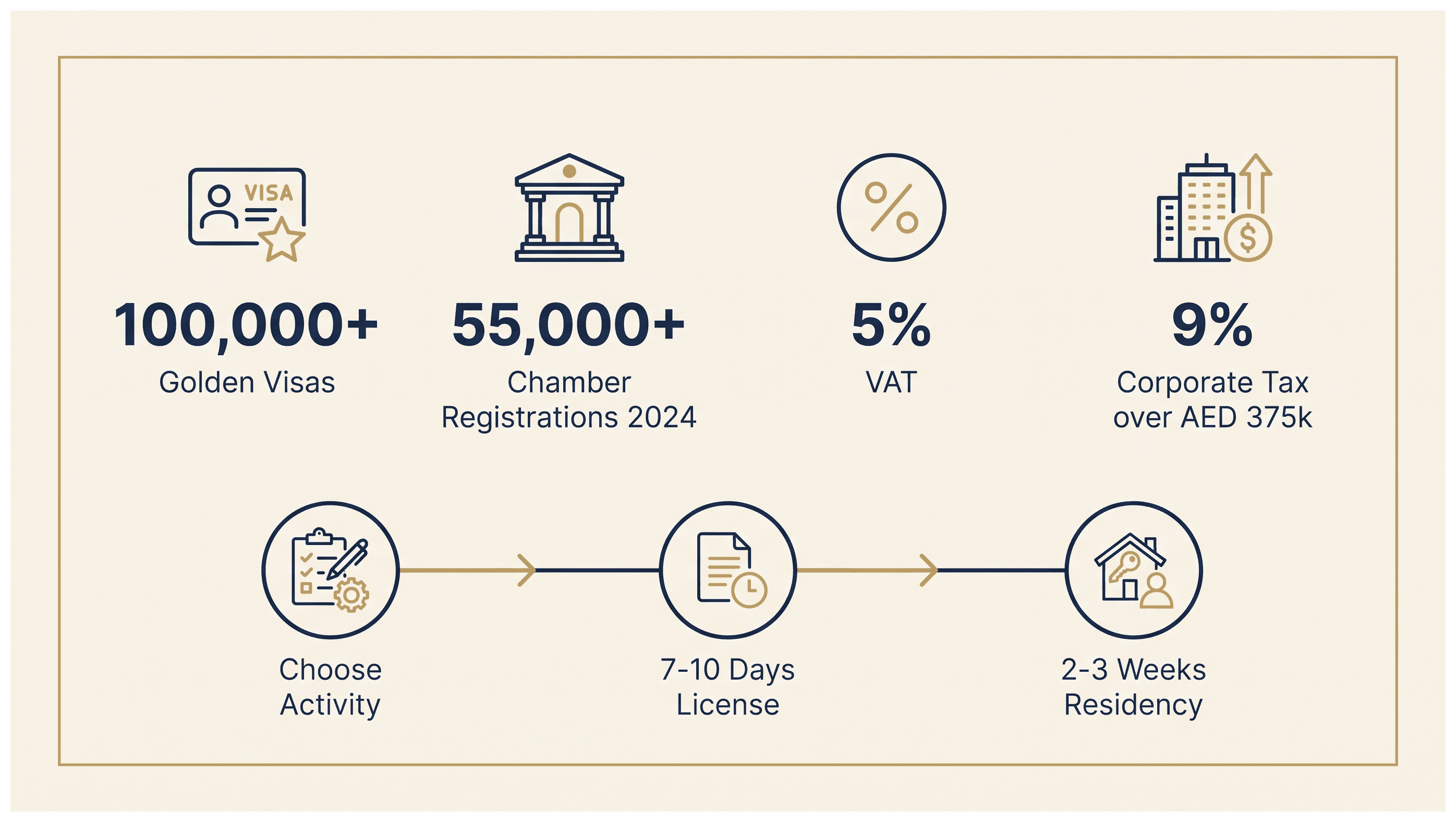
The setup route runs: choose trade activities, reserve a name, submit passport and business plan, sign the free zone agreement, get the license, then register for customs and VAT. Most French founders complete licensing in 7-10 working days once documents are ready.
Step 1: Choose Trading Activities and Name
Pick general trading or a specific commodity code.
Reserve a name matching your trading license activity.
Run a quick check company name availability search first.
Step 2: Submit Documents and Get Licensed
Passport copy, proof of French address, brief business plan.
License issuance typically takes 7 to 10 working days.
Free zone agreement signed digitally in most cases.
Step 3: Register With Customs for Re-Export
Get a customs code through Dubai Trade.
Register for VAT with the FTA once trading.
Standard rate sits at 5% on taxable trade [3].
Customs, VAT and the Federal Decree-Law Every French Founder Must Know
Federal Decree-Law No. 47 of 2022 sets 9% corporate tax above AED 375,000 profit, while the FTA administers 5% VAT on taxable trade. Re-export shipments through Jebel Ali and Al Maktoum often qualify for customs duty suspension when goods leave UAE territory.
Corporate Tax and VAT Basics
Profit under AED 375,000 stays untaxed under the Decree-Law; anything above is taxed at 9% [4]. VAT filing is usually quarterly for smaller trading companies, monthly for larger turnover. Neither tax replaces customs duty, which is separate and handled through Dubai Trade.
Customs Duty Suspension for Re-Export
Bonded warehousing near Jebel Ali defers duty until goods exit UAE customs territory.
A French cosmetics importer storing stock in a bonded zone before shipping to Saudi Arabia pays no UAE import duty on transit goods.
Suspension applies only while goods remain within the bonded facility.
Key Facts: Dubai Trading Company Setup From France
Feature | Item | Detail |
|---|---|---|
License cost from AED 12,500 | Base entry point | Single-activity trading license, first year |
Setup timeline 7-10 working days | License issuance | From document submission to active license |
VAT rate 5% via FTA | Taxable trade | Registered once turnover crosses FTA threshold |
Corporate tax 9% above AED 375,000 profit | Decree-Law No. 47 of 2022 | Applies to net profit, not turnover |
Residency steps via ICP and GDRFA | Entry permit to Emirates ID | Two to three weeks after license issuance |
Warehousing near Al Maktoum and Jebel Ali | Sea and air options | Bonded storage plus air cargo handling on-site |
Warehousing and Logistics Options Near Al Maktoum and Jebel Ali
Bonded storage near Jebel Ali port, air cargo handling via Al Maktoum, short-term flex warehousing for seasonal stock, integrated customs clearance on-site, and direct trucking links to mainland distribution hubs cover most trading needs.
Sea Freight Warehousing Near Jebel Ali
Container consolidation suits French exporters shipping mixed pallets.
Bonded storage duration limits vary by facility contract.
DP World operates much of the port infrastructure feeding Jebel Ali.
Air Cargo Through Al Maktoum
Faster turnaround suits high-value or time-sensitive goods.
Perishables and luxury re-export both benefit from air routing.
Dubai Airports handles substantial cargo volumes through the Al Maktoum hub.
What warehousing options exist near Jebel Ali for a French trading company?
Bonded sea freight storage, air cargo handling via Al Maktoum, and short-term flex space for seasonal stock. Most French traders combine bonded sea storage with occasional air freight for urgent orders.
Visas, Emirates ID and Residency Steps After Licensing
Once licensed, founders apply for an entry permit through the ICP (Federal Authority for Identity, Citizenship, Customs and Port Security), complete a medical test and Emirates ID biometrics, then finalize residency status with the GDRFA (General Directorate of Residency and Foreigners Affairs). Most French founders finish this within two to three weeks after the license is issued.
Entry Permit and Medical Test
You'll apply for the entry permit through ICP once your license is active. A medical fitness test follows, usually booked within days of arrival. This step confirms you're clear for residency before biometrics.
Emirates ID and Residency Stamping
Biometric appointments capture fingerprints and photo for your Emirates ID card. The GDRFA then stamps residency onto your passport, completing the process. Full residency services, including Emirates ID applications, run through Dubai South's residency services team.
What French Exit Tax Means Before You Relocate
French exit tax applies to founders holding substantial shareholdings who relocate their tax residency outside France. The DGFiP (Direction Générale des Finances Publiques) requires a declaration before departure, and deferred capital gains tax may apply depending on shareholding value and holding period.
DGFiP Declaration Requirements
Founders with significant shareholdings, generally those exceeding certain value thresholds, must file with the DGFiP before leaving France. This isn't optional paperwork; it's a formal exit declaration tied to your capital gains position at departure.
Planning Around French Exit Tax
Time your Dubai license application around your actual departure date, not before. Talk to a French accountant before you move, not after you've already relocated. Getting this sequence wrong can trigger tax you didn't expect.
Setup Cost Breakdown for Starting a Dubai Trading Company From France
A Dubai trading license typically starts around AED 12,500, with warehousing, visas and customs registration adding to total cost. French founders should budget for license fees, Emirates ID processing, bonded storage rental and initial customs code registration before shipping goods.
License and Visa Cost Components
Base trading license fee starts near AED 12,500.
Visa and Emirates ID processing add separate per-person fees.
Multi-activity licenses cost more than single-activity ones.
Warehousing and Customs Budgeting
Bonded storage rental varies by size and duration near Jebel Ali.
Customs code registration through Dubai Trade carries its own fee.
Run your own numbers on the cost calculator before committing.
Starting a Dubai trading company from France comes down to picking the right activities, registering with the FTA and Dubai Trade, arranging warehousing near Al Maktoum and Jebel Ali, and settling your DGFiP paperwork before you relocate. Get the sequence right and licensing takes days, not months.
Ready to move forward? Browse Business Activities to pick your trade code, or run the numbers on the Cost Calculator to set up or buy your license. If you're planning the broader move, our Moving to Dubai from France guide covers the relocation side in full.
References
Frequently Asked Questions