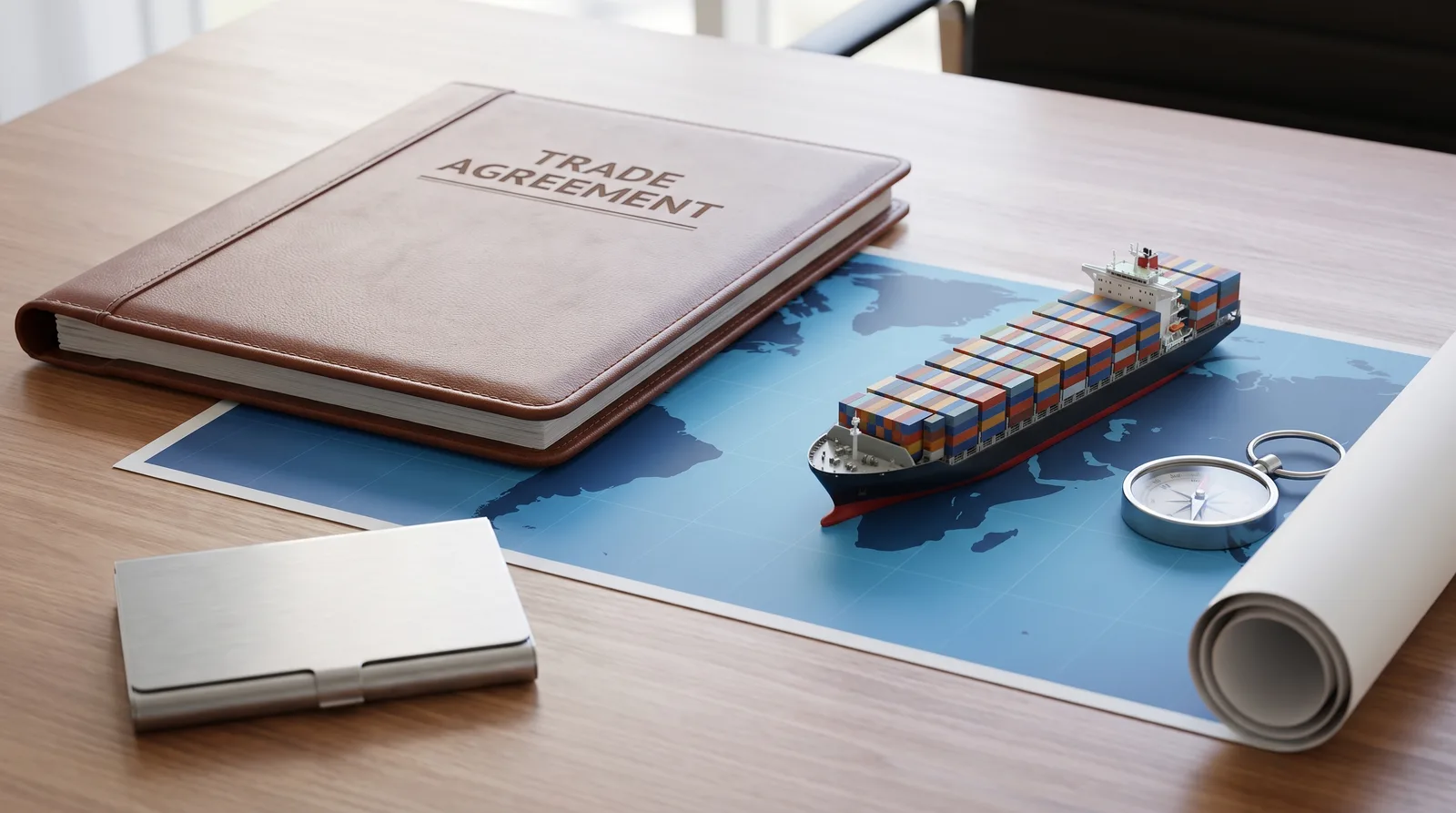
Trade Between Australia and the UAE: License and Routes
Topic Summary
What Is Trade Between Australia and the UAE and Why It Matters
Trade between Australia and the UAE covers the two-way flow of goods, services, and investment between both countries. For Australian founders, it means accessing a zero-personal-income-tax jurisdiction, a Gulf logistics hub, and a gateway market of 400 million consumers across the Middle East and Africa.
Choosing the Right Australia UAE Trade License for Import-Export
Australian founders trading goods between Australia and the UAE need a free zone trading license that lists the specific commodity groups they handle. A general trading license covers a broad range of goods; a specific trading license restricts activity to named categories. License type determines which customs codes and HS classifications apply at clearance.
Corporate Tax and the Australian Founder
UAE corporate tax under Federal Decree-Law No. 47 of 2022 is 9% on taxable income above AED 375,000. Qualifying free zone income remains at 0%. Australian founders must also satisfy the Australian Taxation Office (ATO) on tax residency, the ATO taxes Australian residents on worldwide income regardless of where the company is incorporated.
How to Set Up Your DSBH Trade Entity: Step-by-Step
Setting up a DSBH free zone trading company involves five core steps: selecting your business activities, reserving your trade name, submitting your application with identity documents, paying your license fee, and activating your Emirates ID and residency visa. The process typically takes three to seven working days from submission.
Dubai Import Export Australia: Logistics Routes and Infrastructure
Goods moving between Australia and the UAE travel primarily by sea through Jebel Ali Port and by air through Al Maktoum International Airport. Both gateways are within the Dubai South logistics district, giving DSBH license holders direct proximity to bonded warehousing, customs clearance, and multimodal onward distribution across the GCC and beyond.
Key Facts: Australia–UAE Trade at a Glance
Australia and the UAE share a high-value, growing trade relationship anchored in commodities, services, and investment. For Australian founders, the combination of a UAE free zone trade license, proximity to Jebel Ali and Al Maktoum, and a 0% personal income tax environment makes Dubai the logical base for regional trade operations.
In 2026, two-way merchandise trade between Australia and the UAE is tracking above AUD 6 billion annually, making the UAE Australia's largest trading partner in the Middle East (Dubai Chamber, 2024). The UAE personal income tax rate sits at 0% (u.ae, 2024). Corporate tax on qualifying free zone income is also 0% under Federal Decree-Law No. 47 of 2022 (Federal Tax Authority, 2023). License packages at Dubai South Business Hub Free Zone (DSBH) start from AED 12,500, and the setup process runs three to seven working days. Yet most Australian founders setting up a Dubai entity have no clear map of the license type they need, the customs gateway their goods move through, or the tax obligations that follow them home.
This guide walks you through the trade route from an Australian business to a UAE free zone company, covering the right license, approved activities, logistics hubs near Al Maktoum International Airport and Jebel Ali Port, and every government body you'll deal with along the way.
What Is Trade Between Australia and the UAE and Why It Matters
Trade between Australia and the UAE covers the two-way flow of goods, services, and investment between both countries. For Australian founders, it means accessing a zero-personal-income-tax jurisdiction, a Gulf logistics hub, and a gateway market of 400 million consumers across the Middle East and Africa.
The Scale of the Bilateral Relationship
The UAE is Australia's largest trading partner in the Middle East, with two-way merchandise trade above AUD 6 billion (Dubai Chamber, 2024). Key Australian exports include gold, meat, live animals, wheat, and education services. That's a diverse basket, and the commercial logic for building a UAE trading entity is stronger than many founders realise.
Here's a detail most exporters miss: UAE re-exports mean goods entering Dubai routinely reach Saudi Arabia, Egypt, and East Africa. An Australian beef exporter who licenses a trading entity at DSBH can clear goods through Al Maktoum International Airport and redistribute to Gulf Cooperation Council (GCC) markets under a single UAE trade license, without separate registrations in each destination country.
Why Australian Founders Choose a UAE Free Zone Entity
The tax structure is the headline reason. Key facts:
UAE personal income tax rate: 0% (u.ae, 2024)
Corporate tax on qualifying free zone income: 0% under Federal Decree-Law No. 47 of 2022
100% foreign ownership, no local sponsor required
DSBH sits within Dubai South, co-located with Al Maktoum International Airport
A Sydney-based commodities trader who establishes a DSBH free zone company, licenses import-export activities, and routes Australian raw materials through Al Maktoum to GCC buyers operates under a structure that attracts 0% personal income tax. The ownership structure is clean too, you hold 100% of the entity from day one.
Choosing the Right Australia UAE Trade License for Import-Export
Australian founders trading goods between Australia and the UAE need a free zone trading license that lists the specific commodity groups they handle. A general trading license covers a broad range of goods; a specific trading license restricts activity to named categories. License type determines which customs codes and HS classifications apply at clearance.
Trading License vs. Service License: Which One Fits
A trading license authorises the physical import, export, re-export, and distribution of goods. A service license covers consultancy, logistics management, or trade facilitation, with no physical goods changing hands. Many Australian founders actually need both, particularly if they provide supply-chain advisory alongside physical trade.
The practical upside at DSBH: a single license can carry multiple approved activities. A Melbourne-based food distributor, for instance, takes out a trading license listing "foodstuffs, general" and adds "supply chain management" as a consultancy activity, both sitting on one DSBH license. You can review trading license activities in Dubai to confirm which commodity categories fit your operation before you apply.
HS Codes, Restricted Goods, and Customs Registration
Every product traded between Australia and the UAE is classified under a Harmonised System (HS) code. Get this wrong and shipments are held at customs, sometimes for weeks. The UAE Federal Customs Authority manages import and export controls; clearance for Dubai South cargo runs through the Dubai Trade portal.
A few things worth flagging on restricted goods: live animals, food products, and certain agricultural items from Australia face additional inspection at the UAE border. Australian live sheep exports, for example, require an import permit from UAE authorities before the vessel even departs. The importer's UAE trade license must already be active and registered with customs before that permit can be issued. A DSBH trade license number is the prerequisite for any customs registration.
Corporate Tax and the Australian Founder
UAE corporate tax under Federal Decree-Law No. 47 of 2022 is 9% on taxable income above AED 375,000. Qualifying free zone income remains at 0%. Australian founders must also satisfy the Australian Taxation Office (ATO) on tax residency, the ATO taxes Australian residents on worldwide income regardless of where the company is incorporated.
UAE Corporate Tax: What Free Zone Traders Actually Pay
Federal Decree-Law No. 47 of 2022 introduced a 9% corporate tax rate, effective June 2023. Qualifying free zone persons pay 0% on qualifying income, that's trading income meeting both substance and activity tests set by the Federal Tax Authority (FTA). Income from UAE mainland customers, by contrast, is taxed at 9% and does not qualify for the free zone rate (tax.gov.ae, 2023).
A DSBH trading company that sells exclusively to non-UAE buyers, routing Australian goods to Saudi Arabia, for example, can structure qualifying income to attract the 0% free zone rate, provided it meets FTA substance requirements. FTA registration is mandatory for all UAE companies, regardless of whether any tax is actually owed.
Australian Tax Residency and the ATO's Long Reach
Incorporating a Dubai company does not automatically break your Australian tax residency. The ATO applies both the "domicile test" and the "resides test" to determine whether you remain assessable on worldwide income. An Australian founder who keeps a family home in Brisbane and spends six months a year in Australia may still be assessed as an Australian tax resident, even with an active Dubai company.
Worth flagging: there is no Australia–UAE double-tax agreement. Unresolved residency can create genuine dual taxation exposure. Before trade between Australia and the UAE generates its first invoice, get qualified cross-border tax advice. This article is general information only. You can also read more about the residency considerations at the moving to Dubai from Australia guide.
How to Set Up Your DSBH Trade Entity: Step-by-Step
Setting up a DSBH free zone trading company involves five core steps: selecting your business activities, reserving your trade name, submitting your application with identity documents, paying your license fee, and activating your Emirates ID and residency visa. The process typically takes three to seven working days from submission.
Step 1: Select Activities and Calculate Your Setup Cost
Start by choosing trading activities from the DSBH approved list, import, export, re-export, general trading, or specific commodity categories. Getting this right at the start saves amendment costs later. An Australian founder importing medical devices from Sydney, for instance, would compare a single-activity license (medical devices trading) against a multi-activity package that also includes logistics consultancy, both options are modelable before commitment.
Use the DSBH cost calculator to calculate your company setup cost in Dubai across license fees, visa allocation, and office options. License packages start from AED 12,500 (DSBH, 2024), and the calculator takes under five minutes to run.
Step 2: Identity Verification, ICP, GDRFA, and Emirates ID
The Identity and Citizenship Authority (ICP) manages entry permits and residency applications for free zone visa holders. The General Directorate of Residency and Foreigners Affairs (GDRFA) issues the residence visa stamped in your passport. Emirates ID, issued by the ICP, is mandatory for all UAE residents and required to open a bank account, sign leases, and access government services.
Founders applying from Australia submit initial documents digitally. Biometrics are completed on the first UAE entry. A Perth-based founder can submit her passport copy online, receive her entry permit by email, fly to Dubai, complete an Emirates ID biometric appointment, and collect her residence visa stamp, all within a single visit. DSBH's company formation support team coordinates these steps on your behalf.
Step 3: Bank Account and Ongoing Compliance
Three compliance milestones follow license activation:
Open a UAE corporate bank account (requires active trade license, Emirates ID, and proof of business activity)
Complete FTA corporate tax registration, mandatory even if the entity qualifies for the 0% free zone rate
Set a renewal calendar for annual license renewal to keep the company in good standing
In practice, a DSBH client uses the on-site business support team to complete FTA registration and submit the corporate tax registration form, a task that typically takes under two hours with guided assistance. That's the kind of operational detail that makes a real difference when you're managing the process from Australia.
Dubai Import Export Australia: Logistics Routes and Infrastructure
Goods moving between Australia and the UAE travel primarily by sea through Jebel Ali Port and by air through Al Maktoum International Airport. Both gateways are within the Dubai South logistics district, giving DSBH license holders direct proximity to bonded warehousing, customs clearance, and multimodal onward distribution across the GCC and beyond.
Sea Freight: Jebel Ali Port and the Australia–UAE Lane
Jebel Ali Port is the largest port in the Middle East and ranks among the top ten globally by container throughput (DP World, 2024). Direct shipping lines connect Melbourne, Sydney, Brisbane, and Fremantle to Jebel Ali, with transit times averaging 18 to 25 days.
DSBH free zone entities can use bonded warehouse facilities near Jebel Ali for duty-deferred storage before GCC distribution. A Queensland agri-products exporter, for example, ships chilled beef from Brisbane to Jebel Ali on a reefer container service, clears customs using the Dubai Trade portal, and transfers goods to a cold-storage facility in the Dubai South logistics zone, all within 48 hours of vessel arrival.
Trading via a DSBH Free Zone vs. Trading from Australia: Key Comparison
Feature | DSBH Free Zone Entity (UAE) | Operating from Australia |
|---|---|---|
Personal income tax rate | 0%, no personal income tax in the UAE | Up to 47% marginal rate for high-income earners |
Corporate tax rate | 0% on qualifying free zone income; 9% on non-qualifying income above AED 375,000 | 25% (small business base rate) or 30% (standard rate) |
100% foreign ownership | Yes, no local sponsor required in the free zone | Yes, domestically, full ownership is standard |
GCC market access via re-export | Yes, Dubai is a primary re-export hub for Saudi Arabia, Egypt, and East Africa | Limited, no free trade agreement with GCC; each market requires separate entry |
Proximity to major cargo hub | Al Maktoum International Airport and Jebel Ali Port, both within Dubai South | 18–25 days sea transit to UAE; no direct GCC logistics proximity |
Company setup time | 3–7 working days at DSBH | N/A, Australian company formation does not provide UAE market access |
Minimum license cost | From AED 12,500 (DSBH, 2024) | N/A, Australian registration does not include UAE trade license rights |
Note: This table is general information. Individual tax outcomes depend on residency status and ATO assessment. Seek qualified tax advice before trading.
Air Freight: Al Maktoum International Airport and Time-Sensitive Cargo
Al Maktoum International Airport (DWC) is co-located within Dubai South and is designed to handle 12 million tonnes of cargo annually at full build-out. That capacity makes it the natural gateway for high-value, time-sensitive Australian exports: seafood, pharmaceuticals, fresh produce, and technology components.
DSBH license holders benefit from direct proximity, bonded cargo facilities sit within the same economic zone as the airport. A Sydney seafood exporter can ship live lobsters by air freight from Kingsford Smith to Al Maktoum, clear through the Dubai South cargo terminal, and deliver to a Dubai luxury hotel within six hours of landing. Air freight costs more per kilogram than sea freight, but the 10 to 14 hour direct transit time is the trade-off that makes it worthwhile for perishables.
Key Facts: Australia–UAE Trade at a Glance
Australia and the UAE share a high-value, growing trade relationship anchored in commodities, services, and investment. For Australian founders, the combination of a UAE free zone trade license, proximity to Jebel Ali and Al Maktoum, and a 0% personal income tax environment makes Dubai the logical base for regional trade operations.
Important Considerations Before You Trade
Trade between Australia and the UAE is subject to both UAE customs rules and Australian export controls, check both before your first shipment
References
Frequently Asked Questions