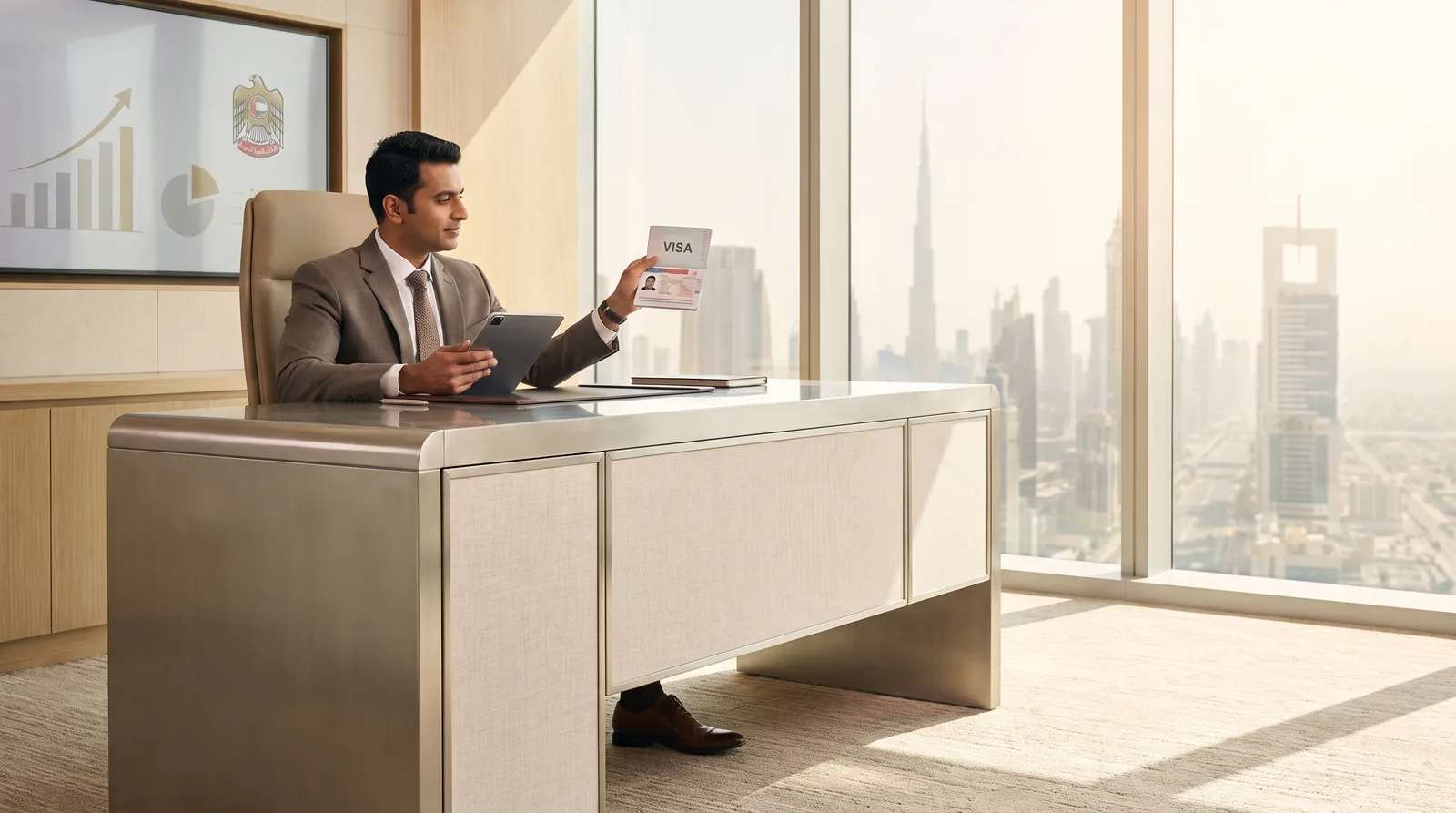
Trade Between Germany and the UAE: License and Logistics
Topic Summary
What Is Trade Between Germany and the UAE and Why the Structure Matters
Trade between Germany and the UAE refers to the cross-border movement of goods, services, and capital between the two countries. Structuring this through a UAE free zone company determines your customs access, tax treatment, and logistics efficiency, making entity choice as important as the trade relationship itself.
Why Dubai South Is the Right Base for Germany–UAE Trade
Dubai South Business Hub Free Zone sits adjacent to Al Maktoum International Airport and within close proximity of Jebel Ali Port, giving German founders direct access to the UAE's two primary freight gateways. Its free zone status means 0% import duty on goods re-exported outside the UAE and full foreign ownership with no UAE national sponsor required.
How to Set Up a Germany–UAE Trade License at Dubai South: Step-by-Step
Setting up a Germany–UAE trade license at Dubai South Business Hub Free Zone involves five steps: selecting your trade activities, reserving a company name , submitting incorporation documents, receiving your license, and applying for residency visas. The process typically takes 3–7 working days from document submission.
Customs, Logistics, and the Al Maktoum–Jebel Ali Corridor
German goods entering the UAE through Al Maktoum Airport or Jebel Ali Port are subject to UAE customs clearance managed via the Dubai Trade portal. Free zone entities importing for re-export pay 0% duty; goods entering the UAE mainland attract a standard 5% GCC customs tariff on CIF value.
Corporate Tax and the German Exit Tax Question
UAE corporate tax under Federal Decree-Law No. 47 of 2022, administered by the Federal Tax Authority (FTA), applies at 9% above AED 375,000 for non-qualifying income. German founders relocating assets must also address Wegzugsteuer, Germany's exit tax, with their Finanzamt before transferring business interests to the UAE.
Residency, Emirates ID, and Visa Compliance for German Founders
German founders setting up a UAE trade company can apply for an investor residency visa tied to their trade license. The GDRFA processes the visa; the ICP issues the Emirates ID. Both documents are required for bank account opening, signing local contracts, and demonstrating genuine UAE residency to the Finanzamt.
In 2026, Germany remains the UAE's largest European trading partner, with bilateral trade exceeding USD 10 billion annually (Dubai Chamber, 2024). German exports to the Gulf, machinery, vehicles, chemicals, pharmaceuticals, flow through a corridor that handled over 14 million TEUs at Jebel Ali Port in 2023 (DP World, 2024). License packages at Dubai South Business Hub Free Zone (DSBH) start from AED 12,500 (DSBH, 2024). Setup takes 3–7 working days. Personal income tax in the UAE sits at 0% (u.ae, 2024). Corporate tax on qualifying free zone income is 0% under Federal Decree-Law No. 47 of 2022 (Federal Tax Authority, 2023).
This guide shows German founders exactly how to structure trade between Germany and the UAE: which license to hold, which business activities to register, how customs and logistics work near Al Maktoum and Jebel Ali, and what the Federal Tax Authority (FTA), Identity and Citizenship Authority (ICP), General Directorate of Residency and Foreigners Affairs (GDRFA), Emirates ID, Finanzamt, and German exit tax mean for your setup.
What Is Trade Between Germany and the UAE and Why the Structure Matters
Trade between Germany and the UAE refers to the cross-border movement of goods, services, and capital between the two countries. Structuring this through a UAE free zone company determines your customs access, tax treatment, and logistics efficiency, making entity choice as important as the trade relationship itself.
The Germany–UAE Trade Corridor at a Glance
Germany is the UAE's top European trade partner. Key German exports include industrial machinery, motor vehicles, chemicals, and pharmaceuticals. UAE exports back to Germany cover crude oil derivatives, aluminium, and re-exported Asian goods that transit through Dubai's port infrastructure.
The corridor is expanding. UAE non-oil foreign trade with Europe has risen steadily since 2020, and bilateral trade between Germany and the UAE now exceeds USD 10 billion annually (Dubai Chamber, 2024). Dubai's position as a re-export hub means German goods frequently continue onward to South Asia, East Africa, and the broader GCC, all cleared through a single UAE entity.
A Munich-based machinery exporter supplying industrial equipment to Gulf construction firms, for instance, uses a Dubai South free zone entity as the invoicing hub, holding the import-export license and managing UAE-side customs clearance. That structure cuts agent fees and gives the exporter direct control over delivery timelines.
Why Entity Structure Defines Your Trade Outcome
A UAE free zone entity can hold import-export activities, invoice in AED or EUR, and repatriate profits without withholding tax. Without a properly licensed entity, German founders often route trade through third-party agents, losing margin and control over documentation.
The license activity list must match the actual goods or services traded. Mismatches between registered activities and shipped commodities create customs holds and compliance risk, a problem that's entirely avoidable at registration stage. You can review the full list of business activities at Dubai South before committing to your activity selection.
A Frankfurt-based chemical distributor who registered a trading license at DSBH consolidated Gulf-region invoicing under one entity within three weeks of submission. License packages start from AED 12,500 (DSBH, 2024), and incorporation typically completes in 3–7 working days.
Germany–UAE Trade via DSBH Free Zone: Key Facts at a Glance
Factor | Detail |
|---|---|
Bilateral trade value | USD 10 billion+ annually (Dubai Chamber, 2024) |
License setup time | 3–7 working days (DSBH, 2024) |
Personal income tax (UAE) | 0% (u.ae, 2024) |
Corporate tax on qualifying free zone income | 0% under Federal Decree-Law No. 47 of 2022 |
UAE mainland corporate tax rate | 9% above AED 375,000 for non-qualifying income (FTA, 2023) |
Import duty on free zone re-exports | 0%, goods re-exported outside the UAE are duty-free |
Import duty on UAE mainland entry | 5% GCC common external tariff on CIF value |
Why Dubai South Is the Right Base for Germany–UAE Trade
Dubai South Business Hub Free Zone sits adjacent to Al Maktoum International Airport and within close proximity of Jebel Ali Port, giving German founders direct access to the UAE's two primary freight gateways. Its free zone status means 0% import duty on goods re-exported outside the UAE and full foreign ownership with no UAE national sponsor required.
Location Advantage: Al Maktoum and the Jebel Ali Corridor
Dubai South is the master development surrounding Al Maktoum International Airport, which is planned to reach a cargo capacity of 12 million tonnes annually, positioning it among the world's largest freight hubs. For German exporters, that means dedicated terminals with direct connections to Frankfurt, Munich, and Hamburg.
Jebel Ali Port, operated by DP World, is the largest port in the Middle East and ranked 10th busiest container port globally. It's the primary entry point for containerised German exports arriving by sea. The Dubai South–Jebel Ali corridor sits within the same logistics zone, which cuts drayage time and customs transfer costs significantly for import-export businesses.
A Hamburg-based auto-parts supplier shipping to Gulf dealers, for example, uses Al Maktoum air freight for urgent consignments and Jebel Ali sea freight for bulk orders, both managed under a single DSBH license, with one customs registration and one invoicing entity.
Free Zone Benefits for German Founders
Here's what a DSBH free zone license gives you from day one:
100% foreign ownership, no UAE national sponsor required
0% personal income tax (u.ae, 2024)
0% corporate tax on qualifying free zone income under Federal Decree-Law No. 47 of 2022
Multiple trade activities permitted under one license
Full profit repatriation with no withholding tax
The 9% corporate tax rate under Federal Decree-Law No. 47 of 2022 only applies to non-qualifying income above AED 375,000 (FTA, 2023). For founders whose trade flows primarily between free zone entities and international counterparties, qualifying income status is achievable, but confirm this with a UAE tax adviser before trading. Use the company setup cost calculator to model your full license and visa costs before committing.
How to Set Up a Germany–UAE Trade License at Dubai South: Step-by-Step
Setting up a Germany–UAE trade license at Dubai South Business Hub Free Zone involves five steps: selecting your trade activities, reserving a company name, submitting incorporation documents, receiving your license, and applying for residency visas. The process typically takes 3–7 working days from document submission.
Step 1: Choose Your Trade Activities and License Type
A trading license in Dubai covers import, export, re-export, and distribution of physical goods. Your activity list must reflect the exact commodity categories you trade, machinery, chemicals, consumer goods, medical devices, because mismatches between registered activities and actual shipments create customs holds.
DSBH allows multiple activities under one license, so you don't need separate entities for different product lines. A Düsseldorf medical-device exporter, for instance, registers both 'General Trading' and 'Medical Equipment Trading' as activities under one DSBH license to cover both commodity streams. License packages start from AED 12,500 (DSBH, 2024).
Step 2: Submit Documents and Receive Your License
Required documents are straightforward: passport copies of all shareholders, a proposed company name, and a completed application form. DSBH processes incorporation in 3–7 working days from submission (DSBH, 2024).
Once licensed, you can open a UAE corporate bank account and register with the Dubai Trade portal for customs access. Dubai Trade is the electronic gateway for all UAE customs declarations and clearance, you'll need it active before your first shipment moves.
Step 3: Apply for Residency Visas and Emirates ID
The trade license is the anchor document for UAE residency visa applications. The General Directorate of Residency and Foreigners Affairs (GDRFA) processes investor and employment visas in Dubai. The Identity and Citizenship Authority (ICP) then issues the Emirates ID, which is mandatory for all UAE residents.
Emirates ID is required for bank account opening, signing contracts, and accessing government portals, so it's not optional. The business support services at DSBH cover PRO transactions, visa applications, and government filings to keep this process moving without delays.
Customs, Logistics, and the Al Maktoum–Jebel Ali Corridor
German goods entering the UAE through Al Maktoum Airport or Jebel Ali Port are subject to UAE customs clearance managed via the Dubai Trade portal. Free zone entities importing for re-export pay 0% duty; goods entering the UAE mainland attract a standard 5% GCC customs tariff on CIF value.
Import and Re-Export Duty Framework
Goods imported into a UAE free zone for re-export are not subject to UAE customs duty. That's a significant structural advantage for trade between Germany and the UAE when the end destination is Saudi Arabia, Oman, or East Africa rather than the UAE mainland itself.
Goods crossing from a free zone into the UAE mainland attract the 5% GCC common external tariff on CIF (cost, insurance, freight) value. Certain categories, alcohol, tobacco, carry excise duties regardless of zone status, so check your commodity classification before structuring the route.
A Stuttgart-based industrial manufacturer exporting CNC machines to DSBH free zone, for example, can re-export those machines to Saudi Arabia duty-free from the free zone, bypassing UAE mainland customs entirely. All declarations run through the Dubai Trade portal.
Air Freight vs. Sea Freight: Practical Routing for German Exporters
Al Maktoum International Airport handles cargo via dedicated freight terminals with direct connections to Frankfurt, Munich, and Hamburg. Air freight from Frankfurt to Al Maktoum runs approximately 6–8 hours. For time-sensitive shipments, spare parts, pharmaceuticals, electronics, that speed justifies the premium.
Jebel Ali Port offers weekly feeder services connecting to North European ports including Hamburg and Rotterdam. Sea freight from Hamburg to Jebel Ali takes approximately 6–7 days. For bulk commodity shipments where cost per tonne matters more than speed, sea freight is the default route. DSBH's location means same-day customs clearance submission via Dubai Trade is achievable for most standard commodity categories.
Corporate Tax and the German Exit Tax Question
UAE corporate tax under Federal Decree-Law No. 47 of 2022, administered by the Federal Tax Authority (FTA), applies at 9% above AED 375,000 for non-qualifying income. German founders relocating assets must also address Wegzugsteuer, Germany's exit tax, with their Finanzamt before transferring business interests to the UAE.
UAE Corporate Tax: What Qualifies and What Doesn't
Federal Decree-Law No. 47 of 2022 introduced UAE corporate tax, with the FTA as the administering authority. Qualifying free zone income, including income from transactions with other free zone entities and certain cross-border trade flows, is taxed at 0%. That's the rate most German founders trading between Germany and the UAE will target.
Non-qualifying income, such as revenue from UAE mainland customers, is taxed at 9% above AED 375,000 (Federal Tax Authority, 2023). Confirm your qualifying income status with a UAE tax adviser before your first invoice goes out. Getting this wrong retrospectively is expensive.
German Exit Tax (Wegzugsteuer) and the Finanzamt
Germany imposes Wegzugsteuer (exit tax) under §6 AStG on the deemed disposal of shareholdings when a German tax resident relocates abroad. The Finanzamt (German tax office) assesses this charge based on the unrealised gain in any GmbH or AG shareholding exceeding 1%, held for at least seven years.
A Berlin founder holding 100% of a GmbH who relocates to Dubai without notifying the Finanzamt may face exit tax on the full market value of that shareholding, even if no shares are actually sold. Founders who establish a UAE company without first resolving their German tax residency risk retrospective Finanzamt assessments that arrive long after setup.
Worth flagging: Germany and the UAE do not have a double-tax agreement in force. That increases the risk of dual taxation if residency is not properly severed. Sequence the German exit before the UAE onboarding, and get specialist advice from both a German tax lawyer and a UAE tax adviser.
Is a DSBH free zone company enough to establish UAE tax residency?
A company registration alone is not sufficient. German tax authorities require substantive UAE ties: an Emirates ID, a UAE residential lease, and active UAE bank accounts. A DSBH free zone license is the starting point, but the residency and banking layer must follow to satisfy the Finanzamt's domicile test.
Residency, Emirates ID, and Visa Compliance for German Founders
German founders setting up a UAE trade company can apply for an investor residency visa tied to their trade license. The GDRFA processes the visa; the ICP issues the Emirates ID. Both documents are required for bank account opening, signing local contracts, and demonstrating genuine UAE residency to the Finanzamt.
GDRFA, ICP, and the Emirates ID Pathway
The General Directorate of Residency and Foreigners Affairs (GDRFA) is the Dubai authority that stamps investor and employment visas. The Identity and Citizenship Authority (ICP) is the federal body responsible for issuing Emirates ID to all UAE residents.
Emirates ID is the primary national identity document in the UAE, required for SIM registration, banking, and government portal access. The visa and Emirates ID process runs concurrently with company setup and typically completes within 2–4 weeks post-license issuance. That timeline is predictable, which matters when you're coordinating a German exit and UAE onboarding simultaneously.
References
Frequently Asked Questions