US Software Companies Opening a Gulf Entity in Dubai

Topic Summary
What Is a Gulf Entity for US Software Companies Opening a Gulf Entity in Dubai
A Gulf entity is a locally registered free zone company that lets a US software firm invoice regional clients, hold a UAE bank account, sponsor staff visas, and hire in-market talent, while the parent company stays incorporated in the US for tax purposes. It's a company for American founders wanting a genuine Dubai company for American founders footprint, not a shell.
Choosing the Right License for US Software Companies Opening a Gulf Entity in Dubai
Choosing the Right License for US Software Companies Opening a Gulf Entity in Dubai
Understanding Licensing Costs and Tax Rules Before You Move
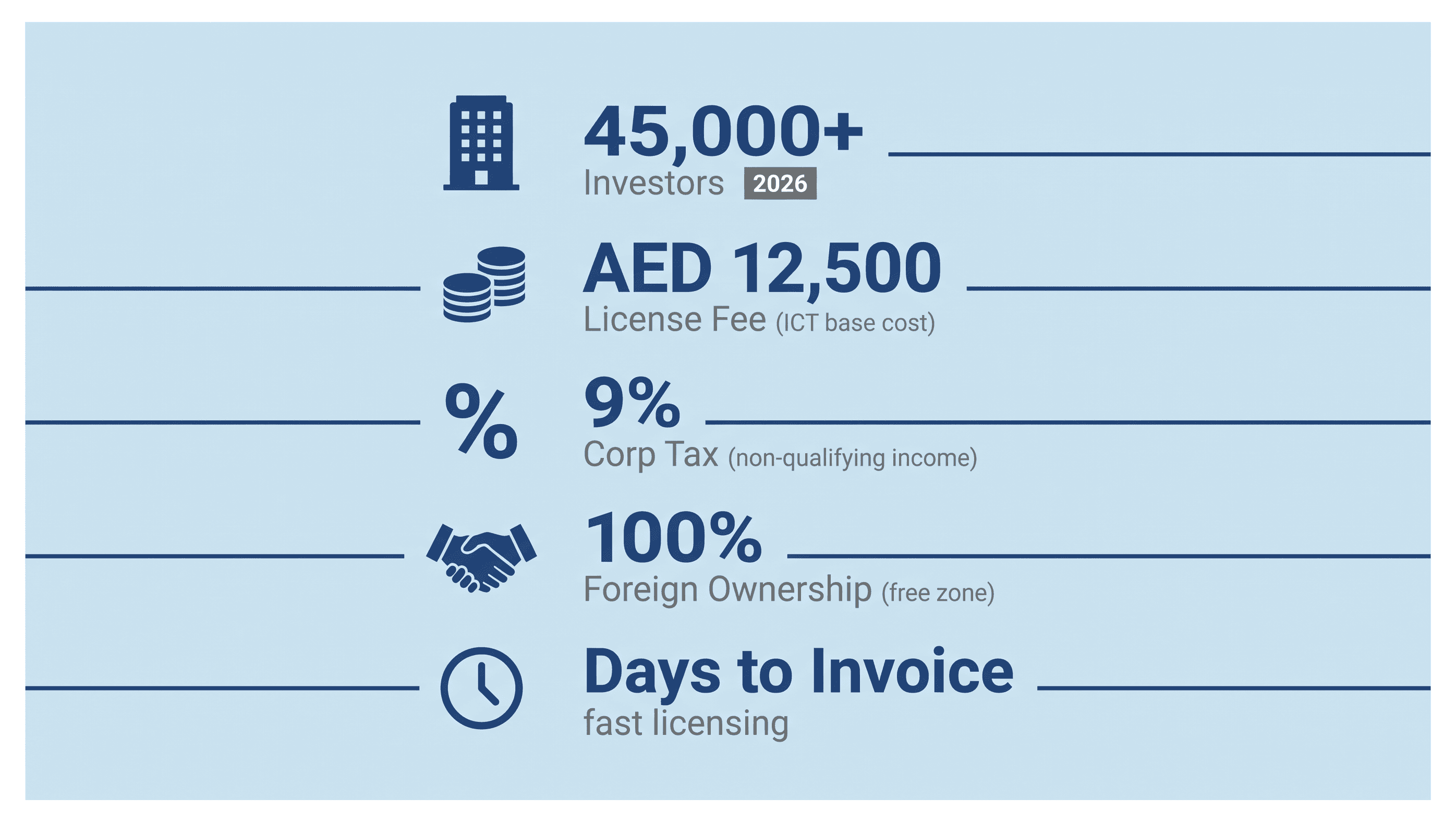
Free zone license fees for tech activities typically start from AED 12,500, with total setup budgets varying by visa quota and office size. Corporate tax under Federal Decree-Law No. 47 of 2022 applies 9% to non-qualifying income, while qualifying free zone income can be taxed at 0% under FTA conditions.
Step-by-Step Process for US Software Companies Opening a Gulf Entity in Dubai
Setting up follows five stages: choose activities and reserve a name, submit incorporation documents, secure the trade license, apply for residency through ICP and GDRFA, then complete Emirates ID biometrics. Most founders finish within days once documents are in order.
US Tax Obligations You Cannot Ignore
American founders remain liable to the Internal Revenue Service (IRS) on worldwide income regardless of Dubai residency. Foreign bank accounts over reporting thresholds require FBAR filing, and FATCA obliges foreign financial institutions to report US-owned accounts, so coordinating both filings with a cross-border accountant is essential.
Common Mistakes American Founders Make When Opening a Dubai Entity
Founders often underestimate visa quota limits tied to office size, delay checking trade name availability, skip FBAR and FATCA filings, and assume tax exemption applies universally. Avoiding these missteps early keeps the setup timeline and budget on track.
In 2026, over 45,000 foreign investors registered new companies in the UAE, and American software founders make up a growing slice of that pipeline as they chase Gulf market access [1]. US software companies opening a Gulf entity in Dubai now have a faster path than most founders expect, and it doesn't require abandoning your US corporate structure. This guide walks through licensing, budgeting, and the paperwork you can't skip back home.
What Is a Gulf Entity for US Software Companies Opening a Gulf Entity in Dubai
A Gulf entity is a locally registered free zone company that lets a US software firm invoice regional clients, hold a UAE bank account, sponsor staff visas, and hire in-market talent, while the parent company stays incorporated in the US for tax purposes. It's a company for American founders wanting a genuine Dubai company for American founders footprint, not a shell.
Why Software Founders Choose Dubai Over Other Hubs
Dubai sits in a time zone that bridges your US morning calls with Asian afternoon deals. That's a real operational edge, not marketing fluff. The regulatory paperwork runs in English, which matters when you're already juggling contracts in three languages.
Licensing for tech activities moves fast, too. A SaaS company relocating from Austin, for instance, can license under an ICT activity code and start invoicing GCC enterprise clients within days. Over 45,000 new investor registrations landed in the UAE in 2026 alone [1], a sign that American founders aren't the only ones noticing.
Free Zone vs Branch Office Structures
A free zone company is a standalone legal entity, separate from your US parent.
A branch office ties liability back to the American parent company.
Free zone setup at Dubai South Business Hub gives full foreign ownership.
Profit repatriation is straightforward under free zone rules, unlike some branch structures.
If you're relocating from the US, our guide for moving to Dubai from the United States covers the visa side of this decision too.
Choosing the Right License for US Software Companies Opening a Gulf Entity in Dubai
Most US software founders need an ICT or technology-focused trade license covering activities like software development, SaaS, IT consulting, or app hosting. Picking precise activities upfront avoids costly amendments later and determines which visa quota and office tier apply.
Common Activities Software Founders Select
Software development and design work.
SaaS platform hosting and delivery.
IT consultancy and systems integration.
App development for mobile and web.
A fintech app developer, for example, might bundle software design with consultancy activities under one license rather than filing two separate applications. Check the full range of options under ICT business license in Dubai before you commit.
Checking Your Preferred Trade Name Early
Naming conflicts cause more setup delays than almost anything else. Reserve your name before you submit any documents. Try to align it with the brand you already use in your US filings, so clients and investors see one consistent identity across both markets. You can run a quick check company name availability search before filing anything else.
Key Facts for US Software Companies Opening a Gulf Entity in Dubai
Feature | Requirement | Detail |
|---|---|---|
License fee starting point: AED 12,500 | Base ICT license cost | Varies by activity bundle and office tier chosen |
Corporate tax on non-qualifying income: 9% | Federal Decree-Law No. 47 of 2022 | Applies once profit crosses the taxable threshold |
Qualifying free zone income: 0% under FTA conditions | Federal Tax Authority (FTA) rules | Requires meeting substance and activity conditions |
Setup timeline: as little as 3 working days | Document readiness dependent | Faster with digital submissions and clean paperwork |
US reporting: IRS worldwide income, FBAR, FATCA | Ongoing US compliance | Independent of UAE tax status |
Understanding Licensing Costs and Tax Rules Before You Move
Free zone license fees for tech activities typically start from AED 12,500, with total setup budgets varying by visa quota and office size. Corporate tax under Federal Decree-Law No. 47 of 2022 applies 9% to non-qualifying income, while qualifying free zone income can be taxed at 0% under FTA conditions.
Corporate Tax and the Federal Tax Authority (FTA)
The FTA administers this system, and filing obligations tie to your company's financial year, not the calendar year automatically. A founder running a two-person software startup in Dubai South Business Hub, for instance, still files annually with the FTA even at 0% rate. Details sit on the Federal Tax Authority portal.
Budgeting for License, Visas, and Office Space
License fees scale with your activity bundle, so bundling three ICT activities costs more than one. Visa quota is tied directly to office tier, meaning a smaller desk space caps how many staff you can sponsor. A two-founder software startup should budget for the license plus two investor visas from day one, not add them later. Run your own numbers on the business setup cost in Dubai calculator before committing to a package.
Step-by-Step Process for US Software Companies Opening a Gulf Entity in Dubai
Setting up follows five stages: choose activities and reserve a name, submit incorporation documents, secure the trade license, apply for residency through ICP and GDRFA, then complete Emirates ID biometrics. Most founders finish within days once documents are in order.
Step 1: Select Activities and Reserve Your Trade Name
Match activities to your actual software business model.
Reserve your name to avoid processing delays.
Confirm activity codes match your US brand positioning.
Step 2: Submit Documents and Secure the License
Passport copies and shareholder details required upfront.
A short business plan speeds activity approval.
License issuance often happens within days, not weeks.
Step 3: Apply for Residency Through ICP and GDRFA
The Federal Authority for Identity, Citizenship, Customs and Port Security (ICP) handles entry permit approval.
The General Directorate of Residency and Foreigners Affairs (GDRFA) processes status change and stamping.
Both steps happen after your license issues, not before.
Founders relocating staff, not just themselves, should review investor visa UAE options early.
Step 4: Complete Emirates ID and Bank Account Setup
Biometrics appointment finalizes your Emirates ID.
Corporate bank account opening follows license and ID issuance.
Banks typically request the same incorporation documents twice.
For the banking side, our bank account opening in UAE resource walks through documentation.
US Tax Obligations You Cannot Ignore
American founders remain liable to the Internal Revenue Service (IRS) on worldwide income regardless of Dubai residency. Foreign bank accounts over reporting thresholds require FBAR filing, and FATCA obliges foreign financial institutions to report US-owned accounts, so coordinating both filings with a cross-border accountant is essential.
How does US tax law treat American founders living in Dubai?
The IRS taxes worldwide income no matter where you live. Dubai residency doesn't remove that duty. You may claim foreign tax credits, but you still file annually with a US-licensed accountant.
FBAR and FATCA Compliance for Dubai Accounts
FBAR reporting kicks in once your combined foreign account balances cross the federal threshold in a calendar year. FATCA separately requires UAE banks to report US-owned accounts directly to the IRS. Missing either filing risks steep penalties, so build this into your annual compliance calendar from year one, not year three.
Common Mistakes American Founders Make When Opening a Dubai Entity
Founders often underestimate visa quota limits tied to office size, delay checking trade name availability, skip FBAR and FATCA filings, and assume tax exemption applies universally. Avoiding these missteps early keeps the setup timeline and budget on track.
Overlooking Visa Quota and Office Size Links
Office tier caps how many visas you can sponsor.
Plan your hiring roadmap before signing any lease.
Upgrading office tier later costs more than planning ahead.
Ignoring US Reporting Deadlines
Missed FBAR deadlines trigger real financial penalties.
FATCA disclosure gaps often get flagged by your own bank.
Coordinate US and UAE filing calendars together, not separately.
Review specific activity requirements under business activities in Dubai before finalizing your license application.
US software companies opening a Gulf entity in Dubai gain regional market access, straightforward licensing, and a workable tax structure, provided founders stay current on IRS, FBAR, and FATCA duties back home. Explore business activities or run the numbers on the cost calculator to set up or buy your license today.
References
Frequently Asked Questions