
Topic Summary
What Is a Commercial Broker License Dubai and How It Differs from Trading
A commercial broker license dubai authorizes commission-based intermediary activity, connecting buyers and sellers without owning goods. A trading license permits buying, importing, and reselling stock directly. The core difference is ownership: brokers earn commissions, traders earn margins on owned inventory.
Why the Commercial Broker License Dubai Choice Matters for Your Business
A commercial broker earns commission on transactions arranged between buyer and seller without taking ownership of goods. A trading license holder buys and sells goods for their own account. Using the wrong license for your actual business model creates a mismatch in your company's activity codes that becomes visible during customs clearance or contract review.
Key Differences Between Commercial Broker License Dubai and Trading License
The main contrasts lie in ownership of goods, revenue structure, warehousing needs, and typical capital outlay. Brokers avoid stock risk and logistics costs, while traders need storage, import documentation, and working capital for inventory, making setup costs and operational complexity differ significantly.
Steps to Choose and Apply for Your Commercial Broker License Dubai
Pick between brokerage and trading by auditing your actual revenue source, then select activity codes, prepare documents, choose a free zone, and submit your application. Most applicants clear initial approval within two to three weeks when paperwork is complete.
Common Mistakes When Picking Between Commercial Broker License Dubai and Trading
Entrepreneurs often select trading licenses by default without checking if they truly hold inventory, underestimate warehousing costs, or register overlapping activities that confuse renewals. Reviewing actual operations before filing avoids costly activity amendments later.
Costs and Timelines for a Commercial Broker License Dubai
A commercial broker license dubai typically runs AED 12,000 to 18,000 in registration, with visa costs of AED 3,000 to 5,000 per person. Most applications clear within two to three weeks once documents are complete and verified.
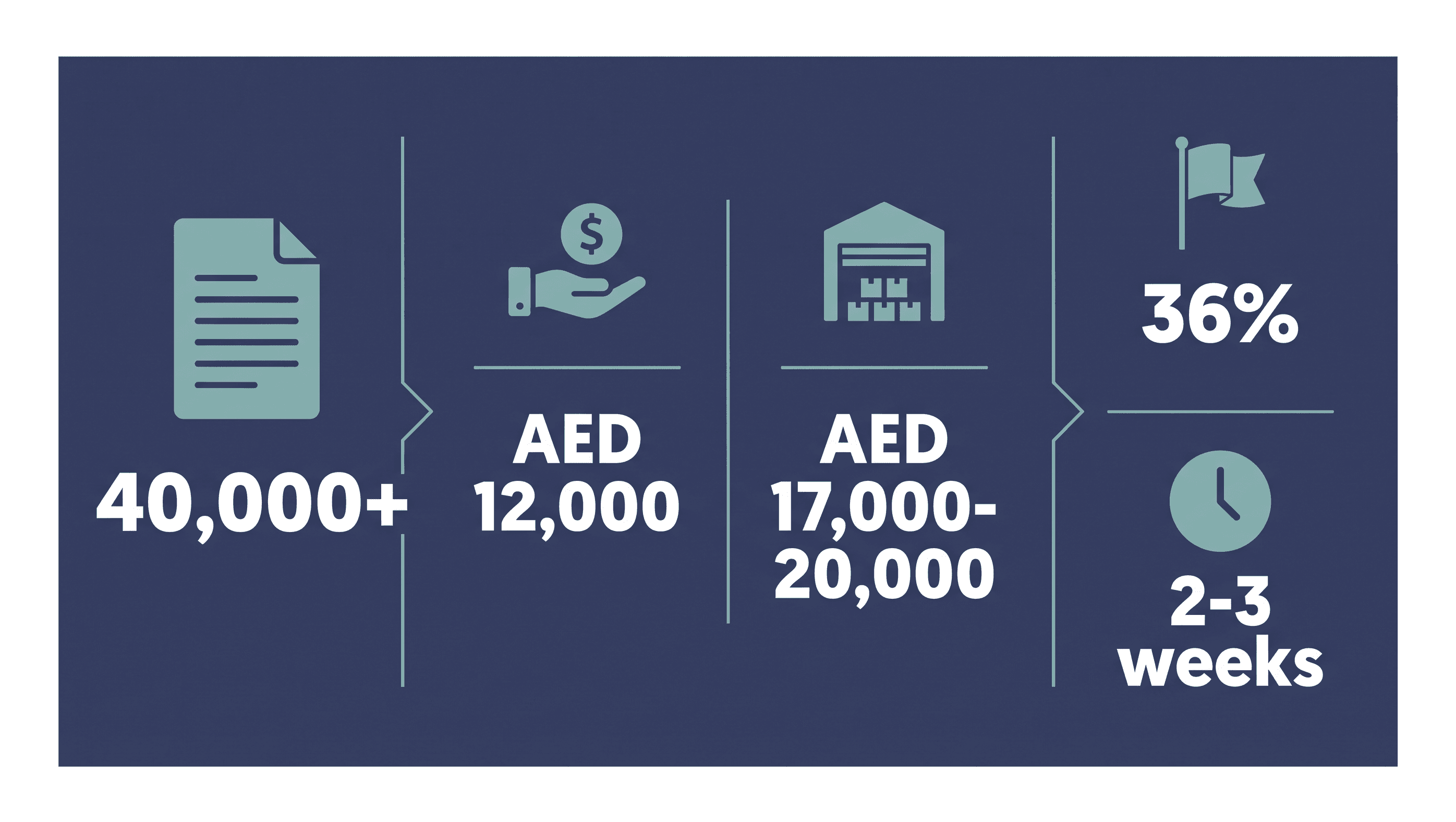
In 2026, Dubai processes more than 40,000 new business licenses annually [1], and a growing share of founders mix up brokerage and trading categories before they even apply. A commercial broker license dubai covers one activity model. A trading license covers a completely different one. 36% of licensing amendments filed with Dubai authorities relate to activity mismatches [2]. Setup fees for brokers typically run AED 12,000 [3]. Trading setups often add AED 5,000 to 8,000 more for storage-linked documentation [3]. Processing for either activity averages 2 to 3 weeks when paperwork is complete [4]. This guide breaks down what a commercial broker license dubai actually permits versus a standard trading license, so you register the right activity the first time.
What Is a Commercial Broker License Dubai and How It Differs from Trading
A commercial broker license dubai authorizes commission-based intermediary activity, connecting buyers and sellers without owning goods. A trading license permits buying, importing, and reselling stock directly. The core difference is ownership: brokers earn commissions, traders earn margins on owned inventory.
Defining the Brokerage Activity Scope
Brokerage under a commercial broker license dubai means you facilitate a deal and collect a fee. You never touch the goods. Picture a broker connecting a steel importer in Sharjah with a regional buyer in Oman, earning a fixed commission on the transaction value without ever warehousing a single beam.
This structure is classified under the international system for economic activities, which groups intermediary trade services separately from wholesale and retail operations (unstats.un.org, 2024). It's a clean, asset-light model that suits agents, commodity brokers, and commission-based representatives.
Defining the Trading License Scope
A trading license covers direct buying and reselling of physical goods. You own the inventory, you store it, and your margin comes from the spread between purchase and resale price. A general trading company importing electronics for resale into Gulf Cooperation Council markets is a textbook example.
This category demands working capital tied up in stock, plus logistics planning. Understanding the different types of trade licenses in Dubai helps clarify which sub-category fits your product line before you commit.
Why the Commercial Broker License Dubai Choice Matters for Your Business
Choosing the wrong license restricts what you can legally invoice for and can trigger compliance issues during audits or bank account setup. Matching your license to your actual revenue model protects you from activity mismatches that regulators flag during renewals or inspections.
Commercial Broker License vs Trading License Comparison
Feature | Commercial Broker License | Trading License |
|---|---|---|
Inventory ownership | None, you never hold stock | Full ownership until resale |
Revenue model | Commission per transaction | Margin on purchase vs resale |
Startup capital | Lower, no stock purchase needed | Higher, inventory financing required |
Warehousing needs | Not required | Storage and logistics required |
Typical activities | Agency deals, commodity brokering | Import, export, general resale |
Compliance and Banking Implications
Banks run KYC checks against your license activity.
Invoicing outside your activity raises red flags.
Renewal audits verify real operations match the license.
A brokerage invoicing as a trader can face account freezes during a bank's know-your-customer review, since the invoice descriptions won't match the registered activity code.
Revenue Model Fit
Commission accounting and margin accounting are treated differently for tax reporting purposes under UAE corporate tax rules (tax.gov.ae, 2024). If you structure client contracts around a fee percentage but register as a trader, your tax filings and contracts won't align, which creates friction at year-end reconciliation.
Key Differences Between Commercial Broker License Dubai and Trading License
The main contrasts lie in ownership of goods, revenue structure, warehousing needs, and typical capital outlay. Brokers avoid stock risk and logistics costs, while traders need storage, import documentation, and working capital for inventory, making setup costs and operational complexity differ significantly.
Ownership and Risk Exposure
Brokers carry zero inventory risk.
Traders absorb price swings and storage costs.
Insurance needs differ sharply between the two.
Capital and Setup Cost Differences
Setup cost ranges typically sit between AED 12,000 and AED 20,000, depending on activity and office requirements [3]. Brokers need less upfront capital since there's no stock to finance. Traders, on the other hand, often need warehousing contracts bundled into their lease before approval. Visa allocation also differs by activity code, so general trading license vs activity-specific license in Dubai comparisons are worth reading before picking your code.
How much capital do you need to start a brokerage versus a trading company in Dubai?
Brokers often start with AED 12,000 and no stock purchase. Traders need extra working capital for inventory, plus warehousing fees, pushing total outlay well beyond basic registration costs.
Steps to Choose and Apply for Your Commercial Broker License Dubai
Pick between brokerage and trading by auditing your actual revenue source, then select activity codes, prepare documents, choose a free zone, and submit your application. Most applicants clear initial approval within two to three weeks when paperwork is complete.
Step 1: Audit Your Revenue Model
List your last 10 invoices.
Check if income is commission or margin.
Confirm activity before you register.
Step 2: Select the Correct Activity Code
Match your activity to ISIC-based descriptions.
Verify the code with Dubai South Business Hub advisors.
Avoid requesting overlapping dual activities.
Reviewing commercial brokers trading license in Dubai cost and requirements upfront saves you a second filing round later.
Step 3: Submit Documents and Secure Visas
Prepare passport copies and a business plan.
Arrange a lease agreement for office space.
Apply for residency visas tied to your license, verified through the immigration authority's identity platform (icp.gov.ae, 2024).
Common Mistakes When Picking Between Commercial Broker License Dubai and Trading
Entrepreneurs often select trading licenses by default without checking if they truly hold inventory, underestimate warehousing costs, or register overlapping activities that confuse renewals. Reviewing actual operations before filing avoids costly activity amendments later.
Defaulting to Trading Without Inventory
Overestimating storage needs you don't have.
Paying unnecessary warehousing fees for no reason.
Creating an invoicing structure that doesn't match reality.
A startup brokering deals between two parties still often registers as a trader by default, then wonders why renewal audits flag the mismatch.
Ignoring Activity Amendment Costs
Late activity changes cost both time and additional fees. Renewal delays stack up when codes don't match operations, and in some cases, banks pause account access until the mismatch is resolved. It's cheaper to get the activity right the first time than to amend it mid-year.
Costs and Timelines for a Commercial Broker License Dubai
A commercial broker license dubai typically runs AED 12,000 to 18,000 in registration, with visa costs of AED 3,000 to 5,000 per person. Most applications clear within two to three weeks once documents are complete and verified.
Breaking Down Setup Fees
Registration and license fees: AED 12,000 to 18,000.
Office lease requirements vary by package.
Visa packages bundle with the license application.
Trading license applicants should budget extra for storage, since the setup cost ranges vary AED 12,000-20,000 depending on activity type and warehouse needs.
Processing Timeline Expectations
Document readiness speeds up approval considerably. Most applicants see a 2 to 3 week turnaround once paperwork is in order (dubaichamber.com, 2024). Delays usually stem from incomplete lease documents or mismatched activity codes submitted at the last minute.
Choosing between a commercial broker license dubai and a trading license comes down to whether you own the goods you sell or simply connect buyers and sellers for a fee. Get this wrong and you'll face bank friction, renewal delays, and amendment costs down the line. Get it right and your license matches exactly what you invoice for, every time.
Follow the revenue audit steps above before you file. Review your revenue model with Dubai South Business Hub advisors before filing your application to avoid activity mismatches later.
References
Frequently Asked Questions