Topic Summary
100% Foreign Ownership With No Local Sponsor
Dubai South Commercial District allows foreign investors to retain full ownership of their company from day one. There is no requirement to bring in a local sponsor, which simplifies control and profit repatriation.
Licenses Start From AED 12,500
A standard DSBH license begins at AED 12,500 and includes up to five approved business activities at no extra cost. licensing in one working day for eligible activities is available through the Dubai South Business Hub digital platform.
Over 3,500 Approved Business Activities
The district covers a wide range of retail and service categories, including fashion, electronics, food and beverage, IT support, business consulting, and beauty and wellness. Businesses should confirm their exact activity code before applying.
Prime Location Next to Al Maktoum Airport
The 145 sq km zone sits directly beside Al Maktoum International Airport and close to Jebel Ali Port, giving businesses on-site access to air freight and sea cargo under a single DSBH license. This integrated logistics setup is difficult to replicate from a generic Dubai address.
A Fast-Growing Customer Base on Your Doorstep
Dubai South is a planned city designed to accommodate over one million residents at full build-out, already drawing a large daily workforce and airport visitors. This growing catchment gives retail and service businesses a steady stream of customers without competing in saturated city-centre locations.
Six Clear Steps to Get Your License
The setup process follows six straightforward steps: choose your activity code, reserve a trade name, apply for your license, submit documents, receive your license, and open a UAE bank account. The digital platform makes it possible to complete much of this process quickly and remotely.
In 2026, a growing community of businesses operate through Dubai South Business Hub Free Zone, and the Dubai South Commercial District is one of the UAE's fastest-growing retail and service hubs. The zone covers 145 sq km next to Al Maktoum International Airport. Licenses start from AED 12,500. Foreign investors keep 100% ownership with no local sponsor. Over 3,500 business activities are approved. licensing in one working day for eligible activities is available through the DSBH digital platform (Dubai South Business Hub, 2026).
This guide covers what the Dubai South Commercial District is, which retail and service activities are approved, how to get a license, what it costs, and what rules apply.
What Is Dubai South Commercial District
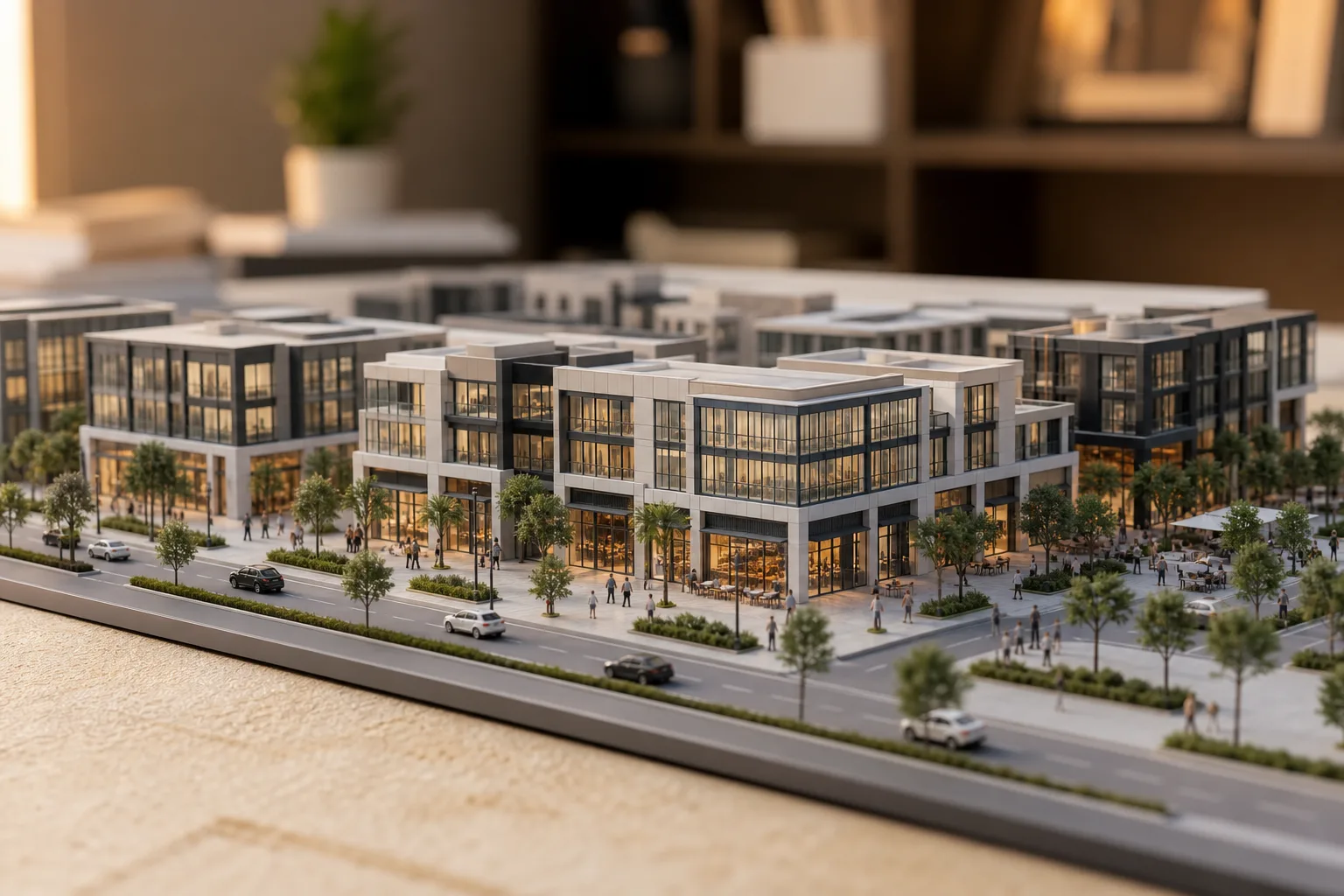
The Dubai South Commercial District is a free zone retail and service hub built around Al Maktoum International Airport. It lets foreign investors own 100% of their company, trade under a DSBH license, and reach customers across the UAE and wider region from a single base.
The district sits inside the Dubai South free zone. It is zoned for retail outlets, showrooms, food and beverage units, and personal service providers. Over 3,500 business activities are approved. Five activities are included in a standard license at no extra cost.
Approved activity types include:
Retail outlets and showrooms
Food and beverage units
Personal care and wellness services
Business consulting and advisory
IT and digital services
The district works best for businesses that want a UAE base without a local sponsor. Foreign investors keep 100% ownership from day one (u.ae, 2026). It suits retailers serving airport travellers, food and beverage operators, personal care providers, business service firms, and regional distributors near Jebel Ali Port.
Why Location Makes the Commercial District Work
The Dubai South Commercial District sits next to Al Maktoum International Airport and close to Jebel Ali Port, giving retail and service businesses fast access to air freight, sea cargo, a large resident workforce, and a growing catchment of over 1 million planned residents.
An electronics retailer can import goods by air into Al Maktoum, clear them through Dubai Customs, store them in a zone warehouse, and display them in a Commercial District showroom, all under one DSBH license.
Logistics factor | Dubai South Commercial District | Generic Dubai address |
|---|---|---|
Airport access | Al Maktoum on site | Drive to DXB or Al Maktoum |
Port access | Jebel Ali nearby | Varies by location |
Zone warehouse link | Direct, same license | Separate arrangement needed |
Customs clearance | Dubai Customs on site | Off-site clearance |
Dubai South is a planned city designed to house over 1 million residents on full build-out. The zone already draws a large daily workforce, residents, and airport visitors. A café opened in the Commercial District serves zone workers during the week and airport travellers at weekends, with no need to compete for foot traffic in a saturated city-centre spot.
Retail and Service Activities Approved in the Commercial District
DSBH approves over 3,500 activities. Each license lists up to five activities, with the first five included at no extra cost.
Approved retail types include fashion and apparel, electronics, food and beverage outlets, furniture and homewares showrooms, and specialty grocery. A trading license covers a wide range of these types.
Approved service types include business consulting, IT support, marketing and media production, education and training, and beauty and wellness. A services license starts from AED 12,500 with same-day issuance available. Always confirm your exact activity code using the approved activities list before you apply.
6 Steps to Set Up in Dubai South Commercial District
Setting up takes six steps: choose your activity, reserve your trade name, apply for your license, submit your documents, get your license issued, and open your UAE bank account.
Step 1, pick your activity code: Check the approved list and confirm your retail or service activity is on it.
Step 2, check your trade name: Search name availability and book the name you want through the DSBH portal.
Step 3, choose your license package: Decide how many visas you need and whether you want a physical office, flexi-desk, or virtual address.
Step 4, send your papers: Passport copy, photo, and any docs the activity needs.
Step 5, receive your license: licensing in one working day for eligible activities is available on the DSBH digital platform for eligible applications.
Step 6, open your bank account: Apply to a UAE bank once your license is in hand.
Licenses start from AED 12,500. Use the DSBH cost calculator to get a figure for your exact setup before you commit. Same-day issuance applies to most standard activities. Activities needing third-party regulatory approval, such as food safety or healthcare, may take longer.
Mainland vs Free Zone: Which Suits Your Business
A free zone DSBH license suits retail and service businesses focused on zone customers, international clients, or import-led trade. A mainland DET license gives broader UAE market access. The right choice depends on where your customers are and how much office space you need.
Feature | Free zone (DSBH) | Mainland (DET) |
|---|---|---|
Foreign ownership | 100% – no local partner needed | 100% permitted for most activities since 2021 |
UAE market access | Mainly zone and international clients | Open UAE-wide trade, no restriction |
License cost from | AED 12,500 | Typically higher; varies by activity |
Office requirement | Flexi-desk options available | Physical office usually needed |
Corporate tax rate | 0% if FTA qualifying conditions are met | 9% standard rate above AED 375,000 profit |
Setup speed | Same-day issuance available | Typically 3 to 7 business days |
Mainland DET licenses let you trade directly with any customer anywhere in the UAE. A restaurant chain planning 10 outlets across Dubai would likely need a mainland DET license. Some regulated activities, such as healthcare clinics, require a mainland or emirate-level license regardless of where you set up.
Costs and Key Facts
DSBH licenses start from AED 12,500. The fee covers your trade license and up to five activities. Visa packages, office space, and activity-specific approvals add to the total.
License fee from | AED 12,500 |
|---|---|
Activities included | 5 at no extra cost |
Renewal period | Annual |
Same-day issuance | Available on the DSBH digital platform |
Office options | Flexi-desk, virtual address, or physical unit |
Visa packages are tied to your license. Flexi-desk suits service businesses with no daily office need. Virtual address is the lowest-cost option for remote-first firms. Physical units are needed for retail showrooms and food and beverage outlets. Retail businesses with a physical unit can apply for more visas based on floor area. See the residency services page for full visa detail.
What Retail and Service Businesses Must Comply With
Retail and service businesses in Dubai South must register for corporate tax with the FTA, renew their license each year, and keep financial records for at least 7 years.
Every DSBH company must register for corporate tax with the FTA from the point of setup, whatever its size or turnover. A free zone company can pay 0% corporate tax if it meets the Qualifying Free Zone Person conditions the FTA sets (Federal Tax Authority, 2026). Registration is required regardless of which rate applies.
VAT registration is needed once your taxable turnover hits the mandatory threshold. Keep your books for at least 7 years.
Sector-specific rules also apply:
Food and beverage: Dubai Municipality food safety approval needed
Healthcare and wellness: Dubai Health Authority (DHA) or MOHAP approval may apply
Education and training: KHDA approval needed for certain course types
Regulated goods such as medicines: extra permits from the relevant authority required
Check the DSBH business support page for help with sector approvals and government transactions.
The Dubai South Commercial District gives retail and service businesses a fast, low-cost route into one of the UAE's highest-growth zones. Licenses start from AED 12,500, foreign investors keep full ownership, and licensing in one working day for eligible activities is available through the DSBH digital platform. Use the DSBH cost calculator to work out your setup cost, confirm your activity is approved, and start your application today.
References
u.ae (u.ae)
Federal Tax Authority (tax.gov.ae)
DHA (dha.gov.ae)
Frequently Asked Questions