Free Zone vs Mainland Company Setup in Dubai: Which Option Achieves Your Business Goals?

Topic Summary
Free Zone vs Mainland: Know the Core Difference
Free zones offer 100% foreign ownership and tax efficiency but restrict direct UAE market sales. Mainland companies grant full local market access — and 2021 reforms now allow 100% foreign ownership in most mainland sectors too.
Dubai South Specializes in Logistics and Trade
Dubai South free zone is purpose-built for aviation, freight forwarding, e-commerce, and light manufacturing — all aligned with Al Maktoum International Airport. If your business fits ISIC sections H (Transportation) or G (Wholesale Trade), you're in the right zone.
Prepare These Documents Before You Apply
You'll need passport copies with six months' validity, a finalized business activity list mapped to DSFZA categories, and three proposed company names. Submitting incomplete documents is the single biggest cause of avoidable registration delays.
Registration Takes 7–15 Business Days
The Dubai South free zone registration process runs from name reservation through license issuance in as little as 10 business days for straightforward applications. Budget AED 12,500–AED 30,000 depending on your activity type and office package.
Select Every Activity Upfront — Not Later
Adding business activities after license issuance costs AED 1,000–AED 3,000 per amendment and takes up to seven business days. Map your 18-month activity roadmap before submitting your initial application to avoid this entirely.
Your Setup Isn't Complete Without a Bank Account
UAE corporate bank account opening takes 4–8 weeks due to rigorous KYC requirements. You'll need your trade license, Memorandum of Association, Establishment Card, and Emirates ID as a minimum document set before most banks will proceed.
VAT and Renewals Require Proactive Management
Register for UAE VAT with the Federal Tax Authority once taxable turnover exceeds AED 375,000 annually. Free zone licenses renew yearly — a lapsed license invalidates your visa and Establishment Card, so act on renewal notices immediately.
You're ready to launch in Dubai, but the moment you search how to get a business license in Dubai South free zone, you're hit with two paths that look almost identical, and choosing the wrong one can cost you months of restructuring and real money. This guide breaks down the free zone vs. mainland decision with specifics, then walks you through the exact registration steps at Dubai South so you can move forward with a clear plan. Estimated timeline: 7–15 business days. Prerequisites: passport copies, a finalized activity list, and a defined ownership structure.
What Is a Free Zone Company in Dubai?
A free zone company in Dubai is a business entity registered within a designated economic zone offering 100% foreign ownership and streamlined customs procedures. These zones operate under their own regulatory authority, separate from the UAE mainland, and restrict direct trading with UAE consumers without a licensed mainland distributor.
Dubai South Free Zone is governed by the Dubai South Free Zone Authority (DSFZA), a completely separate regulatory environment from Dubai Economy and Tourism (DET), which oversees mainland businesses. A U.S.-based logistics startup registering here operates under DSFZA rules entirely.
When it comes to business activities in Dubai South, the free zone specializes in aviation, logistics, freight forwarding, e-commerce, light manufacturing, and trading, aligned with its proximity to Al Maktoum International Airport. Permitted activities span ISIC Rev.4 sections including H (Transportation and Storage), G (Wholesale and Retail Trade), C (Manufacturing), and J (Information and Communication).
Free Zone vs. Mainland: The Core Differences
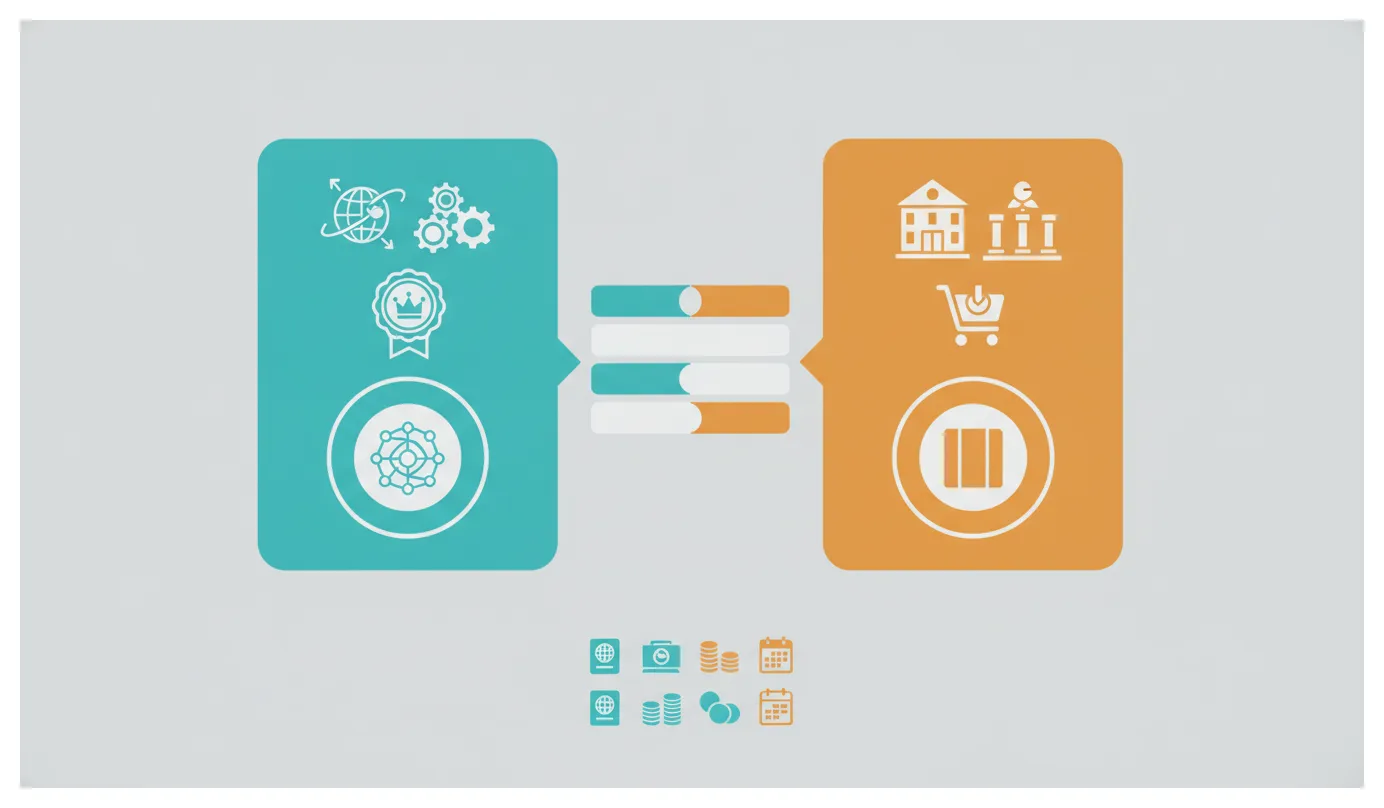
The core difference is market access. Free zone companies offer 100% foreign ownership and tax efficiency but can't sell directly to UAE consumers. Mainland companies can trade freely across the UAE, and following the 2021 Commercial Companies Law amendments, 100% foreign ownership is now permitted in most mainland sectors too.
Both structures allow full profit repatriation with no withholding tax on dividends. Qualifying free zone income is subject to 0% corporate tax under the UAE Corporate Tax Law (effective June 2023). A U.S. entrepreneur running a SaaS business from Dubai South can repatriate 100% of profits to a U.S. bank account with zero UAE withholding tax applied.
On cost, Dubai South free zone license costs start from approximately AED 12,500 (roughly $3,400 USD) annually with a flexi-desk option. Mainland setups typically run AED 15,000–AED 50,000+ depending on activity and office space. A solo entrepreneur testing the market can enter via a Dubai South flexi-desk package at under $4,000 USD all-in for year one.
If your revenue is primarily international, a trading license in Dubai's free zone is operationally leaner. If you're targeting local UAE consumers or government contracts, a mainland entity makes more commercial sense.
Prerequisites Before You Register
Before starting free zone business registration in Dubai, gather these documents: color passport scans for all shareholders (minimum 6 months validity), a finalized business activity list mapped to DSFZA-approved categories, and three proposed company names checked against DSFZA naming rules.
Vague descriptions like "general trading" delay approval, be specific. Submitting a name like "Al Maktoum Logistics LLC" would be flagged immediately for implying government affiliation. Always check your company name availability before your first submission.
Budget AED 12,500–AED 30,000 ($3,400–$8,200 USD) for license fees, registration, and your first visa. Activities requiring additional approvals, healthcare, food handling, add 2–4 weeks to the standard 7–15 business day timeline.
How to Get a Business License in Dubai South Free Zone: Step by Step
Here's the exact process for free zone business registration in Dubai, step by step.
Step 1: Select Your Business Activity and Legal Structure
Log into the DSFZA portal and select every activity your business will conduct, adding activities post-registration costs AED 1,000–AED 3,000 per amendment. Choose a Free Zone Establishment (FZE) for a single shareholder or a Free Zone Company (FZCO) for 2–50 shareholders. An e-commerce entrepreneur should add "Warehousing and storage" alongside "Retail sale via internet" if they plan to hold inventory, missing this creates operational restrictions later.
Step 2: Reserve Your Name and Submit the Application
Submit three proposed names through the DSFZA portal, availability confirmation typically returns within 1–2 business days. Complete the online application with shareholder details, activity selections, office package, and capital structure, attaching all document scans. You'll receive an initial approval email with a reference number within 3–5 business days, save it for every subsequent transaction.
Step 3: Sign Documents, Pay Fees, and Collect Your License
Upon initial approval, DSFZA issues your Memorandum of Association (MOA). Review it carefully, sign via the e-signing portal or before a DSFZA-approved notary, and return it within the stipulated timeframe. Pay all fees through the DSFZA payment portal and retain receipts, your official trade license PDF arrives within 2–5 business days of payment, displaying a QR code UAE banks and authorities use to verify your registration.
Step | Action Required | Method | Timeframe |
|---|---|---|---|
Receive MOA | Review your Memorandum of Association issued by DSFZA | Delivered via DSFZA portal upon initial approval | Immediately after approval |
Sign MOA | Sign the MOA and return within the stipulated deadline | DSFZA e-signing portal or DSFZA-approved notary | Within stipulated timeframe |
Pay Fees | Submit all applicable licensing and registration fees | DSFZA online payment portal; retain all receipts | After MOA signing |
Collect Trade License | Download your official trade license PDF with QR code | DSFZA portal; QR code verified by UAE banks and authorities | 2–5 business days after payment |
Step 4: Apply for Your Establishment Card and Investor Visa
Your Establishment Card is the company's immigration file and is mandatory before any visa processing. Apply for your UAE residency visa through the DSFZA immigration portal, the process includes a medical fitness test, Emirates ID biometrics. Budget 10–15 business days. Once your Emirates ID is active, you can open a UAE corporate bank account.
Common Pitfalls to Avoid
The most common error entrepreneurs make is selecting too few business activities upfront. Under ISIC classification principles, separately billable client-facing services must each appear on your license, ancillary internal functions don't, but anything you invoice a client for does. A consultant adding "HR Recruitment Services" after launching with only "Management Consulting" must file a formal amendment.
Banking deserves its own warning. UAE banks are running rigorous KYC checks, expect 4–8 weeks for corporate bank account opening in Dubai and prepare a detailed business plan, source of funds declaration, and client profile summary before you apply.
Free zone licenses renew annually. DSFZA sends renewal notices 60 days before expiry, but acting on them is your responsibility. An entrepreneur who let their Dubai South license lapse by 30 days faced a AED 5,000 reinstatement penalty plus a mandatory re-submission of all KYC documents, entirely avoidable with a calendar reminder.
After Your License: Confirming You're Fully Operational
You've successfully completed your Dubai South free zone company setup when you hold an active trade license, a valid Establishment Card, at least one UAE residence visa, and a funded corporate bank account. Verify your license on the DSFZA public register, this is what banks and government entities use to validate your business.
Register for UAE VAT with the Federal Tax Authority (FTA) if your taxable turnover exceeds AED 375,000 annually. Voluntary registration is available from AED 187,500, which can benefit input tax recovery. Implement cloud-based accounting software from day one, UAE corporate tax compliance requires financial records maintained for a minimum of 7 years.
When you're ready to scale, evaluate whether a mainland branch makes sense based on where your UAE revenue is actually coming from. That decision should be data-driven, not assumed. If you want to start your business in Dubai South, the free zone route delivers 100% foreign ownership, a fast setup timeline, and a clear path to full operational status within 15 business days.
Your success criteria are straightforward: active license, funded corporate account, valid residence visa. Map your business activities, reserve your company name, and submit your application this week, everything else builds from there.
References
Frequently Asked Questions