
Topic Summary
Why a UAE Corporate Bank Account Matters
A UAE corporate bank account lets you receive payments in AED and major foreign currencies, process payroll, and establish local financial credibility. It is also generally required for tax registration and visa-related transactions.
Banks That Accept Free Zone Companies
Major options include Emirates NBD, Mashreq, RAKBANK, Commercial Bank of Dubai, HSBC, and Standard Chartered. Digital-first platforms like Wio Bank and Liv Business are growing in popularity for companies with straightforward transaction profiles.
Essential Documents You Must Prepare
Core requirements include your trade license, certificate of incorporation, memorandum and articles of association, passport copies, Emirates ID, proof of address, and a business plan. Shareholders may also need to provide up to six months of personal bank statements.
How Activity Codes Affect Your Approval
Banks use your activity codes to assess risk during KYC and AML checks, so accuracy is critical. Businesses in financial services, crypto, pharmaceuticals, or precious metals trading face significantly more detailed scrutiny.
Realistic Timelines to Set Your Expectations
Simple consultancy or trading businesses with clean shareholder structures typically open accounts within two to four weeks. Complex structures or high-risk activity categories can extend the process to several months.
Apply to Multiple Banks Simultaneously
Submitting applications to more than one bank at the same time is common practice and widely recommended. Approval timelines and eligibility criteria vary significantly between institutions, so parallel applications reduce overall waiting time.
A corporate bank account is one of the most practically important steps after receiving your Dubai free zone trade license, and it is consistently the one that surprises new business owners with its complexity. Unlike the license itself, which can be issued within one business day at Dubai South Business Hub Free Zone, bank account opening in the UAE involves a due diligence process that varies significantly by bank, business type, and the nationality and background of the shareholders involved. This guide sets out what to expect, what documents you will need, and how to approach the process most efficiently.
Do I Need a UAE Corporate Bank Account?
For most business purposes, yes. A UAE corporate bank account allows you to receive client payments in AED and major foreign currencies, pay suppliers and staff, process payroll, receive invoice payments, and establish your business as a credible UAE-based entity. Some international businesses use offshore accounts for initial operations, but a UAE account is generally required for tax registration, visa-related transactions, and building a local financial track record. For a detailed walkthrough of the full bank account opening process in the UAE, see the bank account guide. For more detail, see our guide on how foreigners open bank accounts in Dubai. For more detail, see our guide on fixing a rejected UAE business bank account.
Which Banks Accept Dubai Free Zone Companies?
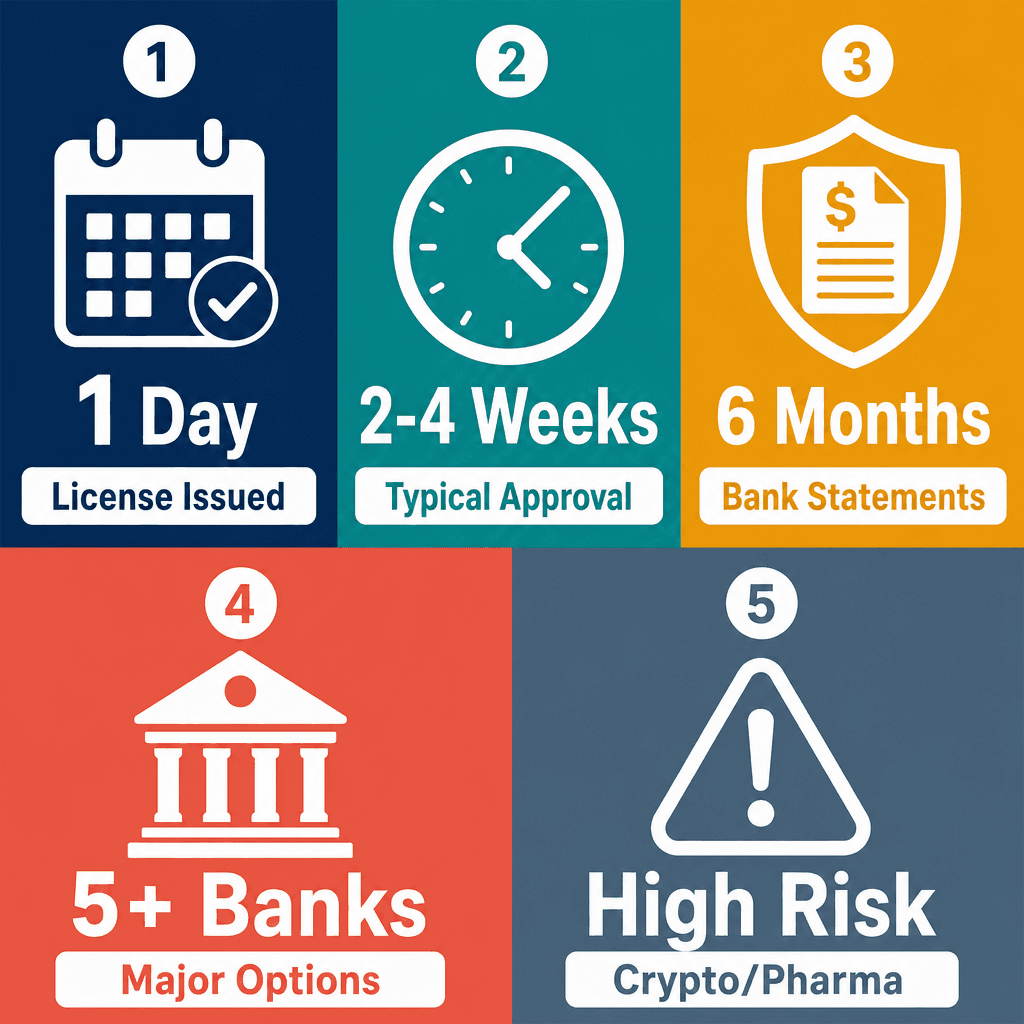
Most major UAE banks accept free zone company accounts, though each has its own eligibility criteria, minimum balance requirements, and risk appetite. Banks commonly used by Dubai free zone companies include Emirates NBD, Mashreq, RAKBANK, Commercial Bank of Dubai, and various international banks with UAE operations including HSBC and Standard Chartered. Digital-first business banking options such as Wio Bank and Liv Business are increasingly popular for free zone companies with straightforward transaction profiles. For more detail, see our guide on ICP smart services for UAE immigration and visas. For more detail, see our guide on Dubai free zone bank account requirements.
Documents Required for Corporate Bank Account Opening
Standard documentation requirements across most UAE banks include:
Valid trade license from Dubai South Business Hub Free Zone
Certificate of incorporation or company registration certificate
Memorandum and articles of association
Passport copies and Emirates ID for all shareholders and signatories
Proof of residential address for all shareholders
Business plan or description of business activities
Evidence of source of funds for initial deposits
Six months of personal bank statements for shareholders in some cases
Requirements vary by bank and by the risk profile of your business type. High-risk categories including financial services, crypto, pharmaceuticals, and precious metals trading typically require more extensive documentation.
What Activity Codes Mean for Bank Approval
UAE banks conduct Know Your Customer and Anti-Money Laundering checks on all new accounts. Your activity codes signal to the bank what your business does, and certain activities attract higher scrutiny. Trading companies, financial services businesses, and businesses with international transaction flows involving higher-risk jurisdictions will face more detailed due diligence. Selecting accurate activity codes on the business activities page and being able to explain your business model clearly is essential for a smooth approval.
Timeline and What to Expect
Account opening timelines vary from one week to several months depending on the bank and your business profile. Straightforward consultancy or trading businesses with simple shareholder structures and clear income sources typically complete the process in two to four weeks. More complex structures take longer. Applying to more than one bank simultaneously is common practice and sensible given the variability in approval timelines.
Citations
Central Bank of the UAE.. centralbank.ae. CBUAE, 2024.
UAE Government Portal.. u.ae. UAE Government, 2024.
Federal Tax Authority.. tax.gov.ae. FTA UAE, 2023.
Federal Authority for Identity, Citizenship, Customs and Port Security.. icp.gov.ae. ICP UAE, 2024.
Dubai Economy and Tourism.. dubaidet.gov.ae. DET Dubai, 2024.
Frequently Asked Questions