Topic Summary
What Is a musical instruments trading license dubai and What It Covers
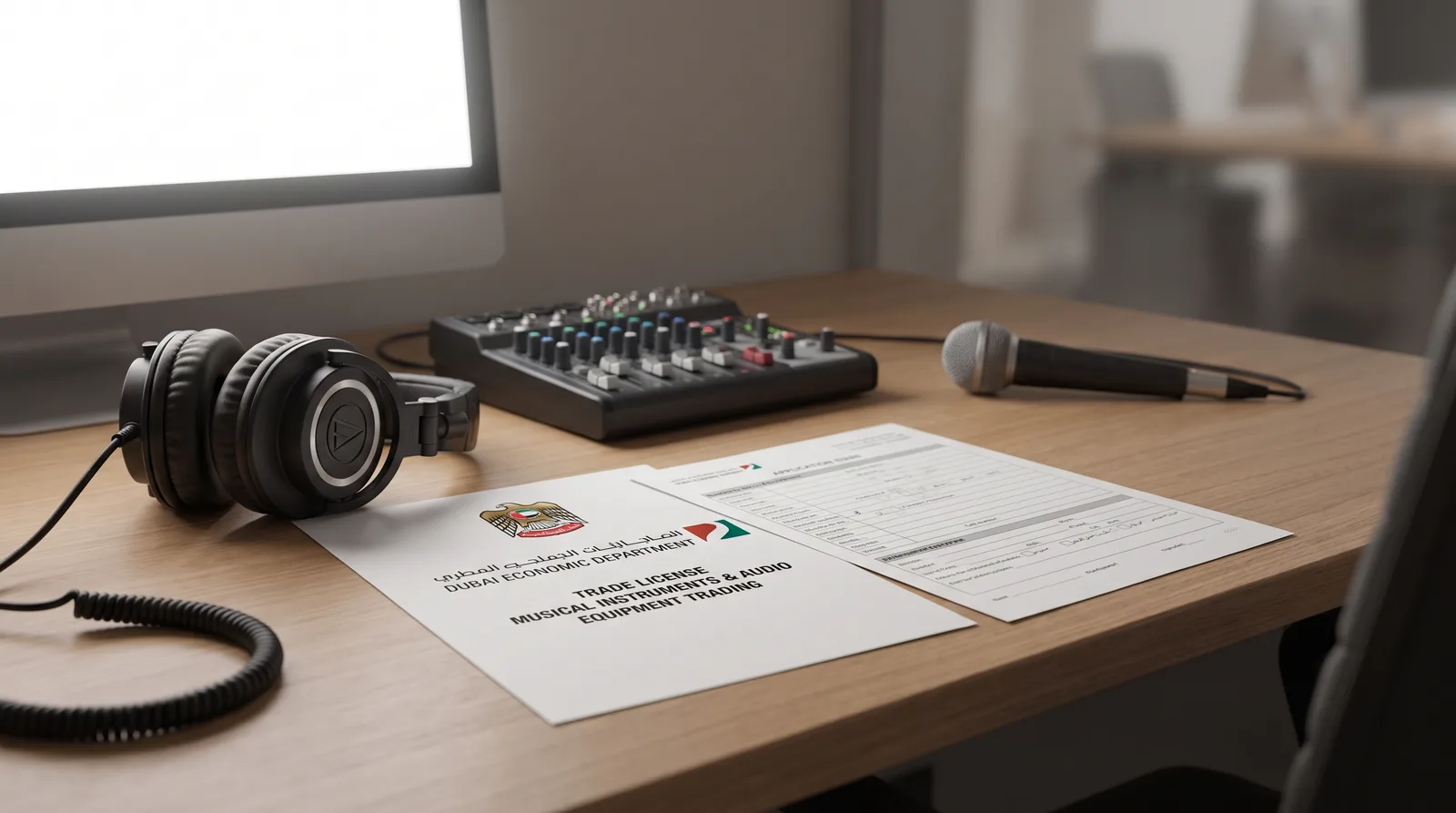
A musical instruments trading license dubai lets you import, stock, and resell instruments, speakers, and studio equipment legally through a free zone company. It covers wholesale and retail trade of musical and audio goods, along with online sales, as long as activities match your license description.
Approvals You Need Before You Trade audio equipment trading license dubai
Audio and electronic equipment imported into the UAE must carry a TDRA type approval certificate or conform to the applicable Emirates standard. Products without this approval are held at customs until the certification is presented. Confirming which items in your product range require type approval before your first shipment lands prevents clearance delays.
Costs Behind a sound equipment trading license cost
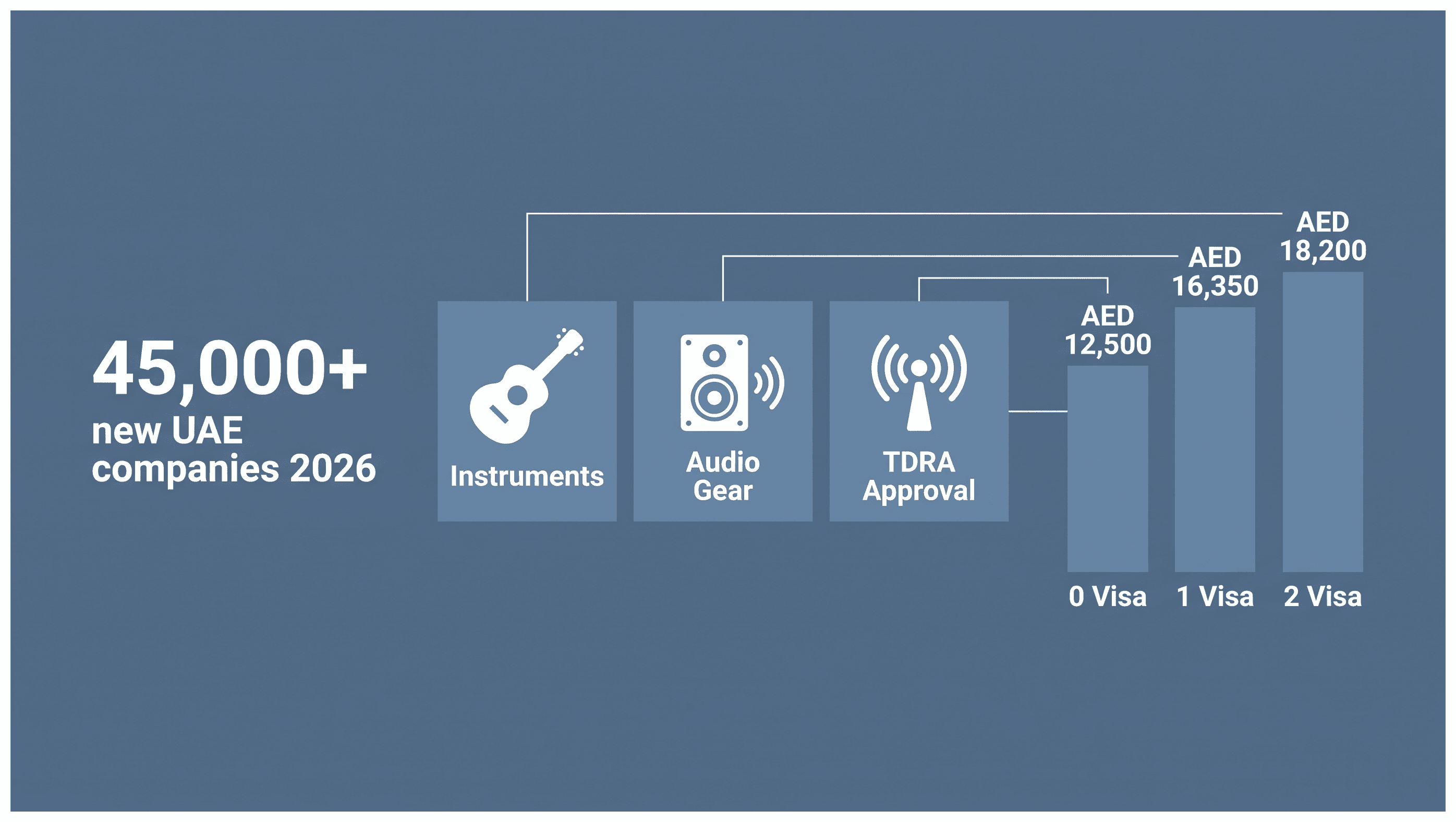
A sound equipment trading license cost at Dubai South Business Hub Free Zone starts at AED 12,500 for the 0 Visa Package. A 1 Visa Package is AED 16,350, and a 2 Visa Package is AED 18,200. VAT applies at 5%, and corporate tax at 9% above AED 375,000 profit.
Steps to Get Your musical instruments trading license dubai
Setting up a musical instruments trading license dubai involves choosing your activity, checking your trade name, submitting documents, paying license fees, and opening a bank account. Most founders complete the process in one to two weeks with a free zone provider handling the paperwork.
Common Mistakes to Avoid With sound equipment trading license cost Planning
Common mistakes include underestimating sound equipment trading license cost by ignoring VAT and corporate tax, skipping TDRA checks for wireless products, and choosing the wrong visa package for team size. Planning customs duty and storage costs upfront avoids cash flow surprises later.
Building a Growth Path After Your musical instruments trading license dubai
After launch, growth for a musical instruments trading license dubai typically comes from adding audio brands, expanding into online marketplaces, and scaling visa packages as headcount grows. Founders often add a general trading license scope once demand for related categories increases.
In 2026, over 45,000 new companies registered across the UAE, and a rising share deal in instruments, speakers, and studio gear. A musical instruments trading license dubai is what lets you legally buy, hold, and resell that stock. Whether you're importing guitars from Vietnam or wireless mics from South Korea, this guide covers what the license includes, which approvals apply, what a sound equipment trading license cost looks like at Dubai South Business Hub Free Zone, and the exact steps to get moving.
What Is a musical instruments trading license dubai and What It Covers
A musical instruments trading license dubai lets you import, stock, and resell instruments, speakers, and studio equipment legally through a free zone company. It covers wholesale and retail trade of musical and audio goods, along with online sales, as long as activities match your license description.
Goods Covered Under the License
Think guitars, keyboards, drum kits, and brass instruments on one side, and speakers, mixers, microphones, and audio interfaces on the other. Accessories, cables, and spare parts also fall under this scope. A trader importing electric guitars and PA speakers from Asia to resell to retailers and studios in Dubai would operate comfortably under one license, provided both goods categories appear in the activity description.
How This Differs From Retail-Only Activity
Wholesale and retail are distinct activity codes, and your license needs to reflect what you're actually doing. Selling instruments through an online store doesn't change the classification, it's still trade in goods, just delivered through a different channel. If you're private-labeling speakers under your own brand while a factory abroad manufactures them, that's still trading activity on your license, not manufacturing (Federal Decree-Law No. 32 of 2021 on Commercial Companies governs how activities are classified).
Who This License Suits
Importers bringing container loads of instruments into the UAE
Distributors supplying music schools and retail chains
E-commerce sellers running Shopify or Amazon.ae storefronts
Studio equipment suppliers serving production houses
Approvals You Need Before You Trade audio equipment trading license dubai
Most musical and audio trading activity needs only the standard DET-linked free zone trade license. Wireless equipment such as radio microphones or wireless in-ear systems may require TDRA clearance. Standard instruments and passive speakers usually need no extra technical approval beyond the license itself.
Standard Approval Path
Your license gets issued under the Dubai Department of Economy and Tourism (DET) framework, applied through the free zone. You'll select your trading activity at application stage, and it's worth aligning your customs codes early so shipments clear without delays later.
Visa Package Pricing for Musical and Audio Equipment Trading License
Package | Price (AED) | Best Suited For |
|---|---|---|
0 Visa Package | AED 12,500 | Solo importers running online sales without staff |
1 Visa Package | AED 16,350 | Founders hiring one warehouse or sales staff member |
2 Visa Package | AED 18,200 | Distributors needing a small team from launch |
TDRA Clearance for Wireless Gear
Anything transmitting on radio frequency, wireless mics, wireless in-ear monitors, needs Telecommunications and Digital Government Regulatory Authority (TDRA) type approval before customs release. A studio supplier importing wireless in-ear monitor systems has to secure that clearance ahead of shipment, or the boxes sit at the port. Passive speakers, acoustic guitars, and wired mixers skip this step entirely.
Customs and Import Documentation
Commercial invoice and packing list matched to your shipment
HS code classification separating instruments from electronics
Duty-suspended storage while goods sit in the free zone
Worth flagging: Dubai South Business Hub Free Zone is not a VAT-designated zone and doesn't offer bonded warehousing. Goods held there are duty-suspended, not duty-exempt, which matters when you're calculating landed cost.
What documents does customs need for musical equipment imports?
You'll need a commercial invoice, packing list, and correct HS code. Wireless items also need TDRA approval before release. Missing paperwork causes the most common port delays.
Costs Behind a sound equipment trading license cost
A sound equipment trading license cost at Dubai South Business Hub Free Zone starts at AED 12,500 for the 0 Visa Package. A 1 Visa Package is AED 16,350, and a 2 Visa Package is AED 18,200. VAT applies at 5%, and corporate tax at 9% above AED 375,000 profit.
Package Pricing Breakdown
0 Visa Package: AED 12,500, no employment visas included
1 Visa Package: AED 16,350, one residency visa allocation
2 Visa Package: AED 18,200, two residency visa allocations
Tax Obligations to Budget For
The UAE isn't tax-free, and it's worth budgeting accordingly. Federal Tax Authority rules apply 5% VAT on relevant supplies (Federal Tax Authority, 2024). Corporate tax sits at 9% once annual profit crosses AED 375,000, per Federal Decree-Law No. 47 of 2022. Below that threshold, profit isn't taxed at the corporate rate, but VAT registration thresholds still apply separately based on turnover.
Extra Costs Beyond the License Fee
Customs duty applies on imported goods depending on HS classification. Warehouse or storage rental adds a recurring monthly cost once your stock grows beyond a small unit. You'll also want to budget for bank account opening in dubai and residency visa processing, both of which run alongside your business setup cost in dubai estimate.
Steps to Get Your musical instruments trading license dubai
Setting up a musical instruments trading license dubai involves choosing your activity, checking your trade name, submitting documents, paying license fees, and opening a bank account. Most founders complete the process in one to two weeks with a free zone provider handling the paperwork.
Step 1: Choose Your Trading Activity
Decide on instruments, audio equipment, or both categories
Match activity codes to your real product range
Confirm wholesale versus retail scope on the license
Step 2: Reserve Your Trade Name and Package
Run a trade name availability search before applying
Pick a visa package matching your hiring plan
Submit passport copies and the application form
Step 3: Get Approvals and Pay Fees
Receive DET-linked license issuance from the free zone
Apply for TDRA clearance if you're stocking wireless gear
Settle your package fee before license release
Step 4: Open Bank Accounts and Start Importing
Set up a corporate bank account
Apply for residence visa dubai under your package
Arrange first shipment and customs clearance
Common Mistakes to Avoid With sound equipment trading license cost Planning
Common mistakes include underestimating sound equipment trading license cost by ignoring VAT and corporate tax, skipping TDRA checks for wireless products, and choosing the wrong visa package for team size. Planning customs duty and storage costs upfront avoids cash flow surprises later.
Underestimating Total Setup Cost
Founders often quote the license fee alone and forget VAT, corporate tax, customs duty, and storage rental. That's a fast way to run short on working capital three months in. Build all four into your first-year budget, not just the headline license price.
Missing Wireless Equipment Clearance
Importing wireless mics without TDRA approval leads to customs holds that can run weeks. One studio equipment importer we've seen learned this the hard way when a shipment of wireless in-ear systems sat at the port for three weeks. Build clearance time into your supplier lead times from day one.
Choosing the Wrong Visa Package
Picking a 0 Visa Package when you already know you'll hire a warehouse assistant in month two just means paying twice, once now and again to upgrade. Match your package to your actual hiring roadmap, not just your launch-day headcount.
Building a Growth Path After Your musical instruments trading license dubai
After launch, growth for a musical instruments trading license dubai typically comes from adding audio brands, expanding into online marketplaces, and scaling visa packages as headcount grows. Founders often add a general trading license scope once demand for related categories increases.
Expanding Product Range
Once your instrument line is moving, adding DJ equipment or audio accessories under the same list of business activities in dubai is a natural next step. Diversifying suppliers also cuts your exposure if one factory hits a production delay.
Scaling Team and Visa Package
Upgrading from a 0 Visa Package to a 1 or 2 Visa Package usually happens once warehouse or sales headcount grows. Matching your residency visa count to actual hiring, rather than guessing, keeps costs predictable as the business scales.
A musical instruments trading license dubai gives you a clear, compliant route to import and resell instruments and audio gear, with costs, approvals, and steps that are predictable once you know the framework. Whether you're starting with a small container of guitars or a full studio equipment catalogue, the process at Dubai South Business Hub Free Zone follows the same structure: pick your activity, reserve your name, get approvals, and open your bank account. If you're ready to start your company this quarter, reach out to plan your package and get your license moving.
References
Frequently Asked Questions