
Topic Summary
What Bahraini Founders Need to Know Before Setting Up in Dubai and Why It Matters
What Bahraini founders need to know before setting up in Dubai is the set of licensing, visa, attestation, tax and banking rules that apply to a GCC national forming a UAE company. Knowing them first shortens formation time and keeps your bank application on track.
Choosing a Free Zone License Structure
Choosing a Free Zone License Structure
Document Attestation Requirements From Bahrain
Bahraini founders usually need passport and ID copies, proof of address, and any Bahrain-issued corporate or educational papers attested before UAE use. Document attestation generally runs through Bahrain's Ministry of Foreign Affairs, then a UAE-recognised route. Confirm the current chain before ordering copies.
Tax Obligations and GCC Trade Considerations
The UAE applies 9% corporate tax on taxable profits above AED 375,000 and 5% VAT on most supplies ( Federal Tax Authority, 2026). Qualifying free zone income may be taxed differently, and registration is still required.
Banking Considerations for Bahraini Entrepreneurs
UAE banks check ownership, activity, source of funds and expected turnover. For a UAE corporate bank account, prepare a clear business plan and proof of funds, and allow two to six weeks for onboarding ( Central Bank of the UAE sets the compliance framework).
Step-by-Step Guide to Relocating and Setting Up in Dubai
What Bahraini founders need to know before setting up in Dubai includes the sequence: define activity, choose structure, submit documents, get the license, complete residency, then bank. More than 70% of new Dubai South Business Hub applications come from founders who never visit during formation (Dubai South Business Hub, 2026).
Residency Visa and Emirates ID Steps for Bahraini Nationals
A company license can carry a residency visa for the founder and staff, subject to allocation. You complete a medical test, biometrics and Emirates ID registration ( ICP; stamping via GDRFA Dubai ), then hold a residence permit typically valid for two years.
Dubai issues over 30,000 new business licenses a year, and the UAE hosts more than 40 free zones (Dubai Chamber, 2024). That's real choice, and real room for mistakes. This guide covers what Bahraini founders need to know before setting up in Dubai, so you can plan the move from Manama in the right order.
What Bahraini Founders Need to Know Before Setting Up in Dubai and Why It Matters
What Bahraini founders need to know before setting up in Dubai is the set of licensing, visa, attestation, tax and banking rules that apply to a GCC national forming a UAE company. Knowing them first shortens formation time and keeps your bank application on track.
Why the Bahrain-to-Dubai Move Is Different
Shared language and business culture help. But GCC nationality doesn't earn you exemptions: you follow the same UAE licensing and compliance regime as any foreign founder. The short flight is the real advantage, since biometrics and bank meetings need days, not weeks.
Picture a Manama consultancy owner who keeps Bahraini clients while forming a Dubai South entity for wider regional contracts. That's a common pattern, and it works because both bases stay active.
Who Benefits Most From a Dubai Company
Service, trading and tech founders wanting regional reach.
Founders who want residency tied to their own license.
Bahraini e-commerce owners serving customers across the GCC.
If you're still comparing options, start with this guide to setting up a new business in Dubai.
Choosing a Free Zone License Structure
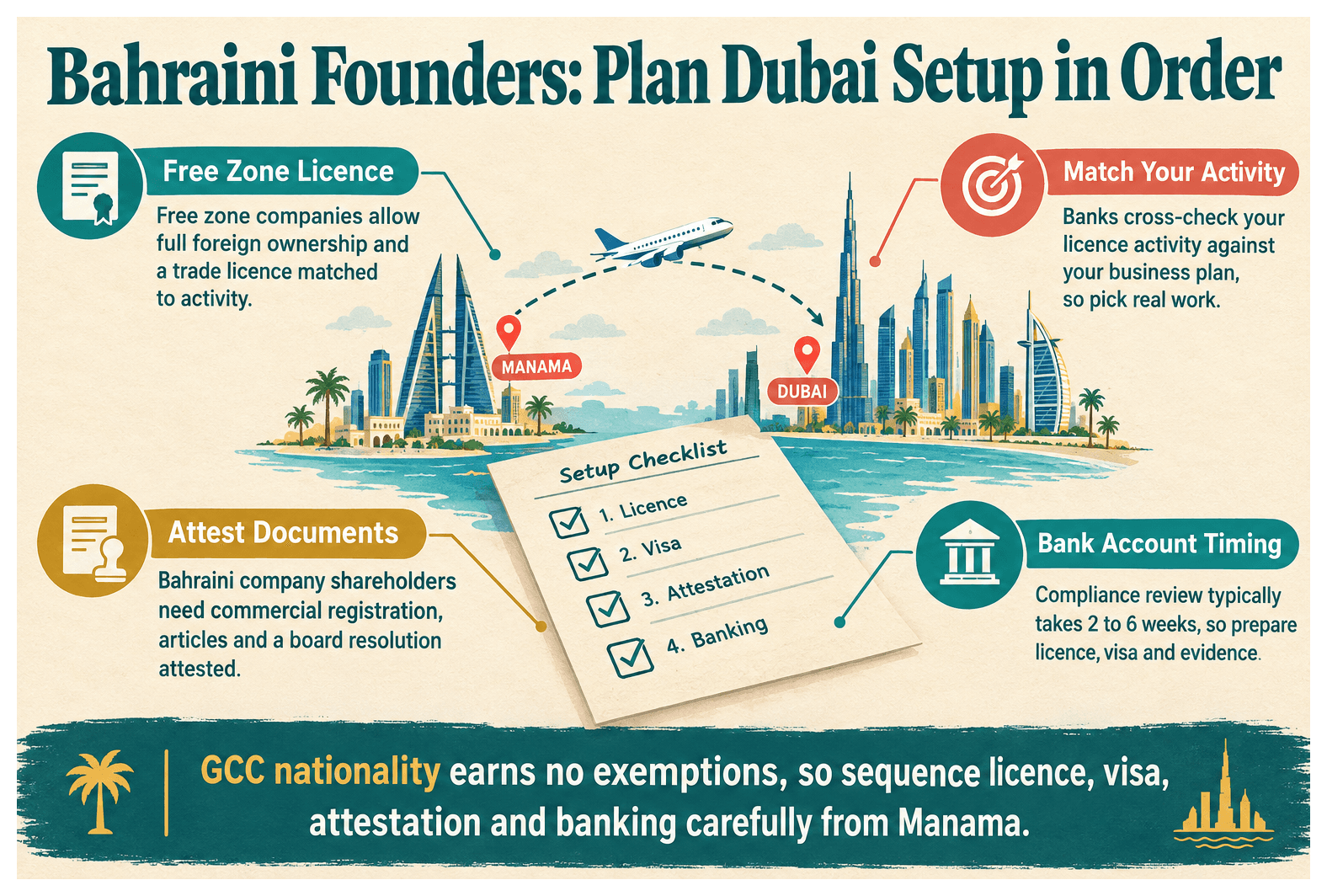
Bahraini founders typically form a free zone company, which allows full foreign ownership and a trade license matched to the activity. A Dubai South free zone license comes in packages tied to residency visas, so choosing the right activity and visa allocation upfront prevents costly amendments.
Matching Your Activity to the License
Pick the activity you'll actually perform. Banks cross-check it against your business plan. A founder who expects consulting invoices should choose management consultancy, not general trading. Some activities need external approval, so confirm that before applying.
Bahraini Founder Setup Checklist: Requirement and Typical Timing
Feature | Requirement | What to Prepare |
|---|---|---|
Passport and ID copies | Passport valid six months or more | Passport, CPR copy, photo, proof of address |
Attested corporate documents (if applicable) | Needed when a Bahraini company is shareholder | Commercial registration, articles, board resolution |
Trade license and activity selection | Activity must match real operations | Activity choice, company name, visa quota |
Residency visa, medical test and Emirates ID | Medical test and biometrics in the UAE | One short trip, entry permit, insurance details |
Corporate bank account application | Compliance review, typically 2 to 6 weeks | License, visa, business plan, client evidence |
Sole Shareholder vs Multiple Shareholders
Solo setups are faster and simpler.
Partners need agreed share splits upfront.
Name the manager and bank signatory early.
Say two Bahraini partners split 60/40 and name one signatory. The bank mandate then matches the paperwork from day one.
Flexible Workspace Instead of a Full Office
Many service businesses can meet the address requirement with a flexi-desk, then upgrade after hiring. See starting a Dubai company without renting a full office. Mainland suits founders who need to contract directly in the local market; free zones suit full ownership and remote formation.
Document Attestation Requirements From Bahrain
Bahraini founders usually need passport and ID copies, proof of address, and any Bahrain-issued corporate or educational papers attested before UAE use. Document attestation generally runs through Bahrain's Ministry of Foreign Affairs, then a UAE-recognised route. Confirm the current chain before ordering copies.
Personal Documents You Will Likely Need
Passport with six months' validity.
CPR copy and proof of address.
Translations, if requested.
Renew an expiring passport before you apply, not mid-application.
Corporate Documents for Existing Bahraini Companies
If a Manama holding company will own the Dubai subsidiary, expect to attest its commercial registration, articles and board resolution. You can start remotely, as covered in how to start a business in Dubai online from another country.
Tax Obligations and GCC Trade Considerations
The UAE applies 9% corporate tax on taxable profits above AED 375,000 and 5% VAT on most supplies (Federal Tax Authority, 2026). Qualifying free zone income may be taxed differently, and registration is still required.
Corporate Tax and Qualifying Free Zone Status
A Qualifying Free Zone Person can get 0% on qualifying income only. Everything else is taxed at 9%. A trading company earning both types should track them separately from the first invoice.
VAT Registration and Bahrain Cross-Border Sales
Register once taxable supplies pass AED 375,000.
Both countries apply VAT under the GCC framework.
Document place of supply for Bahraini clients.
Double Taxation and Treaty Checks
Check any UAE-Bahrain treaty relief for your income type, and confirm your personal tax residency if you split time between Manama and Dubai. Take professional advice rather than assuming.
Banking Considerations for Bahraini Entrepreneurs
UAE banks check ownership, activity, source of funds and expected turnover. For a UAE corporate bank account, prepare a clear business plan and proof of funds, and allow two to six weeks for onboarding (Central Bank of the UAE sets the compliance framework).
What UAE Banks Ask For
Trade license and shareholder passports.
Source of funds explanation.
Client contracts or letters of intent.
Avoiding Common Account Delays
Keep activity descriptions identical across license, website and application. One applicant stalled because the website advertised services missing from the license. Answer compliance queries fast, and keep your Bahraini accounts active meanwhile.
Step-by-Step Guide to Relocating and Setting Up in Dubai
What Bahraini founders need to know before setting up in Dubai includes the sequence: define activity, choose structure, submit documents, get the license, complete residency, then bank. More than 70% of new Dubai South Business Hub applications come from founders who never visit during formation (Dubai South Business Hub, 2026).
Step 1: Define Your Activity and Structure
Confirm activity, shareholders and visa quota.
Reserve the company name.
Step 2: Submit Documents and Receive the License
Upload passports, photos and attested papers.
Sign the application and pay fees.
Step 3: Complete Residency and Emirates ID
Entry permit, medical test and biometrics.
Plan one day trip from Bahrain.
Step 4: Open the Bank Account and Start Trading
Apply with license, visa and business plan.
Register for corporate tax right after license issue.
Other nationalities follow similar paths, such as Egyptian founders.
Residency Visa and Emirates ID Steps for Bahraini Nationals
A company license can carry a residency visa for the founder and staff, subject to allocation. You complete a medical test, biometrics and Emirates ID registration (ICP; stamping via GDRFA Dubai), then hold a residence permit typically valid for two years.
Visa Allocation and Family Sponsorship
Quota depends on package and space.
Resident founders may sponsor family, subject to current rules.
Confirm income conditions with the authorities.
Renewal and Compliance After Arrival
Set calendar reminders 60 days before renewal. Keep Emirates ID details current. Founders from other markets face similar rules, like Pakistani founders.
Your Next Move
What Bahraini founders need to know before setting up in Dubai comes down to sequencing: right license, attested documents, tax awareness, bank readiness, and ordered residency steps. Get these right early and you save weeks.
Contact Dubai South Business Hub for a free consultation to map your company formation, visa package and banking preparation.
References
Frequently Asked Questions