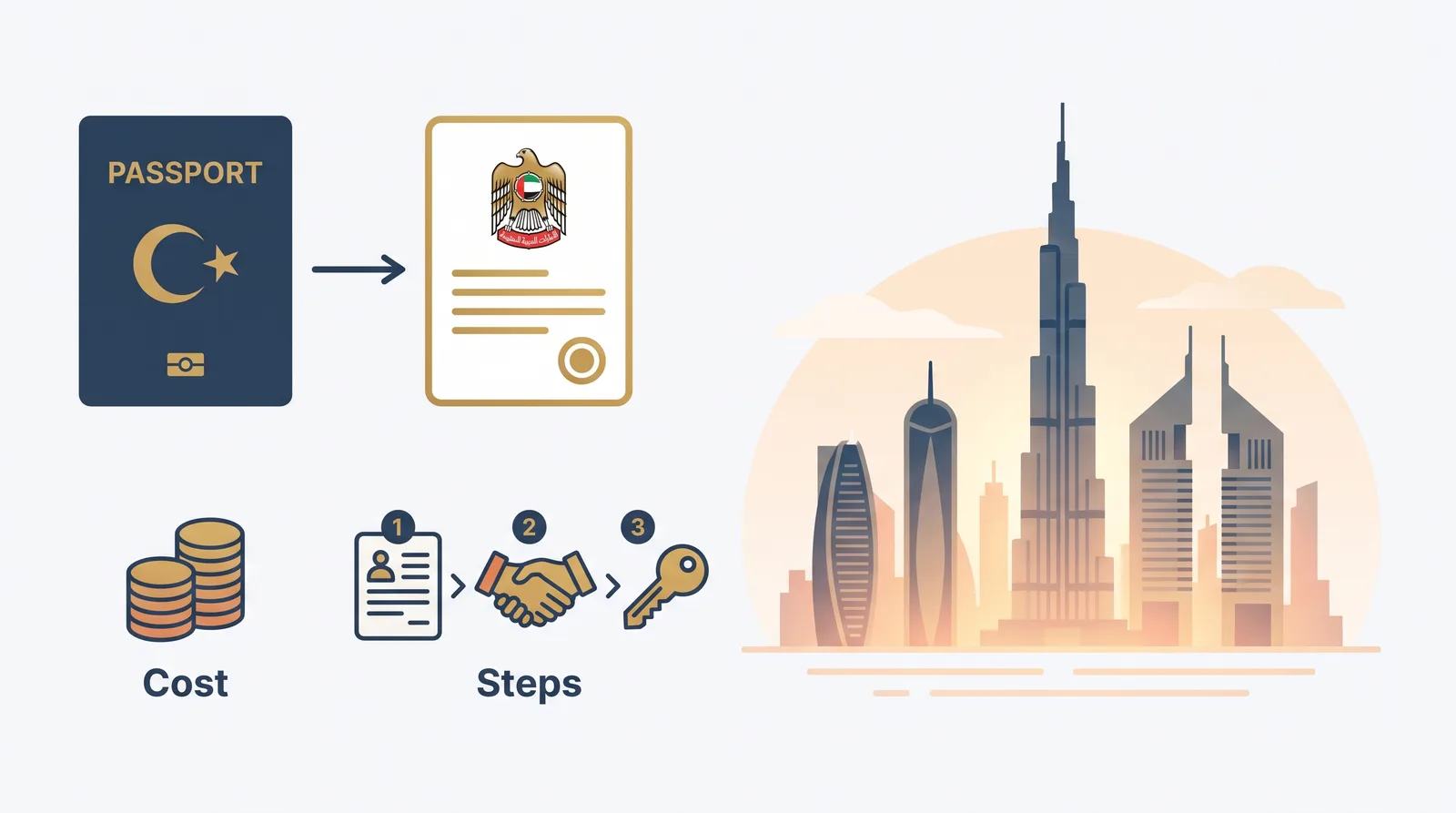
Topic Summary
Low Corporate Tax Beats European Rates
The UAE charges just 9% corporate tax on profits above AED 375,000, and qualifying free zone companies can pay 0%. A Dutch firm paying 25.8% at home can make a material saving by routing Gulf revenues through a UAE free zone entity.
100% Foreign Ownership, No Local Partner
Free zone companies allow full foreign ownership with no requirement for a local partner, a rule that has also extended to most mainland activities since 2021 reforms. European firms retain complete control of their regional entity from day one.
A Stable, Dollar-Pegged Currency
The UAE dirham has been pegged to the US dollar since 1997, removing exchange-rate volatility from regional financial planning. That stability lowers risk for European companies pricing contracts and repatriating profits across multiple markets.
One Hub Reaches 2.5 Billion People
The UAE sits within a four-hour flight of 2.5 billion consumers across the Gulf, Africa, and South Asia. A single licensed entity can serve customers in Saudi Arabia, Kenya, and India without the cost of opening separate offices in each country.
Fast Setup Compared to Rival Locations
Free zone registration can be completed in as few as three to five working days, versus seven to fifteen for a mainland entity and considerably longer in many competing hub cities. Speed to market matters when a European firm is responding to a regional contract opportunity.
Over 100 Tax Treaties Cut Withholding Costs
The UAE has signed more than 100 double tax treaties, reducing the withholding tax burden on cross-border payments between the hub and target markets. This treaty network is a practical financial advantage that Singapore and most EU alternatives cannot fully match for Gulf and African routes.
European Registrations Are Rising Fast
More than 5,000 European companies held active UAE trade licenses in 2026, with new registrations from German, French, and Dutch firms growing 18% year on year. That momentum signals a proven, repeatable path rather than an untested strategy.
In 2026, over 5,000 European companies hold active trade licenses in the UAE, with new registrations from German, French, and Dutch firms rising 18% year on year (Dubai Chamber, 2025). The UAE charges just 9% corporate tax on qualifying profits (Federal Tax Authority, 2023). Free zone companies can pay 0% if they meet the FTA's conditions. The dirham has been pegged to the US dollar since 1997. And the country sits within a 4-hour flight of 2.5 billion people. Those five facts explain why European companies choose the UAE for regional expansion, and this article breaks down each one so you can decide if the move fits your business.
What UAE Regional Expansion Means for European Companies
UAE regional expansion means a European company sets up a licensed entity in the UAE to serve markets across the Middle East, Africa, and South Asia from a single base. It offers a 9% corporate tax rate, 100% foreign ownership in free zones, and fast access to over 2 billion consumers. That is why European companies choose the UAE for regional expansion rather than opening separate offices in each target country.
Defining a Regional Hub Strategy
A regional hub is one licensed entity that handles sales, service, or distribution for several nearby markets. You run one set of accounts, one compliance calendar, and one team, not three.
The UAE sits within a 4-hour flight of 2.5 billion people across the Gulf, Africa, and South Asia. A German logistics firm, for example, sets up one entity at Dubai South to serve customers in Saudi Arabia, Kenya, and India, rather than opening three separate offices. That single structure cuts overhead and simplifies reporting.
There are three main entity types to know: a full subsidiary, a branch office, and a free zone company. Each carries different ownership and tax rules. Free zone companies allow 100% foreign ownership and can qualify for a 0% corporate tax rate on qualifying income, subject to applicable Corporate Tax rules. See the full list of business activities at Dubai South Business Hub to check which license type fits your work.
Why the UAE Beats Other Hub Locations
Compare the UAE against Singapore and the Netherlands as rival hub choices. Here is where the UAE wins on each point:
Corporate tax: 9% on profits above AED 375,000, lower than most EU rates and Singapore's 17%
Personal income tax: None. Directors and staff keep their full salary
Treaty network: Over 100 double tax treaties, cutting withholding costs on cross-border payments (UAE Government Portal, 2024)
Currency stability: The dirham has been pegged to the US dollar since 1997
Ownership: 100% foreign ownership in free zones, no local partner needed
A Dutch holding company paying 25.8% corporate tax in the Netherlands can cut its regional tax bill by routing Gulf revenues through a qualifying UAE free zone entity. That is a material saving, not a marginal one.
UAE Free Zone vs Mainland: Key Differences for European Companies
Feature | Free Zone (DSBH) | Mainland (DET) |
|---|---|---|
Foreign ownership | 100%, no local partner needed | 100% permitted since 2021 reforms for most activities |
Corporate tax rate | 0% for qualifying free zone persons; 9% otherwise | 9% on profits above AED 375,000 |
UAE market access | International clients and other free zones; mainland sales need a distributor | Full UAE market access with no restrictions |
Setup time | 3 to 5 working days | 7 to 15 working days |
Office requirement | Flexi-desk options available; no dedicated office required | Physical office address required |
Personal income tax | None for visa holders | None for visa holders |
Tax and Regulatory Advantages Driving European Interest
The UAE charges 9% corporate tax on profits above AED 375,000 and 0% for qualifying free zone companies. There is no personal income tax. Over 100 double tax treaties reduce withholding costs. Clear rules, fast approvals, and a dollar-pegged currency make the UAE a low-risk base for European firms.
Corporate Tax and Free Zone Rules
The UAE introduced a 9% federal corporate tax in June 2023 under Federal Decree-Law No. 47 of 2022. Free zone companies can pay 0%, but only if they meet the Qualifying Free Zone Person conditions the FTA sets. Those conditions are not automatic.
Qualifying income includes dividends, capital gains, and revenue from transactions with other free zone companies. A French tech firm routing software license revenue through a DSBH free zone entity can qualify for 0% on that income, provided it meets the FTA's substance and income conditions.
European parent companies must check their home country's controlled foreign company (CFC) rules before structuring through the UAE. For banking and taxation guidance specific to DSBH companies, the hub's advisory team can walk you through the FTA's qualifying conditions before you commit.
VAT, Customs, and Trade Rules
UAE VAT rate: 5%, among the lowest globally
Designated zones: Goods moving between designated zones may be treated as outside the UAE for VAT purposes
Location advantage: Dubai South sits close to Jebel Ali Port and Al Maktoum International Airport, cutting import and export costs
GCC customs union: Covers 6 Gulf states and over 50 million people, one customs area, not six
A Dutch consumer goods brand importing to Dubai South and re-exporting to Saudi Arabia pays 5% UAE VAT on local sales only. Goods re-exported to the GCC are not subject to that charge. That distinction matters for margin planning.
Regulatory Speed and Transparency
The UAE ranked 16th globally in the World Bank's business environment index (World Bank, 2024). Company setup in a free zone takes as few as 3 to 5 working days. English is the working language of UAE commerce and of free zone courts. DSBH licenses come with a published fee schedule and no hidden charges. Optional services, visas and any required third-party approvals are charged separately.
7 Key Reasons European Companies Choose the UAE
European companies choose the UAE for 7 main reasons: a low 9% corporate tax rate, 100% foreign ownership in free zones, a location within 4 hours of 2.5 billion consumers, no personal income tax, over 100 double tax treaties, fast company setup, and world-class logistics at Jebel Ali and Al Maktoum.
Low corporate tax: 9% standard rate, 0% for qualifying free zone firms
Full ownership: 100% foreign ownership in free zones, no local partner needed
Location: 4-hour flight to markets covering 2.5 billion people
No personal income tax: Directors and staff keep their full salary
Treaty network: Over 100 double tax treaties cut withholding on cross-border payments
Fast setup: A licensed entity in 3 to 5 working days
Logistics infrastructure: Jebel Ali Port and Al Maktoum International Airport on the doorstep
Which European Sectors Expand Most
Technology and ICT: Sales and delivery hubs for Gulf clients; an ICT license in Dubai suits software, SaaS, and digital services firms
Professional services: Law, consulting, and accounting firms serving Gulf sovereign wealth funds and family offices
Trading and logistics: Port access makes Dubai the natural bridge between Europe, Asia, and Africa
Healthcare and life sciences: European firms entering Gulf government procurement from a single UAE base
Market Access and Strategic Location
The UAE gives European companies direct access to the GCC, Africa, and South Asia from one base. Dubai sits within a 4-hour flight of 2.5 billion people. The country has active Comprehensive Economic Partnership Agreements (CEPAs) with India, Israel, Indonesia, and others, cutting tariffs on goods moving to those markets.
GCC and Africa as Growth Markets
The GCC is a single customs area covering Saudi Arabia, UAE, Kuwait, Qatar, Bahrain, and Oman. Combined GCC GDP exceeds USD 2 trillion, with Saudi Vision 2030 driving major public investment across construction, technology, and healthcare. Africa's middle class is growing fast, with sub-Saharan Africa trade through Dubai rising 12% in 2024 (Dubai Chamber, 2025). A Spanish construction materials firm used its trading license in Dubai to supply Saudi Vision 2030 projects, winning contracts worth AED 40 million in its first year.
Free Trade Agreements and Tariff Access
India CEPA (2022): Cuts tariffs on hundreds of goods, active since May 2022 (UAE Government Portal, 2022)
Israel CEPA: Opens trade corridors for European firms with Israeli operations
Indonesia CEPA: Active, covering Southeast Asia access
Turkey CEPA: Reduces friction on goods moving between the Gulf and Europe via Turkey
Talent, Lifestyle, and Workforce Advantages
The UAE has a workforce of over 5 million skilled professionals from more than 200 countries (MOHRE, 2024). There is no personal income tax, making salaries competitive without raising payroll costs. English is the business language. European executives can relocate on a 10-year Golden Visa, giving them and their families long-term UAE residency. For more detail, see our guide on relocating a business from Germany to the UAE.
Hiring in the UAE as a European Firm
Dubai South Business Hub Free Zone allows a maximum of 6 visa allocations per license. Published packages offer 0, 1 or 2 visas, and visas are charged separately from the license. European companies can sponsor staff from their home country or hire locally from the UAE talent pool. Free zone companies follow their own zone's labour rules, which are simpler for small teams. For UAE residency visa services tied to your free zone license, DSBH handles the application process end to end.
Golden Visa and Long-Term Residency
The UAE Golden Visa gives 10-year residency to investors, senior executives, and specialist professionals. Eligibility criteria include:
Investors who meet the FTA's qualifying investment threshold
Senior executives in companies with a minimum capital requirement
Specialist professionals in science, technology, and healthcare
Spouses and children included on the same application
How to Set Up Your UAE Base as a European Company
A European company sets up a UAE free zone entity in 5 main steps: choose a license type and activity, reserve a trade name, submit documents, pay fees, and collect the license. The process takes 3 to 10 working days at Dubai South Business Hub. Residency visas and a corporate bank account follow within 2 to 3 weeks.
Step 1, pick your license type: Choose trading, services, or ICT, confirm the business activities you need before applying
Step 2, reserve your trade name: Check company name availability online before submitting anything
Step 3, submit your documents: Passport copy, business plan summary, and application form to DSBH
Step 4, pay the fees: License and registration fees on a published schedule, no surprises
Step 5, collect your license: Then apply for residency visas and a corporate bank account
References
Dubai Chamber (dubaichamber.com)
Federal Tax Authority (tax.gov.ae)
UAE Government Portal (u.ae)
World Bank (worldbank.org)
MOHRE (mohre.gov.ae)
Frequently Asked Questions