Aerial Photography Services Business License in Dubai: Cost and Requirements

Topic Summary
Choose Mainland or Free Zone Setup
A mainland license from Dubai Economy and Tourism lets you work across all of Dubai without geographic restrictions, making it the preferred choice for most operators. Free zone licenses limit where you can offer services commercially and may require a local service agent to work with mainland clients.
Gather Core Documents Before Applying
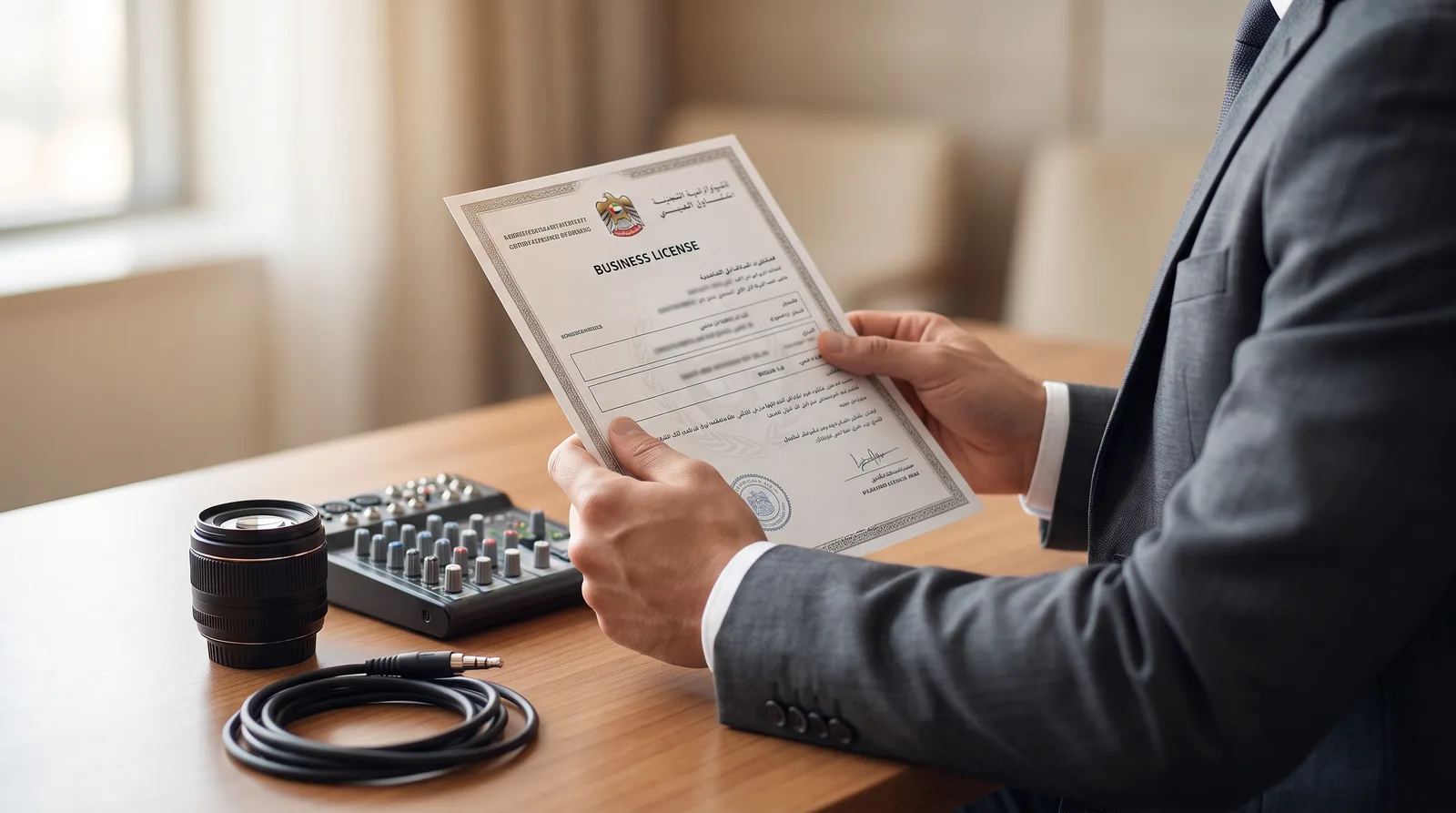
Your trade license application requires passport copies of all shareholders, a valid UAE visa or entry stamp, Emirates ID if you are already a resident, and a business plan or activity description. Having these ready in advance helps avoid delays in the registration process.
Register With GCAA and Get DCAA Approval
Every commercial drone must be registered with the General Civil Aviation Authority before its first flight, and Dubai Civil Aviation Authority approval is required for all flights within Dubai airspace. Both steps are mandatory and cannot be skipped, regardless of your trade license status.
Obtain Your Remote Pilot License Early
Commercial drone pilots must hold a valid Remote Pilot License issued by the GCAA, which requires passing both a theory exam and a practical flight assessment. The process takes several weeks, so starting this certification early is essential to avoid delays in launching your business.
Plan Around Dubai's Strict No-Fly Zones
Flights near airports, government buildings, military areas, and densely populated zones all require special permits, and each shoot location may need a separate flight authorisation request. Unauthorised flights can result in significant fines and equipment confiscation, so checking updated no-fly zone maps before every shoot is critical.
Secure Mandatory Third-Party Liability Insurance
Third-party liability insurance is a legal requirement for all commercial drone operations in Dubai and must be in place before you begin any paid work. This coverage protects your business against claims arising from property damage or injury caused during aerial shoots.
Dubai's skyline is one of the most photographed in the world. Launching an aerial photography business here means navigating a clear but multi-step licensing process. This guide breaks down every requirement, permit, and cost you need to legally operate aerial photography services in Dubai.
Aerial photography is a recognised commercial activity in Dubai. It covers drone-based imaging and manned aircraft photography used for commercial purposes. This includes real estate shoots, construction monitoring, event coverage, and film production.
A standard trade license is not enough on its own. You also need specific drone permits and aviation authority approvals. The Dubai Economy and Tourism (DET) is the primary authority for issuing trade licenses in Dubai. However, additional clearances from aviation regulators are mandatory before you can fly commercially.
Mainland vs Free Zone Setup
You have two main options when setting up your business: mainland or free zone. Each has different rules for where you can operate.
Mainland license: Issued by DET. Allows you to work across all of Dubai without geographic restrictions. This is the preferred choice for most aerial photography operators.
Free zone license: Generally limits where you can offer services commercially. You may need a local service agent to work with mainland clients.
Client access: Most aerial photography businesses choose mainland setup for broader access to real estate developers, event companies, and government clients.
If you want to explore your business activities and understand which structure fits your operation, it helps to map out your target clients first.
Key Requirements to Get Licensed
Before you can begin commercial aerial photography in Dubai, you must meet several regulatory requirements. These span business registration, aviation authority approvals, and insurance obligations.
Core documents needed for your trade license application include:
Passport copy of all shareholders
Valid UAE visa or entry stamp
Emirates ID (if already a UAE resident)
Business plan or activity description
No-objection letter (if applicable)
Beyond the trade license, you must register with the General Civil Aviation Authority (GCAA) and obtain Dubai Civil Aviation Authority (DCAA) approval for flights within Dubai airspace. Both steps are mandatory for any commercial drone operation.
GCAA Drone Registration and Pilot Certification
The GCAA regulates all commercial drone activity across the UAE. Every commercial drone must be registered with the GCAA before its first flight. Registration is linked to the drone's weight category and technical specifications.
Remote Pilot License (RPL): Every commercial drone pilot must hold a valid RPL issued by the GCAA.
Exams: Pilots must pass both a theory exam and a practical flight assessment.
Drone standards: Your drone must meet GCAA weight classifications and safety requirements. Heavier drones face stricter rules.
You cannot legally fly for commercial purposes without completing this certification process. Plan for this step early — it takes several weeks.
No-Fly Zones and Flight Permit Rules
Dubai has extensive no-fly zones. Flights near airports, government buildings, military areas, and densely populated zones require special permits. These rules exist to protect public safety and national security.
Airport proximity:Dubai Airports coordinates airspace approvals for flights near airport zones. You must apply well in advance.
Per-location permits: Each shoot location may require a separate flight authorisation request. There is no blanket permit for multiple sites.
Penalties: Unauthorised flights carry significant fines and can result in equipment confiscation. Compliance is not optional.
Always check the latest no-fly zone maps before planning any shoot. Airspace rules in Dubai are updated regularly.
Insurance and Liability Requirements
Third-party liability insurance is mandatory for all commercial drone operations in Dubai. The GCAA sets minimum coverage thresholds that your policy must meet.
Insurance must be active before your first licensed commercial shoot.
Coverage must account for potential property damage, personal injury, and third-party claims.
Your insurer must be licensed to operate in the UAE.
Do not underestimate this requirement. Clients — especially in real estate and construction — will ask to see your insurance certificate before hiring you.
Cost Breakdown: Fees and Expenses to Expect
Setting up an aerial photography business in Dubai involves several distinct cost layers. Understanding each one helps you budget accurately from day one.
Here is an overview of the main fees involved:
Cost Item | Estimated Cost (AED) | Frequency |
|---|---|---|
Trade license (DET mainland) | 10,000 – 15,000 | Annual |
GCAA drone registration | 500 – 2,000 (per drone) | Annual |
Remote Pilot License training and exam | 3,000 – 8,000 | One-time (renewal required) |
Third-party liability insurance | 2,000 – 5,000 | Annual |
Per-flight permits (restricted zones) | 200 – 1,000 per shoot | Per project |
3,000 – 6,000 | One-time | |
Visa costs (investor/partner) | 3,500 – 5,000 per visa | Every 2–3 years |
Total setup costs typically range from AED 20,000 to AED 35,000 depending on your business structure and drone category. Use a business setup cost calculator to get a more precise estimate for your specific situation.
One-Time vs Recurring Costs
It helps to separate your costs into two buckets: what you pay once and what you pay every year.
One-time costs: Company formation fees, initial GCAA drone registration, Remote Pilot License training and exam, and office or flexi-desk deposits.
Annual recurring costs: Trade license renewal, insurance renewal, drone re-registration, and any required pilot refresher training.
Per-project costs: Flight permits for restricted zones. Budget for these as an ongoing operational expense — they add up across multiple shoots.
Free Zone Cost Comparison
Some free zones offer lower headline setup fees than a mainland DET license. However, the trade-off is operational geography. A free zone company may not be able to work directly with mainland clients without additional approvals.
Free zone packages often bundle visa quotas and flexi-desk space. This can reduce overhead for a small team.
Compare the total cost of ownership — not just the license fee. Factor in any service agent fees required for mainland work.
If your clients are primarily in Dubai's property or construction sector, a mainland license usually delivers better return on investment.
Step-by-Step Process to Get Your License
The licensing process for aerial photography in Dubai follows a logical sequence. Completing each step in order avoids delays and ensures full compliance before your first commercial flight.
Step 1 — Choose your business activity and legal structure. Aerial photography falls under specific activity codes in Dubai's commercial registry. Decide between an LLC (for multiple shareholders) or a sole establishment (for individual operators).
Step 2 — Reserve your trade name and apply for initial approval. Submit your application through the Dubai Economy and Tourism portal. Check your business name availability before submission to avoid rejection delays.
Step 3 — Register your drone(s) with the GCAA and obtain your Remote Pilot License. Enrol in an approved training programme. Complete the theory exam and practical flight assessment. This step takes the most time — start early.
Step 4 — Secure third-party liability insurance. Choose a UAE-licensed insurer and confirm that coverage meets GCAA minimum thresholds. Get your certificate of insurance before your first shoot.
Step 5 — Apply for DCAA and Dubai Airports airspace approvals. Submit location-specific flight authorisation requests for each planned shoot site. Allow at least 5–7 working days per application.
Step 6 — Receive your trade license and begin commercial operations. Once all approvals are in place, you are legally authorised to offer aerial photography services in Dubai.
Typical Timeline
Planning your timeline carefully prevents gaps between your license approval and your first paying job.
Trade license approval: 5–10 working days with a complete document set.
GCAA pilot certification: 4–8 weeks, including training and exam scheduling.
Per-flight permits: Apply at least 5–7 working days before each shoot in a controlled zone.
Total setup timeline: Expect 6–10 weeks from your first application to your first legal commercial flight.
If you need a UAE residency visa as part of your setup, factor in additional processing time. A UAE residency visa tied to your company license can usually be processed in parallel with your trade license application.
Staying Compliant After You Launch
Getting licensed is only the beginning. Maintaining compliance is an ongoing responsibility. Dubai's aviation and business regulators take non-compliance seriously.
Renew your trade license annually through DET before the expiry date. Late renewal attracts fines and can disrupt your ability to operate legally.
Keep drone registration current. The GCAA enforces strict renewal schedules. An expired registration means you cannot fly commercially.
Maintain your Remote Pilot License. Renewal requirements include refresher assessments at defined intervals.
Log all commercial flights. GCAA operational standards require flight logs. Keep records accurate and up to date.
Monitor no-fly zone updates. Airspace rules in Dubai change frequently. Check updated maps before every shoot — not just once at setup.
Review your insurance annually. Ensure coverage limits remain adequate as your fleet and revenue grow.
Penalties for Non-Compliance
The consequences of non-compliance are serious. They go beyond simple fines.
Operating without a valid trade license can result in business shutdown and financial penalties.
Unauthorised drone flights carry penalties under UAE aviation law — including equipment confiscation on the spot.
Repeated violations can lead to permanent license suspension. For more detail on UAE regulations, refer to u.ae, the official UAE government information portal.
Building a culture of compliance from day one protects your investment and your reputation with clients.
Ready to Launch Your Aerial Photography Business in Dubai?
Getting an aerial photography business license in Dubai requires a trade license from DET, GCAA drone registration, a Remote Pilot License, and location-specific flight permits. Total setup costs typically range from AED 20,000 to AED 35,000 depending on your business structure and drone category.
The process is clear and manageable with the right guidance. Each step builds on the last — and completing them in the correct order saves time and money.
Ready to start your business in Dubai? Get a free cost estimate and let our setup specialists guide you through every step — from trade name reservation to your first licensed commercial flight.
References
Frequently Asked Questions