Electronic Transport Services Business Setup in Dubai: Licensing Guide

Topic Summary
Starting an Electronic Transport Services business in Dubai (activity code 4922.93) requires navigating DED or free zone licensing, RTA approvals, and ownership rules.
Dubai's rapid shift toward smart mobility has made Electronic Transport Services (activity code 4922.93) one of the most strategically relevant business activities to register in the emirate today. Whether you are building a ride-hailing platform, an app-based dispatch system, or a digital fleet management solution, understanding the licensing landscape is essential before you start your business in Dubai. This guide explains what the activity covers, who can operate it, key licensing considerations, and how free zone options like Dubai South Business Hub can support your setup.
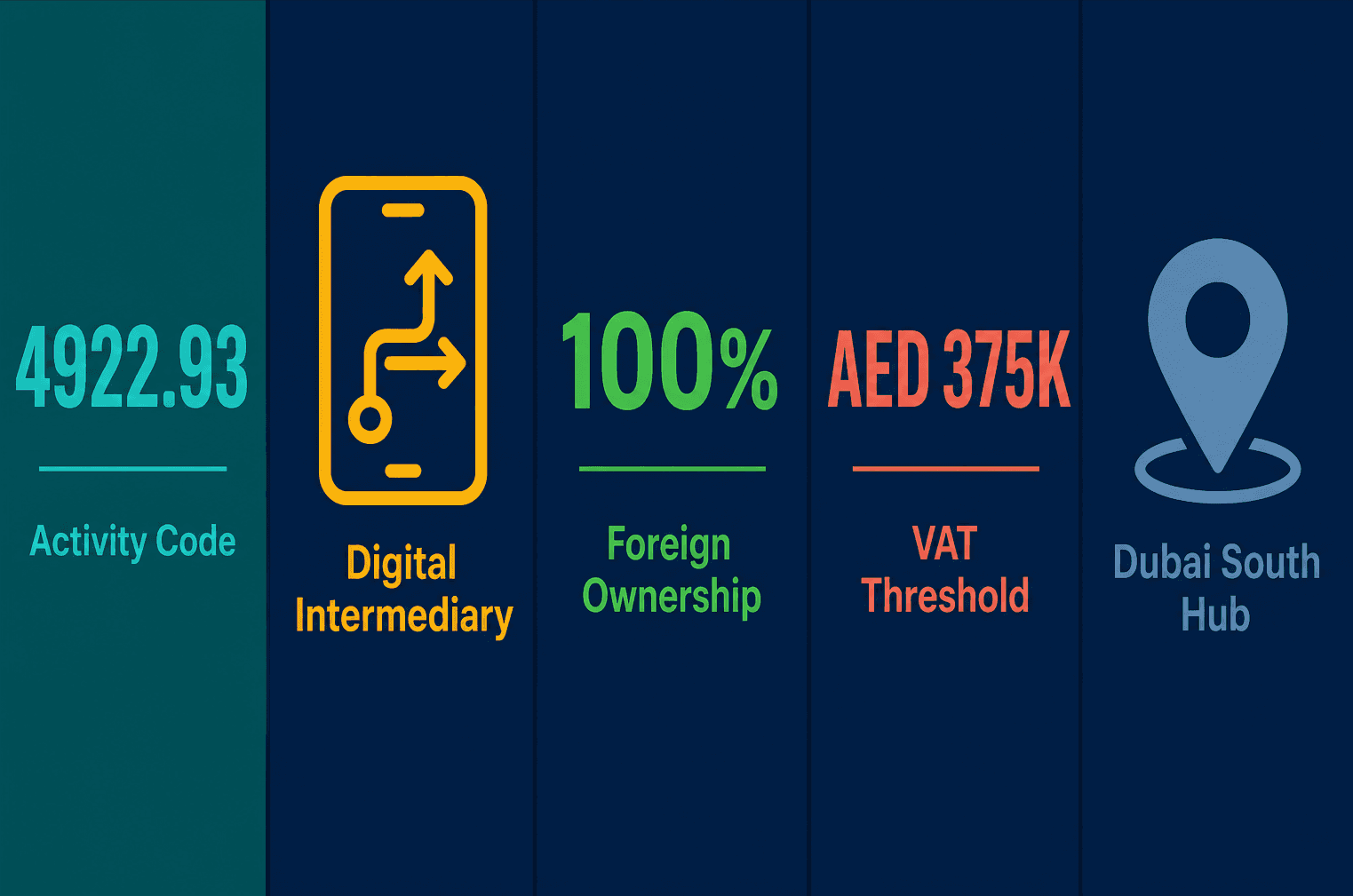
Key Facts: Electronic Transport Services (4922.93) in Dubai |
|---|
Activity Code: 4922.93 |
Activity Type: Technology-enabled transport coordination (digital intermediary) |
Licensing Jurisdictions: Mainland (DED) or approved free zones |
Key External Approval: Road and Transport Authority (RTA), Dubai |
Ownership: Up to 100% foreign ownership available via free zone |
VAT Registration Threshold: Mandatory if taxable turnover exceeds AED 375,000 annually |
Strategic Location Advantage: Dubai South — proximity to Al Maktoum International Airport |
What Are Electronic Transport Services (Activity Code 4922.93)?
Electronic Transport Services refers to technology-enabled coordination of passenger or goods transport through digital platforms. Rather than operating physical vehicles directly, businesses licensed under activity code 4922.93 function as the digital intermediary layer — connecting users, drivers, or logistics operators through software, mobile applications, or web-based systems. This activity is distinct from traditional taxi licensing or freight forwarding, making it particularly relevant to startups, technology firms, and established transport operators looking to digitise their operations.
Entrepreneurs exploring the broader business activities in Dubai will find that electronic transport sits at the intersection of technology and mobility — a sector receiving significant investment and regulatory attention across the UAE.
Scope of the Activity
Platform-based booking, routing, and dispatch systems for passengers or goods
App-driven ride-hailing coordination and electronic fleet management
Last-mile delivery coordination facilitated through electronic means
Digital aggregator models connecting transport service providers with end users
It is important to note that this activity does not automatically include the physical operation of vehicles. Businesses that also intend to own or operate a fleet will likely need separate approvals or additional activity codes alongside 4922.93.
Licensing Requirements and Regulatory Considerations
Activity code 4922.93 can be licensed through either a mainland entity via the Department of Economy and Tourism (DED) or through an approved free zone authority. The right choice depends on your target market, ownership preferences, and operational model. Regardless of jurisdiction, businesses must ensure their trade licence activity precisely reflects their actual service delivery to avoid compliance gaps.
RTA and External Approvals
The Road and Transport Authority (RTA) is the primary regulatory body overseeing transport platform licensing for services operating on Dubai roads. If your platform facilitates passenger movement or coordinates transport services within Dubai, you should verify whether your business model requires an RTA no-objection certificate (NOC) or a formal operator permit before commencing operations.
The u.ae government portal provides a useful starting point for identifying the correct regulatory pathway and understanding which government entities need to be engaged during the approval process. Engaging directly with the RTA early in your planning phase is strongly recommended to avoid delays post-incorporation.
Mainland vs. Free Zone Licensing
Mainland licence (DED): Allows direct commercial engagement with clients across the UAE, including government contracts. Suitable if your platform serves end consumers or businesses within the domestic market.
Free zone licence: Typically permits 100% foreign ownership and suits technology-platform businesses with an international focus or B2B service model. Some free zones accommodate electronic transport activity codes — always verify with the specific zone authority before proceeding.
Typical Setup Requirements for Electronic Transport Services
While exact requirements vary by jurisdiction, the following are commonly requested during the business setup process for activity code 4922.93:
Passport copies of all shareholders and directors
Current visa status documentation or entry stamp details
A business plan outlining the platform model and target market
NOC from a current sponsor, where applicable
Office or flexi-desk arrangement (free zones often offer cost-effective workspace options)
Minimum share capital requirements differ between mainland and free zone structures. UAE economic substance regulations may also apply depending on how the activity is classified, so it is worth reviewing the guidance published by the UAE Ministry of Economy to understand your obligations.
Ownership and Visa Eligibility
Free zone entities typically permit 100% foreign ownership without the need for a local partner
Mainland LLCs may require a UAE national service agent depending on the specific activity classification
Investor and employee residence visas are allocated based on office space type and licence category
The ICP (Federal Authority for Identity, Citizenship, Customs and Port Security) handles residency visa processing for business owners and their dependants
If you plan to sponsor employees or family members, understanding the UAE residency visa process early will help you plan your setup timeline more accurately.
Why Consider Dubai South Business Hub Free Zone
Dubai South is a purpose-built economic zone designed around logistics, aviation, and smart city infrastructure. Its proximity to Al Maktoum International Airport makes it a natural home for transport and mobility-related businesses, including those operating electronic transport platforms.
Dubai South Business Hub Free Zone offers free zone licences suited to technology-enabled service businesses, including those in the smart transport and mobility sector. Flexi-desk and cost-structured packages make it accessible for early-stage startups that need a credible registered presence without the overhead of a full office fit-out. You can calculate your business setup cost in Dubai using the online tool to get an indicative figure before committing.
The strategic positioning of Dubai South within a broader logistics and transport ecosystem — including dedicated zones for e-commerce, aviation services, and urban mobility — creates a relevant environment for businesses operating in the electronic transport space.
Key Considerations Before You Register
Before selecting a jurisdiction and submitting your application, work through the following checklist:
RTA approval pathway: Confirm whether your platform model requires an RTA operator permit or NOC before choosing a jurisdiction
Activity alignment: Ensure your trade licence activity (4922.93) precisely matches your technology and service delivery model
VAT obligations: If your annual taxable turnover exceeds the mandatory registration threshold, VAT registration is required — review current guidance at tax.gov.ae
Employment compliance: If you plan to hire staff locally, familiarise yourself with MOHRE obligations covering employment contracts, wages, and Emiratisation requirements
Professional advice: Consult a business setup adviser to map the most cost-efficient and compliant structure for your specific platform model
Conclusion
Setting up an Electronic Transport Services business in Dubai requires careful alignment between your platform model, the correct trade licence activity (4922.93), RTA regulatory requirements, and the right jurisdiction — whether mainland or free zone. The emirate's infrastructure, regulatory framework, and strategic position in the smart mobility sector make it a compelling location for this type of business. Contact Dubai South Business Hub to explore free zone licence packages suited to electronic transport and smart mobility businesses.
References
u.ae government portal (u.ae)
UAE Ministry of Economy (moet.gov.ae)
ICP (Federal Authority for Identity, Citizenship, Customs and Port Security) (icp.gov.ae)
tax.gov.ae (tax.gov.ae)
MOHRE (mohre.gov.ae)
Frequently Asked Questions