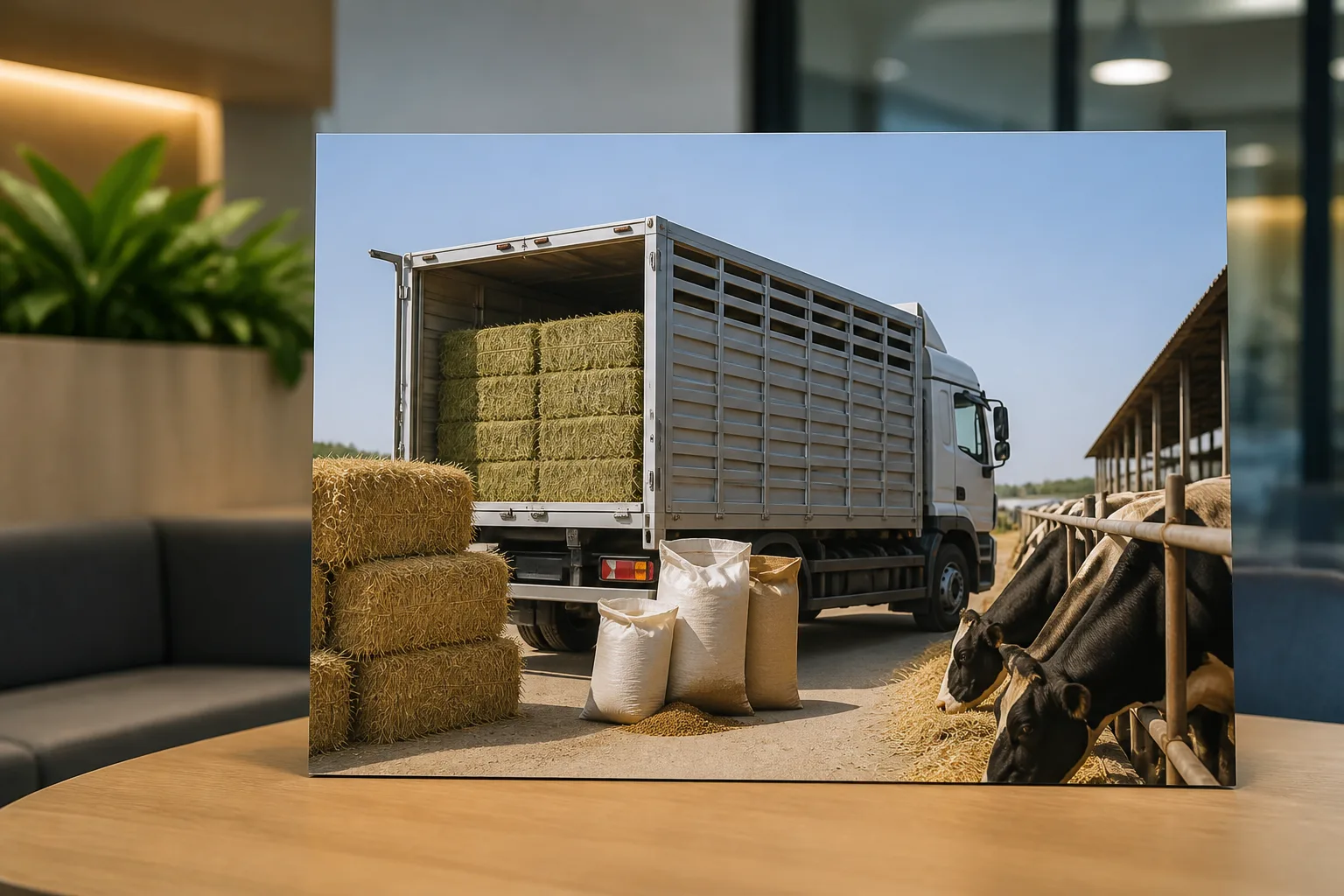
Start a Fodder & Animal Feed Transport Business in Dubai

Topic Summary
Understand Activity Code 4923.93
This code covers road-based transport of hay, silage, pellets, and compound feed between farms, mills, and end-users. It is strictly a logistics activity, not trading, importing, or manufacturing feed.
Know Your Target Sectors
Demand comes from equestrian stables, dairy farms, poultry facilities, and camel breeding operations across Dubai and the UAE. This niche ties directly into the region's food security and agricultural growth agenda.
Check Eligibility and Ownership Rules
UAE nationals, GCC nationals, and foreign investors can all operate under this activity, with ownership terms varying by jurisdiction. Free zones typically allow 100% foreign ownership, while mainland rules have also expanded recently.
Choose Mainland or Free Zone Setup
A mainland licence through the DET lets you serve clients across all emirates without needing a local agent. A free zone licence suits operators concentrated near designated freight corridors.
Coordinate With the RTA
The Road and Transport Authority regulates vehicle permits and routes for this transport activity. Securing the right permits is essential for legal, compliant operations.
Add Complementary Activity Codes
If you plan to trade or distribute feed alongside transporting it, you'll need additional licence codes beyond 4923.93. Reviewing Dubai's full activity list helps identify the right combination for your business model.
Factor in Tax Obligations
Corporate tax may apply once your business crosses the taxable income threshold set by the Federal Tax Authority. It's wise to verify your specific tax position before finalizing your setup costs.
Dubai's expanding livestock sector, equestrian industry, and agri-food supply chain create steady demand for licensed fodder and animal feed transport operators. Whether you are supplying racing stables in Dubai South, dairy farms along the Al Ain corridor, or poultry facilities across the UAE, this logistics niche offers consistent commercial opportunity. This guide explains what activity code 4923.93 covers, who can operate under it, and the key licensing and setup steps to launch a compliant fodder and animal feed transport business in Dubai.
📦 Fodder & Animal Feed Transport — Key Facts at a Glance
Activity Code: 4923.93 — Fodder & Animal Feed Transport
Sector Classification: Transport & Storage (UAE Standard Activity Classification)
Setup Routes: Dubai Mainland (DED) or Free Zone licence
Ownership: 100% foreign ownership available in free zones
Key Regulatory Body: Road and Transport Authority (RTA) for vehicle and route permits
Relevant Sectors Served: Equestrian, dairy, poultry, camel farming
Corporate Tax: Applicable if taxable threshold is met — verify with UAE Federal Tax Authority
What Is Fodder & Animal Feed Transport (Activity Code 4923.93)?
Activity code 4923.93 covers the road-based transport of fodder, hay, silage, pellets, and compound animal feed products between commercial and agricultural locations. This is a purely logistical activity — it encompasses the movement of feed materials rather than their manufacture, retail sale, or distribution in a commercial trading sense.
In practical terms, operators under this code provide B2B logistics services between farms, feed mills, ports, and end-users such as equestrian stables, dairy facilities, poultry farms, and camel breeding operations. The activity is directly relevant to several of Dubai's growing agricultural and leisure sectors, including its internationally recognised equestrian industry and the broader UAE food security agenda.
It is important to note that this activity is distinct from a general trading license in Dubai for animal feed products. Operators licensed under 4923.93 are authorised to transport — not to trade, import, or manufacture the feed itself. Businesses wishing to combine transport with trading or distribution would need to include the relevant additional activity codes on their licence. You can explore the full list of business activities in Dubai to identify complementary codes for your planned operations.
Who Can Conduct This Activity?
This activity is open to UAE nationals, GCC nationals, and foreign investors, with ownership structures varying depending on the chosen jurisdiction. On the mainland, recent regulatory reforms have broadened the scope for foreign ownership in many sectors. Within free zones, 100% foreign ownership is standard. The activity can be conducted under a corporate shareholder structure or as a sole establishment, depending on the legal form selected and the requirements of the licensing authority.
Licensing & Business Setup Considerations in Dubai
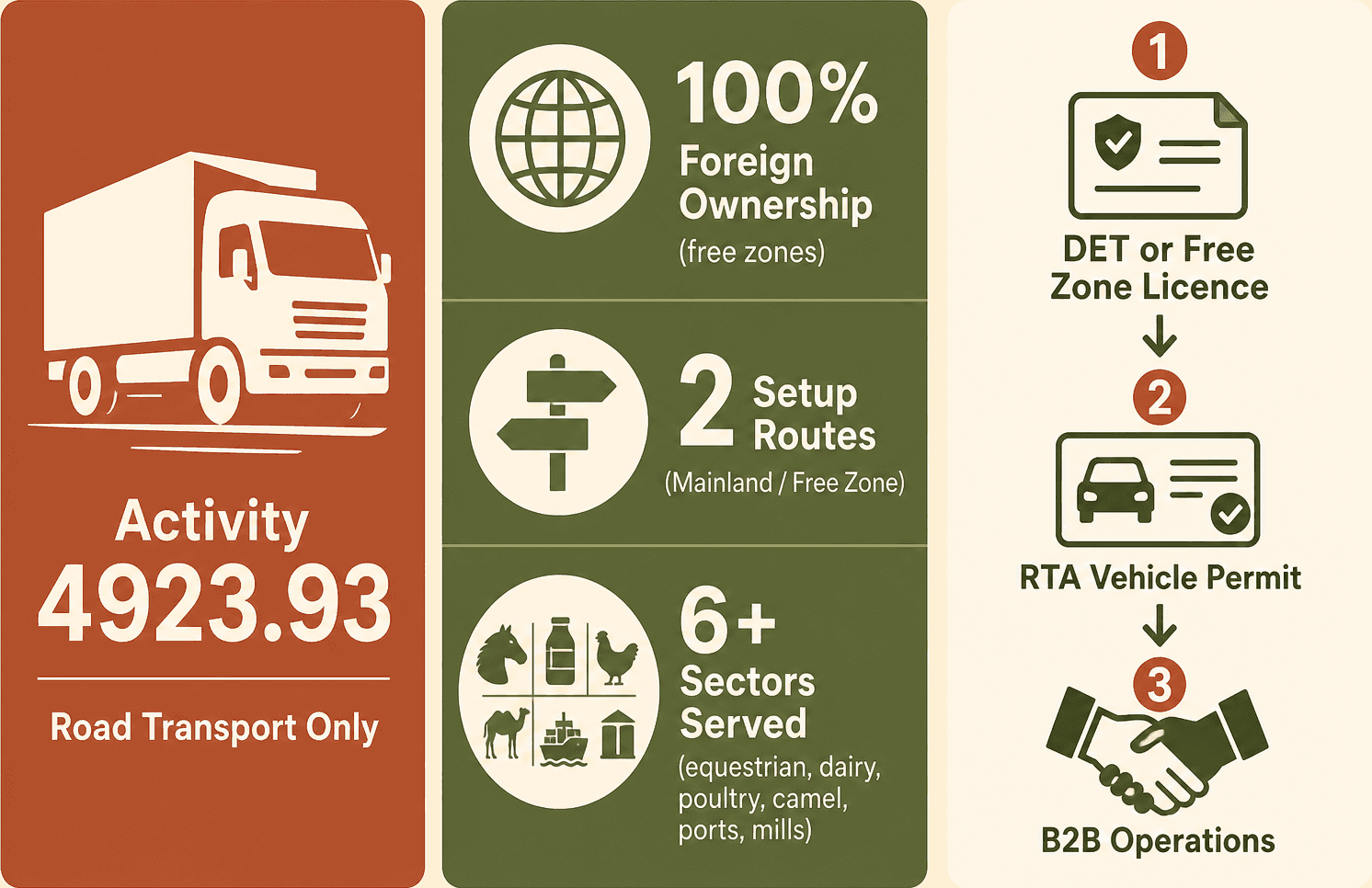
There are two primary routes for setting up a fodder and animal feed transport business in Dubai: a mainland trade licence issued through the Department of Economy and Tourism (DET), or a free zone licence from an approved free zone authority. Each route carries distinct operational implications.
A mainland licence allows operators to conduct transport activities directly across UAE roads without the need for a local service agent or distributor arrangement. This is particularly practical for businesses whose clients are spread across multiple emirates. According to the UAE Ministry of Economy, business activities are classified under standardised codes that determine the scope of permitted operations — ensuring operators remain compliant with their licensed activity.
The free zone route is well-suited to operators whose logistics activity is concentrated within or adjacent to designated freight corridors. When considering business setup cost in Dubai, free zone packages can offer competitive all-in pricing that includes licence fees, flexi-desk arrangements, and visa allocations.
Road & Transport Authority (RTA) Approvals
Regardless of whether a business is set up on the mainland or in a free zone, commercial transport vehicles operating on Dubai's roads require registration and relevant permits from the Roads and Transport Authority (RTA). Heavy goods vehicles carrying bulk fodder or large feed consignments may require specific load classification approvals. Operators are strongly advised to verify current RTA requirements, permit categories, and applicable fees directly with the authority, as these are subject to periodic revision. Further guidance on transport-related regulatory requirements is available via the official UAE government portal at u.ae.
Dubai South Business Hub Free Zone as a Setup Option
Dubai South Business Hub Free Zone is strategically positioned within the Dubai South district, adjacent to Al Maktoum International Airport and in close proximity to major freight and port infrastructure. For fodder and animal feed transport operators, this location offers practical advantages — particularly for businesses handling imported feed products arriving through air or sea cargo channels. The free zone offers streamlined licence issuance for transport and logistics activity codes, 100% foreign ownership, and access to UAE residency visa packages tied to the company licence.
Typical Requirements to Set Up This Activity
While specific documentation requirements may vary by jurisdiction and legal structure, operators setting up under activity code 4923.93 should generally be prepared with the following:
Trade name reservation and initial approval from the relevant licensing authority
Memorandum of Association or sole establishment deed, depending on the chosen legal structure
Tenancy contract or flexi-desk agreement (Ejari-attested for mainland setups)
Vehicle registration documents for the transport fleet, registered under the company name
Confirmation of RTA route and vehicle permits for commercial transport operations
No food-handling permit is typically required for sealed or packaged animal feed, but operators transporting loose or bulk organic fodder should confirm commodity-specific requirements with Dubai Municipality
The Dubai Chamber of Commerce provides useful resources for businesses navigating the local regulatory landscape, including sector-specific guidance relevant to logistics and agri-supply chain operations.
Visa & Workforce Considerations
The number of investor and employee visas allocated to your business will depend on the licence package selected and the size of your registered office space. Drivers employed by the company must hold valid UAE commercial driving licences appropriate to the vehicle category used for feed transport. For mainland entities, labour compliance — including employment contracts, wage protection, and worker welfare — is governed by the Ministry of Human Resources and Emiratisation (MOHRE). Free zone entities follow the employment regulations of their respective free zone authority. Business support services such as PRO assistance and government transaction management can help streamline the visa and workforce onboarding process.
Key Operational & Compliance Considerations
Once licensed and operational, fodder and animal feed transport businesses must maintain ongoing compliance across several areas:
Vehicle standards: All transport vehicles must comply with UAE Federal Traffic Law requirements relating to load limits, safety equipment, and roadworthiness.
Corporate tax: Businesses meeting the UAE's taxable income threshold are required to register for corporate tax. Operators should verify current thresholds and obligations with the Federal Tax Authority.
Contractual clarity: Agreements with farms, stables, and feed distributors should clearly define liability for spoilage, contamination, or damage during transit.
Insurance: Commercial vehicle insurance and cargo liability cover are standard practice for this activity and are typically required by clients and regulatory bodies alike.
Record-keeping: Maintaining accurate transport logs, delivery records, and vehicle maintenance documentation supports regulatory compliance and builds client trust.
Why Dubai Is a Strategic Base for Feed Transport Operations
Dubai's position as a GCC logistics hub makes it an ideal base for animal feed transport operations that extend beyond the UAE's borders. The emirate's world-class road network, port infrastructure, and air cargo facilities support efficient regional distribution across the wider Gulf region.
Demand for feed transport services is driven by Dubai's growing equestrian sector, the dairy and poultry industries in the broader Northern Emirates, and camel farming communities in the hinterland. The UAE government's ongoing commitment to food security and agri-logistics investment further supports long-term growth in this sector. Businesses can leverage Dubai's import infrastructure — particularly the proximity to Jebel Ali Port — to handle international fodder and compound feed products arriving from global suppliers. Trade facilitation resources and logistics data are available through Dubai Trade, the UAE's integrated trade and logistics platform.
Conclusion
Fodder and animal feed transport (activity code 4923.93) is a viable, in-demand logistics business in Dubai, supported by the emirate's agri-food supply chain needs and world-class infrastructure — with setup options available on both mainland and in free zones like Dubai South Business Hub Free Zone. Whether you are an experienced logistics operator or an investor entering the sector for the first time, choosing the right licence structure and understanding regulatory requirements from the outset is essential to a smooth launch.
Contact Dubai South Business Hub Free Zone to explore licence packages suited to transport and logistics activities and receive guidance tailored to your specific business structure and operational goals. You can also start your business in Dubai with the support of an experienced free zone team that understands the local regulatory environment.
References
UAE Ministry of Economy (moet.gov.ae)
u.ae (u.ae)
Dubai Chamber of Commerce (dubaichamber.com)
Ministry of Human Resources and Emiratisation (MOHRE) (mohre.gov.ae)
Federal Tax Authority (tax.gov.ae)
Dubai Trade (dubaitrade.ae)
Frequently Asked Questions