Topic Summary
What Is Korean Nationals Banking UAE and Why It Matters
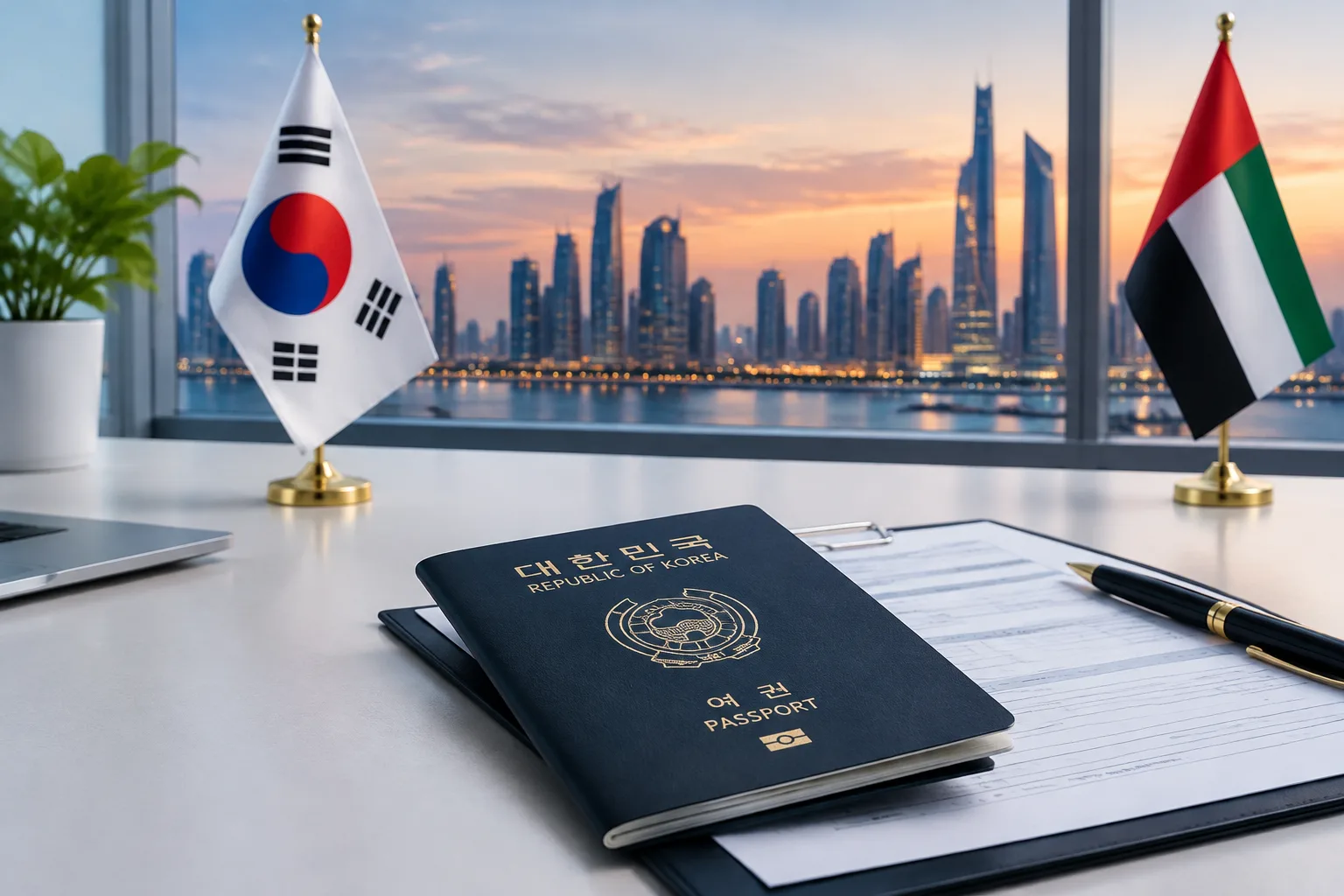
Korean nationals banking UAE means opening and running a corporate or personal bank account in the UAE as a South Korean passport holder. It enables AED invoicing, supplier payments, payroll and profit transfers. Banks decide using KYC, license activity and source-of-funds evidence. For a wider primer, read our guide on opening a UAE corporate bank account as a Korean entrepreneur .
How a Dubai Company Korean National Owner Qualifies for an Account
How a Dubai Company Korean National Owner Qualifies for an Account
Step-by-Step Process for Korean Nationals Banking UAE
Form your free zone company, collect KYC documents, choose a bank that fits your trade profile, submit the application, attend any compliance interview, then activate with an initial deposit. Complete files commonly clear in one to four weeks. Our Dubai South set-up guide for Korean nationals covers formation in detail.
How Electronics and Components Distribution Shapes Your Banking Needs
Electronics and components distribution creates specific banking needs: high-value USD and AED payments, letters of credit, fast settlement and clear import documents. For uae business from south korea in this sector, choose multi-currency accounts with trade finance and tolerance for large, irregular transfers.
Regulations in the UAE on Tax, Currency and Cross-Border Transfers
UAE banks follow Central Bank rules on AML, KYC and sanctions screening, while the Federal Tax Authority governs corporate tax and VAT. Qualifying free zone income can be taxed at 0%, with 9% on other taxable income above AED 375,000 (Federal Tax Authority, 2026). Korean owners should also track home-country reporting duties.
How Much Does It Cost and How Long Does It Take
Corporate accounts commonly involve minimum balances of AED 10,000 to AED 50,000, monthly fees of AED 0 to AED 150 and setup of one to four weeks, as the table above shows (checked March 2026). Confirm current figures with the bank, since fee schedules change. A Korean owner might budget AED 25,000 for the balance plus transfer fees.
Common Mistakes Korean Business Owners Make When Banking in the UAE
Common Mistakes include applying before license and residency are complete, vague trade plans, mixing personal and business funds, ignoring KYC refresh requests and applying to too many banks at once. Each can trigger a decline or freeze lasting weeks. Compare notes in our Japanese entrepreneur banking guide .
A Korean national can open a UAE corporate account once a free zone company holds a trade license and residency. Approval typically takes 1 to 4 weeks when the KYC file is complete [1]. The Central Bank of the UAE supervises more than 50 licensed banks, yet about 40% of first-time founders still face a delay or decline [1]. This guide shows how korean nationals banking uae works, what it costs in AED and which mistakes cause declines.
What Is Korean Nationals Banking UAE and Why It Matters
How a Dubai Company Korean National Owner Qualifies for an Account
Step-by-Step Process for Korean Nationals Banking UAE
How Electronics and Components Distribution Shapes Your Banking Needs
Regulations in the UAE on Tax, Currency and Cross-Border Transfers
How Much Does It Cost and How Long Does It Take
Common Mistakes Korean Business Owners Make When Banking in the UAE
What Should You Do Next to Start Korean Nationals Banking UAE
References
What Is Korean Nationals Banking UAE and Why It Matters
Korean nationals banking UAE means opening and running a corporate or personal bank account in the UAE as a South Korean passport holder. It enables AED invoicing, supplier payments, payroll and profit transfers. Banks decide using KYC, license activity and source-of-funds evidence. For a wider primer, read our guide on opening a UAE corporate bank account as a Korean entrepreneur.
How UAE Banks Classify Korean Owners and Their Companies
Banks treat a free zone company owned by a Korean national as a non-resident-owned entity unless the owner holds UAE residency. Decisions rest on the license, the activity code and beneficial ownership disclosure.
Activity descriptions map to ISIC Rev.4, the UN classification (UN Statistics Division, 2008). Take a Seoul-based distributor of memory modules. Its trade sits under Section G, wholesale of electronic and telecommunications equipment and parts, and that clean coding helps a bank judge risk quickly.
Why a Local Account Beats Relying on Korean Banks Alone
AED accounts shorten payment cycles with Gulf buyers.
You cut correspondent bank fees and delays.
Payroll, visa and license renewals clear locally.
A component supplier can collect AED from Dubai South logistics customers without converting at every step.
How a Dubai Company Korean National Owner Qualifies for an Account

A Dubai company Korean national owner qualifies with a valid free zone trade license, a clear business activity, verified shareholder identity and documented source of funds. Banks also favor residency, a registered office and a credible trading plan backed by supplier and customer evidence.
Free Zone License and Residency as the Foundation
Start with Dubai South Business Hub Free Zone company formation and the trade license. Residency visa packages tied to the license strengthen the file, and our UAE investor visa guide for Korean nationals covers timing. Founders who finish license and residency before approaching any bank avoid the most common early decline.
Business Substance Banks Look For
Registered office, lease or flexi-desk evidence.
Draft purchase orders from a Korean semiconductor supplier.
A website matching your activity.
Realistic monthly turnover in AED.
Matching Your Company Name and Activity to Your Plan
Pick a name consistent with your activity, such as Han River Components Trading, so KYC reviews align. Run the name check tool before filing. Then keep the activity wording identical across license, website and bank forms.
Step-by-Step Process for Korean Nationals Banking UAE
Form your free zone company, collect KYC documents, choose a bank that fits your trade profile, submit the application, attend any compliance interview, then activate with an initial deposit. Complete files commonly clear in one to four weeks. Our Dubai South set-up guide for Korean nationals covers formation in detail.
Step 1: Complete Company Formation and Licensing
Secure the license, share certificate and lease before booking any bank appointment.
Step 2: Prepare KYC and Source-of-Funds Evidence
Passport, Emirates ID if held, proof of Korean address.
Korean bank statements and business registration.
Apostilled documents with English translation.
A Korean parent company's audited accounts to prove funding origin.
Step 3: Shortlist Banks and Submit Your Application
Compare minimum balance, monthly fees and trade finance. Apply to one or two banks, not many. Budget with the cost calculator.
Step 4: Pass Compliance Review and Activate the Account
Expect questions on customers, suppliers and volumes. Answer with signed supplier agreements, fund the initial deposit and set up online banking. Reply to information requests quickly.
How Electronics and Components Distribution Shapes Your Banking Needs
Electronics and components distribution creates specific banking needs: high-value USD and AED payments, letters of credit, fast settlement and clear import documents. For uae business from south korea in this sector, choose multi-currency accounts with trade finance and tolerance for large, irregular transfers.
Multi-Currency and Trade Finance Features to Prioritize
USD and AED settlement under one roof.
Letters of credit and documentary collections.
The dirham is pegged at 3.6725 per USD, which simplifies pricing (Central Bank of the UAE).
A display driver distributor, for example, pays its Korean manufacturer in USD and invoices UAE buyers in AED.
Documenting High-Value Component Shipments for Your Bank
Keep commercial invoices, packing lists and bills of lading together, with consistent HS codes. Picture a one-off AED 400,000 inbound payment. With the invoice and shipping documents attached, it clears without a query. Explain spikes before the bank asks. Our guide on what Korean founders need to know before setting up in Dubai adds context.
Regulations in the UAE on Tax, Currency and Cross-Border Transfers
UAE banks follow Central Bank rules on AML, KYC and sanctions screening, while the Federal Tax Authority governs corporate tax and VAT. Qualifying free zone income can be taxed at 0%, with 9% on other taxable income above AED 375,000 (Federal Tax Authority, 2026). Korean owners should also track home-country reporting duties.
AML, KYC and Ongoing Monitoring Duties
Banks run periodic KYC refreshes.
You must disclose beneficial owners.
Monitoring flags unusual patterns, such as a sudden rise in monthly inflows.
Corporate Tax and VAT Registration Basics
The structure is not 100% tax free. Register with the Federal Tax Authority, file on time and keep qualifying and non-qualifying income in separate ledgers. VAT registration becomes mandatory at AED 375,000 of taxable supplies.
Typical UAE Corporate Bank Account Costs and Timelines in AED (fees checked on a stated date)
Feature | Standard Business Account | Premium or Trade-Focused Account |
|---|---|---|
Minimum balance (AED) | AED 10,000 to AED 25,000, lower entry point | AED 25,000 to AED 50,000, opens up trade finance lines |
Monthly maintenance fee (AED) | AED 0 to AED 50, often waived above the balance | AED 50 to AED 150, includes dedicated relationship manager |
Account opening fee (AED) | AED 0 to AED 500, usually modest | AED 500 to AED 1,000, covers multi-currency setup |
International transfer fee (AED) | AED 50 to AED 100 per wire, simple pricing | AED 25 to AED 75 per wire, negotiated for volume |
Typical approval time | 1 to 3 weeks with a complete file | 2 to 4 weeks, deeper compliance review |
Fees indicative, checked March 2026. Confirm with each bank.
How Much Does It Cost and How Long Does It Take
Corporate accounts commonly involve minimum balances of AED 10,000 to AED 50,000, monthly fees of AED 0 to AED 150 and setup of one to four weeks, as the table above shows (checked March 2026). Confirm current figures with the bank, since fee schedules change. A Korean owner might budget AED 25,000 for the balance plus transfer fees.
What Drives Delays and How to Shorten Them
Incomplete source-of-funds files.
Mismatched activity descriptions.
Unattested or untranslated documents.
One founder lost two weeks over a missing translation of the Korean business registration.
Common Mistakes Korean Business Owners Make When Banking in the UAE
Common Mistakes include applying before license and residency are complete, vague trade plans, mixing personal and business funds, ignoring KYC refresh requests and applying to too many banks at once. Each can trigger a decline or freeze lasting weeks. Compare notes in our Japanese entrepreneur banking guide.
Application and Documentation Errors
Unclear activity descriptions.
Missing apostilles or translations.
Turnover figures that contradict the trade plan, a classic decline reason.
Operational Habits That Raise Compliance Flags
Large unexplained cash deposits.
Third-party transfers without invoices.
Ignoring bank messages.
Repeated unexplained third-party credits are enough to freeze an account.
What Should You Do Next to Start Korean Nationals Banking UAE
Check your company name, estimate costs, form your Dubai South Business Hub Free Zone company and gather KYC documents. Then apply to a bank suited to electronics and components trade, with supplier evidence and a realistic AED forecast.
Your 30-Day Action Plan
Week 1: name check and cost estimate.
Week 2: license and residency filing.
Weeks 3 and 4: KYC pack and bank application.
Where to Get Help From Dubai South Business Hub
We handle formation, trade licenses and residency packages, and we guide you on bank-ready documentation. Korean nationals banking UAE is manageable when the license, residency and KYC file are complete before you apply. Check your name, run the cost calculator and speak with Dubai South Business Hub today.
References
[1] Central Bank of the UAE, 2026
Federal Tax Authority, 2026
Frequently Asked Questions