Topic Summary
What the Brokerage License Covers
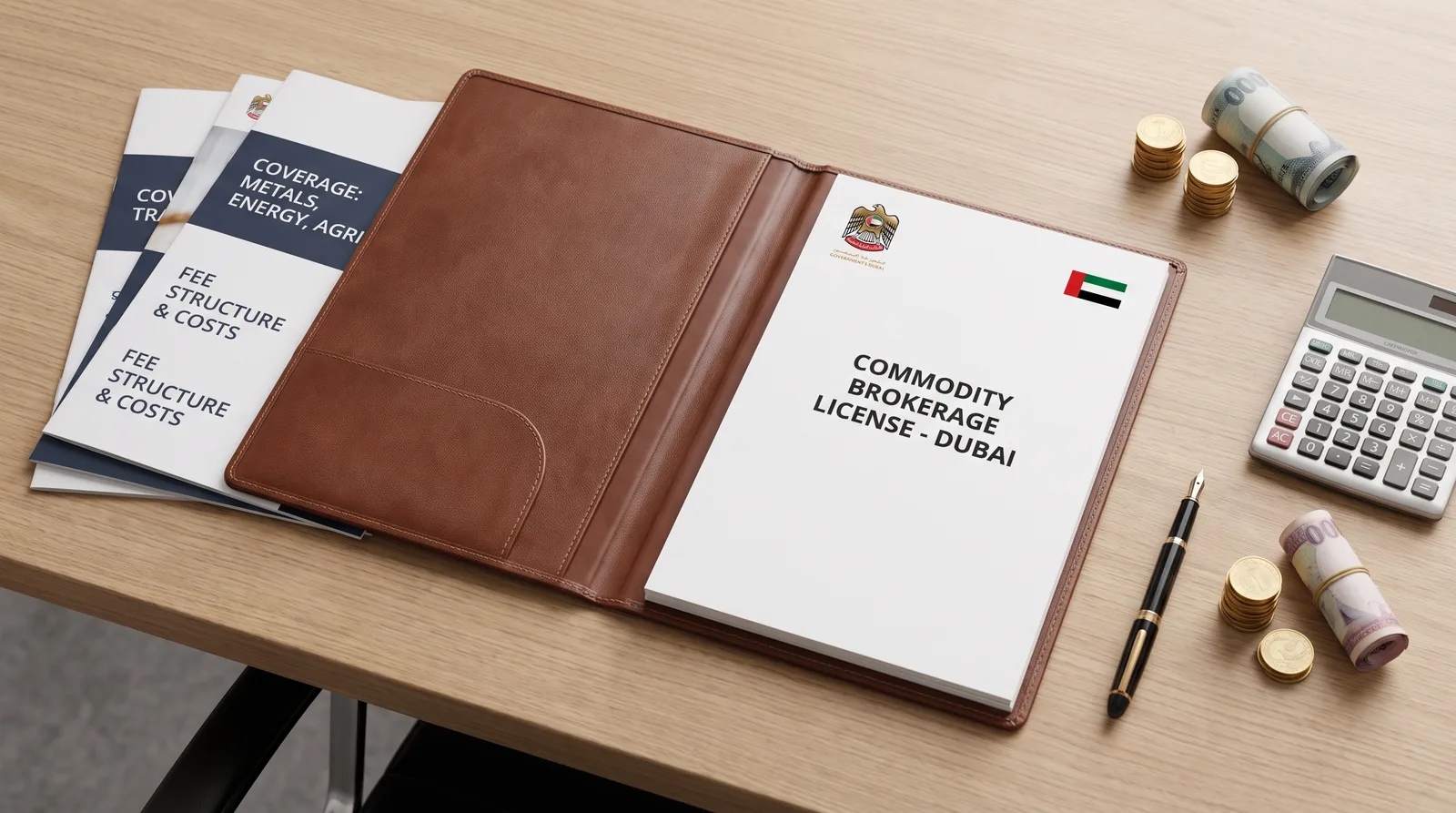
A commodity brokerage license lets a company arrange buy and sell deals for clients, usually for a commission, without owning the goods. Permitted activities are listed on the license schedule, so check them before signing client agreements.
Who Should Apply for This License
The license suits founders who earn commission by matching commodity buyers and sellers, or who place orders without taking title to stock. Teams planning to act as intermediaries before moving into trading often start here.
Activities That Need a Separate Permit
Buying and holding stock for resale, importing or exporting on your own account, and dealing in regulated financial products fall outside this license. A business that resells cargo needs a trading permit instead of or alongside the brokerage license.
How Regulators Classify Commodity Businesses
Authorities classify a business by its principal activity, meaning the work that generates the most value, along with the type of goods involved. Selling online does not change the classification; a platform brokering metal contracts is classified by the metal trade it arranges.
Steps to Obtain the License
The process involves defining your brokerage activities, selecting a licensing free zone, preparing company documents, submitting the application, paying fees, and securing an office. Start by matching each commodity you plan to broker to a permitted activity code.
This guide explains what a commodity brokerage license in Dubai covers, how the application works, what you should budget, and how it differs from a trading license. By the end, you'll know which license fits your model. The UN's International Standard Industrial Classification (ISIC) Rev.4 splits all economic activity into 21 top-level sections, labelled A to U (UN Statistics Division, 2008). In 2026, Dubai's non-oil trade crossed AED 2.1 trillion (Dubai Chamber of Commerce, 2026), and much of that volume moves through brokers who never touch the cargo.
What Is a Commodity Brokerage License in Dubai?
A commodity brokerage license lets a company arrange buy and sell deals for commodities on behalf of clients, usually for a commission. The broker connects buyers and sellers but does not own the goods. In Dubai, the license is issued through a free zone or mainland authority, based on the activity the company performs.
Who Needs This License
This license suits founders who earn commission by matching commodity buyers and sellers. It also suits firms that place orders for clients without taking title to the stock.
How Commodity Activity Is Classified
Regulators classify your business by its principal activity. ISIC Rev.4 uses a four-level hierarchy of sections, divisions, groups and classes (UN Statistics Division, 2008).
Principal activity: the work that generates the most value added.
Goods type: metals, grains, or energy products define the category.
Sales channel: selling online does not change the classification.
What a Commodity Brokerage License in Dubai Covers

A commodity brokerage license covers arranging commodity deals, negotiating terms between parties, and earning commission on completed transactions. It does not usually cover holding inventory or taking title to goods. The exact permitted activities appear on the license schedule, so check them before you sign a client agreement.
Activities Permitted Under the License
Introductions: matching buyers and sellers for listed commodities.
Negotiation: agreeing terms on behalf of a client.
Fees: earning commission or a fixed fee per deal.
A broker that matches a client with a supplier of listed industrial goods stays within the brokerage scope. Your fee comes from the deal, not from the stock.
Activities That Need a Separate Permit
Buying and holding stock for resale falls outside this license. So does importing or exporting goods on your own account. A broker that buys a cargo to resell needs a trading permit, either in addition to or instead of the brokerage license.
Steps to Get a Commodity Brokerage License in Dubai
To get a commodity brokerage license in Dubai, choose your activity scope, select a licensing free zone, prepare company documents, submit the application, pay the fees, and secure an office. Dubai South Business Hub Free Zone supports company formation and free zone trade licenses from start to finish.
Step 1: Define Your Brokerage Activity
List the commodities you will broker.
Match each one to a permitted activity code.
Confirm that no trading activity sits in your plan.
Step 2: Submit Documents and Pay Fees
Prepare passport copies, a business plan, and a proposed company name.
Submit the application to the licensing authority.
Pay government and free zone fees after approval.
Commodity Brokerage License Cost in Dubai: What to Budget
The cost of a commodity brokerage license in Dubai depends on the free zone, the activity scope, office or desk requirements, and visa packages. Budget for license fees, registration, office space, and renewal.
Fees That Make Up the Total Cost
License and registration fees
Office or flexi-desk rental
Residency visa packages tied to a company license
Read the quote line by line, so each fee is clear before you apply.
Ongoing Costs After Approval
Annual renewal is the main recurring cost. Compliance and accounting support also add up over the year. If you add a new commodity group later, you may need to amend your license before you start that work.
Feature | Commodity Brokerage License | Trading License |
|---|---|---|
Main activity | Arranging deals for clients | Buying and reselling goods |
Income source | Commission or fixed fee | Margin on sales |
Stock ownership | Usually none | Owned stock |
Typical user | Intermediary or agent | Importer or reseller |
Scope change | Requires license amendment | Requires license amendment |
Commodity Brokerage vs Trading License: Key Differences
A commodity brokerage license covers arranging deals for a commission, while a trading license covers buying and selling goods for your own account. The main difference is stock ownership. Choose the license that matches how your business earns revenue. Brokers earn commission, and traders earn margin on sales.
Comparing Scope, Income, and Stock Ownership
Brokers earn commission and usually do not hold stock. Traders earn margin and do hold stock. Trading licenses often suit importers and exporters who handle goods directly.
A firm that earns a fee for matching deals needs a brokerage license. A firm that buys and resells cargo needs a trading license.
Choosing the Right License for Your Model
Match the license to your primary revenue source. If you plan mixed models, set up separate activity lines. Confirm the scope with the licensing authority before you apply, because a mismatch can delay approval.
Key takeaways
A commodity brokerage license covers arranging deals for commission, not holding stock. Costs depend on the free zone, activity scope, and office needs. Confirm your scope before you apply, and get a written fee quote.
Quick Checklist Before You Apply
Confirm the activity scope.
Choose the right license type.
Request a written fee quote.
Plan for renewal and scope changes.
Important Considerations
A commodity brokerage license in Dubai covers commission work only.
Add a new activity line before you start any stock-holding deal.
References
Frequently Asked Questions