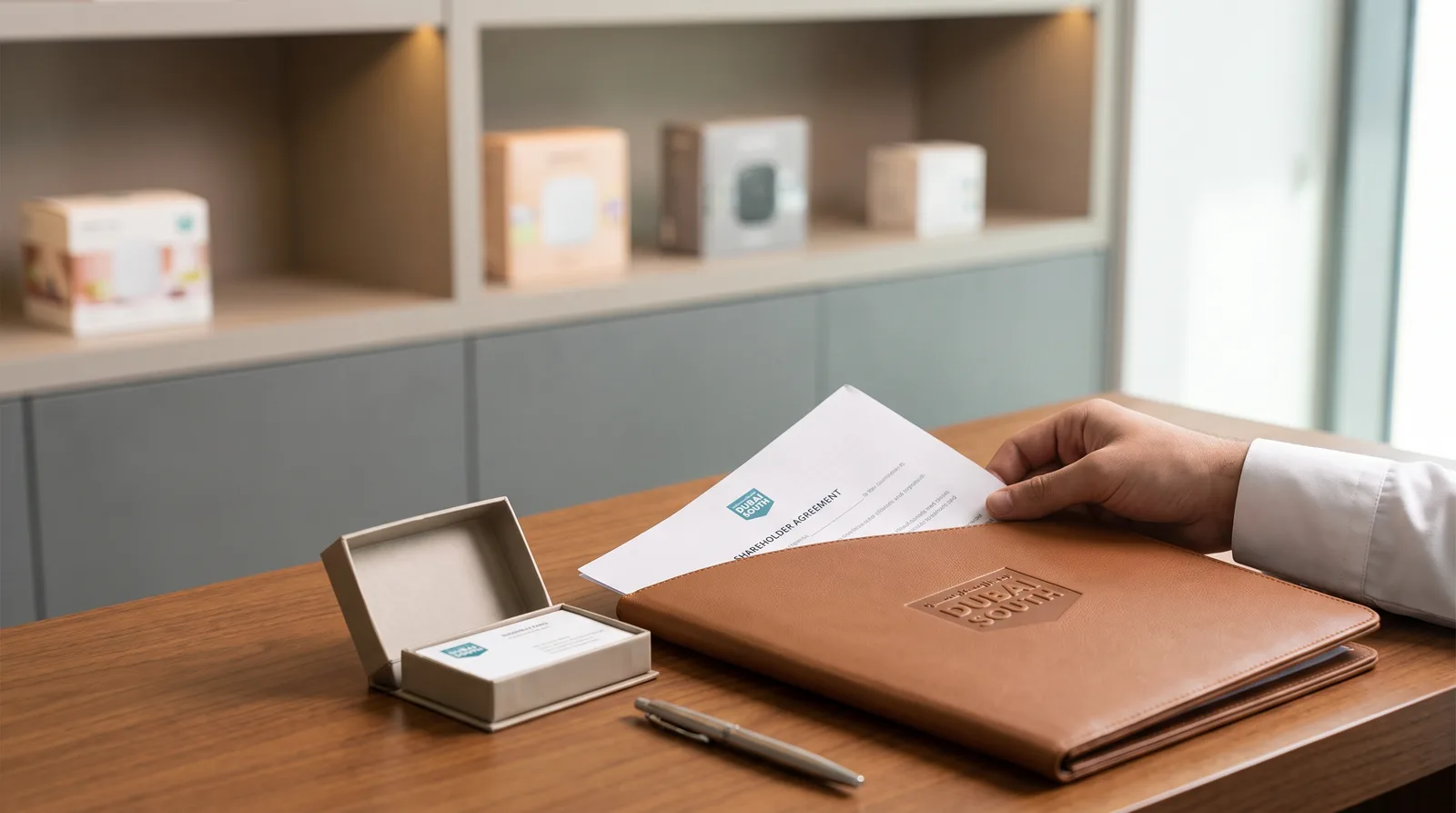
Topic Summary
Legal Requirement for All Online Sellers
UAE Federal Decree-Law No. 14 of 2023 mandates a valid trade license for every online seller, regardless of platform or business model. This covers everything from Instagram DMs and WhatsApp catalogues to Amazon.ae storefronts and dropshipping operations.
Fines Reach AED 50,000 Without a License
Operating without an e-commerce license in the UAE is not a grey area — penalties under UAE commercial law can reach AED 50,000. Unlicensed sellers also risk platform account suspension and being blocked from licensed payment gateways.
Free Zone Licenses Start from AED 12,500
Free zone e-commerce licenses are among the most affordable entry points, starting from AED 12,500 according to Dubai South Free Zone 2026 figures. Free zone packages often bundle digital service activity codes that mainland licenses may not include by default.
E-Commerce vs. General Trade License Differences
A general trade license does not automatically authorise online retail activity codes, which can cause issues during payment gateway onboarding or marketplace seller verification. An e-commerce license includes specific codes such as DET activity code 4791 for retail sale via internet.
Banking and Payment Gateways Require a License
Without a valid trade license, sellers cannot open a business bank account or integrate payment gateways like Stripe or local processors. This creates an immediate growth ceiling for sellers who rely on digital payments and wholesale supplier accounts.
Wide Range of Covered Business Activities
A UAE e-commerce license typically authorises online retail of physical goods, digital products, dropshipping, subscription services, marketplace selling, and electronic marketing. The exact scope varies between free zone and mainland issuing authorities.
Dubai's E-Commerce Market Hits USD 9.2 Billion
The UAE e-commerce market is forecast to surpass USD 9.2 billion in 2026, reflecting rapid growth in online retail across the region. Over 41,000 new companies registered with Dubai Chamber in 2023 alone, signalling strong demand for formal business setup.
In 2026, the UAE's e-commerce market is forecast to surpass USD 9.2 billion (Statista, 2026). Over 41,000 new companies registered with Dubai Chamber in 2023 alone (Dubai Chamber of Commerce, 2023). UAE Federal Decree-Law No. 14 of 2023 mandates a valid trade license for all online sellers. Fines for unlicensed trading can reach AED 50,000 (UAE Ministry of Economy, 2023). Free zone e-commerce licenses start from AED 12,500 (Dubai South Free Zone, 2026). And yet thousands of sellers running Instagram stores, dropshipping businesses, and Amazon.ae storefronts are still operating without one.
Selling online in the UAE without a license isn't a grey area. Whether you're dropshipping, running a WhatsApp catalogue, or listing on Noon, you need a valid trade license to operate legally and access business banking, payment gateways, and wholesale supplier accounts. This guide covers everything: what an ecommerce license dubai actually covers, what it costs in AED, how mainland compares to free zone, what documents you need, and how to connect your license to payment gateways and major marketplaces. For more detail, see our guide on cloud kitchen and food business licence in Dubai. For more detail, see our guide on online wholesale business setup in Dubai. For more detail, see our guide on SaaS business licence and setup in Dubai.
What Is an E-Commerce License in the UAE?
An e-commerce license in the UAE is a trade license that legally authorises a business to sell goods or services online, covering websites, apps, and marketplace storefronts. Without one, you cannot open a business bank account, integrate a payment gateway, or list on platforms like Amazon.ae and Noon. It's the legal foundation every online seller in the country needs before taking a single dirham from a customer.
The Legal Basis for Selling Online in the UAE
UAE Federal Decree-Law No. 14 of 2023 on e-commerce requires all online sellers to hold a valid trade license, regardless of the channel they use. That means your own website, Instagram DMs, WhatsApp catalogues, and third-party marketplaces are all covered by the same requirement. The law makes no distinction between business models.
The channels that require a license include:
Your own website or branded app
Instagram, TikTok Shop, and Facebook Marketplace
WhatsApp Business catalogues
Third-party platforms: Amazon.ae, Noon, Namshi
Dropshipping operations (even where you never touch the product)
Operating without a license can result in fines up to AED 50,000 under UAE commercial law, platform account suspension, and an inability to process payments through licensed gateways. Take the example of a seller running a successful Instagram perfume store shipping to UAE customers: without a license, they can't open a business account with Emirates NBD or integrate Stripe, two blockers that cap growth immediately.
How an E-Commerce License Differs from a General Trade License
A general trade license permits buying and selling physical goods but doesn't explicitly authorise online retail activity codes. An e commerce license uae includes specific activity codes for electronic trading, digital marketing, and online platform management. DET (Dubai Economy and Tourism) activity code 4791, which covers retail sale via internet, is consistent with ISIC Rev.4 Class 4791 and must be listed on your license if your primary sales channel is digital.
Some free zones issue a dedicated "e-commerce" license category with these codes bundled in. If you're selling primarily through digital channels, a general trade license may not be sufficient, and you could face complications during payment gateway onboarding or marketplace seller verification.
For a detailed breakdown of how licensing works in this market, see our ecommerce licensing in Dubai guide.
What Activities Does an E-Commerce License Cover?
A UAE e-commerce license typically covers online retail of physical goods, digital products, dropshipping, subscription services, and marketplace selling. It also authorises electronic marketing and website-based service delivery. The exact activities depend on the issuing authority, free zone licenses may bundle additional digital service codes that mainland licenses list separately.
Core Trading Activities Permitted
Retail sale of physical goods via website, app, or marketplace storefront
Dropshipping, sourcing and forwarding orders without holding inventory
Digital product sales: software, e-books, online courses, templates
Subscription box and recurring delivery businesses
Online wholesale to UAE-based buyers
Electronic marketing and affiliate-based selling
Under ISIC Rev.4 principles, e-commerce is classified by the nature of goods or services provided, not the sales channel. Class 4791 covers retail sale via mail order houses or via internet, so whether you're selling through your own Shopify store or a marketplace storefront, the activity code is the same.
Activities That Require Additional Approvals
The base sell online uae license doesn't cover everything. Some product categories need additional regulatory sign-off before you can list them:
Selling food, supplements, or health products online requires additional approval from Dubai Municipality or the UAE Ministry of Health. The Dubai Municipality food safety portal lists 12 product categories requiring pre-approval. Electronics and regulated goods may need TDRA (Telecommunications and Digital Government Regulatory Authority) or MoIAT certification. Financial products sold online require a separate DFSA or SCA license entirely.
Worth flagging: a seller launching a UAE protein supplement store on their own website needs the e-commerce license plus a Dubai Municipality food import permit. The license alone is not sufficient to list regulated health products legally.
For a full walkthrough of setup requirements, see our guide to e-commerce business setup in Dubai.
Mainland vs Free Zone E-Commerce License, Key Differences
A mainland e-commerce license from DET allows you to sell directly to UAE consumers and list on all local marketplaces with no geographic restriction. A free zone license offers 100% foreign ownership and lower setup costs but may require a local distributor for direct UAE retail, though many platforms like Amazon.ae and Noon accept free zone sellers without restriction.
Mainland E-Commerce License: Pros and Trade-Offs
Issued by Dubai Economy and Tourism (DET); gives unrestricted access to the UAE market
Can sign contracts directly with UAE government entities and large retailers
Requires a physical office address in Dubai, flexi-desk options available from AED 15,000/year
Foreign nationals can hold 100% ownership in most e-commerce categories since UAE Commercial Companies Law amendments in 2021
VAT registration threshold: AED 375,000 annual turnover (mandatory), AED 187,500 (voluntary)
The mainland route gives you the broadest market access. But the office cost requirement makes it noticeably more expensive in year one, something to weigh carefully if you're just starting out.
Free Zone E-Commerce License: Why Dubai South Stands Out
100% foreign ownership, zero personal income tax, full profit repatriation
Dubai South Free Zone sits adjacent to Al Maktoum International Airport, the UAE's designated primary air cargo hub, handling over 800,000 tonnes annually
License packages include visa allocation, registered address, and issuance often within 3–5 business days
Free zone sellers can list on Amazon.ae, Noon, and their own websites without restriction
Dubai South packages start from approximately AED 12,500, roughly AED 8,000 less than a comparable mainland setup
A UK-based entrepreneur launching a fashion brand on Amazon.ae chose Dubai South Free Zone over a mainland license, saving roughly AED 8,000 in setup costs while gaining proximity to air freight routes for fast regional fulfilment. That integrated cargo ecosystem sets Dubai South apart from free zones that offer lower headline prices but lack direct airport and logistics connectivity. Explore the Dubai South Business Hub Free Zone e-commerce license options to compare packages.
Cost Breakdown: What Does an E-Commerce License Cost in Dubai?
An ecommerce license dubai costs between AED 12,500 and AED 25,000 depending on whether you choose a free zone or mainland setup. Free zone packages from Dubai South start at approximately AED 12,500 including registration and address. Mainland DET licenses typically run AED 18,000–AED 25,000 before office and visa costs are added. To get a personalised figure, calculate your e-commerce license cost using the Dubai South tool.
Free Zone E-Commerce License Cost Breakdown
Free zone setup is 30–40% cheaper in year one than mainland, primarily because the registered address requirement costs far less. Renewal fees are also lower, Dubai South renewals typically run AED 10,000–AED 13,000.
Mainland E-Commerce License Cost Breakdown
E-Commerce License Cost Comparison: Free Zone vs Mainland (2026, AED) | ||
Cost Component | Dubai South Free Zone | Mainland (DET) |
|---|---|---|
Base license fee | AED 12,500–15,000 | AED 10,000–15,000 |
Registration / establishment card | AED 1,000–2,000 | AED 620–900 |
Office / registered address | Included or AED 2,500–5,000 | AED 15,000–25,000 |
MOA / notarisation | Not required (standard articles) | AED 3,000–5,000 |
First-year total (excl. visa) | AED 15,500–22,000 | AED 28,000–45,000 |
Annual renewal (approx.) | AED 10,000–13,000 | AED 18,000–30,000 |
Documents Required and Application Process
To apply for a UAE e-commerce license you need a valid passport copy, visa page, Emirates ID (if a UAE resident), passport-size photo, business name options, and a completed application form. Free zone applications are processed online in 3–5 days. Mainland DET applications typically take 5–10 working days. Knowing how to get an ecommerce license uae starts with having these documents ready before you begin.
Documents You Need to Prepare
Passport copy (all shareholders and managers), valid for at least 6 months
Coloured passport-size photograph with white background
UAE visa page and Emirates ID copy (UAE residents only; non-residents apply with passport alone)
3 proposed trade name options, checked against the DET or free zone name registry
Memorandum of Association (MOA) draft for mainland; free zones provide standard articles of association
Non-residents can obtain a UAE e-commerce license without being in the country. Free zone applications, including Dubai South, can be completed 100% remotely, which is a meaningful advantage for US-based or UK-based founders who don't want to fly in just to register.
Step-by-Step Application Process for a Free Zone E-Commerce License
An e-commerce entrepreneur based in the US completed their Dubai South Free Zone application entirely online in under a week, passport scans, digital payment, and a courier-delivered license pack sent to their home address. No flights, no PRO agent, no in-person queues. Ready to do the same? Start your e-commerce business now.
Can You Sell on Amazon.ae and Noon with a UAE Trade License?
Yes, both Amazon.ae and Noon require sellers to hold a valid UAE trade license to activate a seller account. Free zone licenses are accepted by both platforms. You'll also need a UAE business bank account and VAT registration (if turnover exceeds AED 375,000) to complete seller onboarding. Your sell online uae license is the key that opens both platforms.
Amazon.ae Seller Requirements for UAE License Holders
Valid UAE trade license, UAE business bank account, and registered UAE address to activate Seller Central
Both mainland and free zone licenses are accepted, Amazon.ae doesn't discriminate by license type
VAT registration (TRN) required if annual sales exceed AED 375,000; Amazon.ae requests it during onboarding
FBA (Fulfilled by Amazon) UAE requires shipping inventory to Amazon's UAE fulfilment centres, Amazon.ae launched FBA in the UAE in 2022
Is a free zone license enough to sell on Amazon.ae?
Yes. Amazon.ae accepts both mainland and free zone UAE trade licenses for Seller Central activation. You'll need a UAE corporate bank account in the company name and a valid registered address. VAT registration is required once annual sales exceed AED 375,000. Free zone sellers face no platform-level restrictions.
Noon Marketplace: What Your License Needs to Include
Noon requires a UAE trade license with a trading or retail activity code, e-commerce licenses qualify directly
Seller onboarding requires a UAE bank account in the company name and proof of address
Noon Express (fulfilment by Noon) is available to UAE-licensed sellers; an agreement with Noon's logistics team is required
Noon had over 4 million active customers in the UAE as of 2024 (Noon, 2024); Noon Express covers next-day delivery across Dubai, Abu Dhabi, and Sharjah
Amazon.ae vs Noon: Seller Onboarding Requirements for UAE License Holders | ||
Requirement | Amazon.ae | Noon |
|---|---|---|
UAE trade license | Yes (mainland or free zone) | Yes (mainland or free zone) |
UAE business bank account | Yes | Yes |
VAT TRN | Required above AED 375,000 | Required above AED 375,000 |
Fulfilment option | FBA (launched 2022) | Noon Express |
Category approvals | Required for restricted categories | Required for electronics, food, beauty |
For a full setup walkthrough covering both platforms, see our guide to e-commerce business setup in Dubai.
Setting Up a Payment Gateway with a UAE E-Commerce License
A UAE ecommerce license dubai gives you access to payment gateways including Telr, PayTabs, Stripe, and PayPal Business. You'll need your trade license, a UAE corporate bank account, and a live website or app to apply. Most gateways approve UAE free zone and mainland licensed businesses within 5–10 business days.
Which Payment Gateways Accept UAE Free Zone Licenses
Telr: Widely used for UAE free zone e-commerce; supports AED settlements and integrates with Shopify, WooCommerce, and Magento. Standard fee: 2.49% + AED 1.00 per transaction
PayTabs: Accepts both mainland and free zone licenses; multi-currency settlement across GCC markets
Stripe UAE: Available for businesses with a UAE trade license and corporate bank account. Fee: 2.9% + AED 1.00 per transaction
PayPal Business: Requires a UAE bank account linked to a valid trade license for full merchant access
For integration steps and a full comparison, read our guide to
Citations
Dubai Economy and Tourism.. dubaidet.gov.ae. DET Dubai, 2024.
Federal Tax Authority.. tax.gov.ae. FTA UAE, 2023.
UAE Ministry of Economy and Tourism.. moet.gov.ae. MOET UAE, 2024.
Dubai Chamber of Commerce.. dubaichamber.com. Dubai Chamber, 2024.
UAE Cabinet.. uaecabinet.ae. UAE Cabinet, 2023.
Frequently Asked Questions