
Topic Summary
What Is an Accountant UAE Company Cost and Why It Matters
Accountant UAE company cost refers to the fees a business pays for bookkeeping, VAT filing, and corporate tax compliance. Monthly packages typically range from AED 500 to AED 5,000 or more, depending on transaction volume, company structure, and whether in-house staff or outsourced firms handle the work.
When Hiring an Accountant Becomes Mandatory
Corporate tax registration and VAT filing obligations make maintaining accurate records a legal requirement rather than a choice. Once your company crosses the registration threshold for either tax, you need properly maintained books to submit returns on time. Companies subject to mandatory audit also need accounts prepared to the required standard before the audit can proceed.
What Drives Accountant UAE Company Cost Up or Down
Accountant UAE company cost rises with transaction volume, multi-currency operations, invoice count, and corporate tax filing complexity. Businesses with simple single-activity licenses pay closer to AED 500-1,500 monthly, while multi-entity or multi-currency companies pay AED 3,000 or more.
Steps to Choose the Right Accountant for Your Company
Choosing the right accountant involves verifying FTA registration experience, confirming IFRS familiarity, comparing fixed versus hourly pricing, and checking references from similarly sized companies. A structured evaluation process prevents costly compliance mistakes later.
Typical Accountant Fees by Company Size
Typical accountant fees range from AED 500-1,500 monthly for micro businesses, AED 1,500-3,500 for small companies with regular VAT filing, and AED 3,500-8,000 or more for mid-sized firms requiring corporate tax reporting, audits, and multi-currency bookkeeping.
Common Mistakes That Increase Accountant UAE Company Cost
Common mistakes that inflate accountant UAE company cost include delaying bookkeeping until tax deadlines, mixing personal and business expenses, skipping VAT registration until forced, and switching accountants frequently. Each error adds cleanup hours billed at premium rates.
Building Reliable Financial Support for Your UAE Company
Building reliable financial support means pairing a qualified accountant with clear internal processes for invoicing, expense tracking, and deadline management. Companies formed through Dubai South Business Hub can structure licensing and accounting setup together from day one, reducing compliance gaps as the business scales.
In 2026, over 94% of UAE-registered businesses are small and medium enterprises [1]. Fewer than half keep books that meet Federal Tax Authority standards from day one [1]. Accountant UAE company cost runs from AED 500 to AED 8,000 a month [2]. VAT registration kicks in at AED 375,000 turnover [3]. Corporate tax filing deadlines apply regardless of profit [3]. Audit fees for Dubai companies start near AED 3,500 [4]. Catch-up bookkeeping can double your first-year bill. This guide breaks down accountant UAE company cost by business size, explains exactly when hiring one stops being optional, and shows you how to budget for the service without overpaying.
What Is an Accountant UAE Company Cost and Why It Matters
Accountant UAE company cost refers to the fees a business pays for bookkeeping, VAT filing, and corporate tax compliance. Monthly packages typically range from AED 500 to AED 5,000 or more, depending on transaction volume, company structure, and whether in-house staff or outsourced firms handle the work.
What Services Fall Under Accounting Fees
Bookkeeping and ledger maintenance form the base layer of any accounting package. VAT return preparation gets added once turnover crosses the registration threshold, and corporate tax registration support rounds out the standard scope. A small retail trading company pays roughly AED 1,200 a month for basic bookkeeping plus quarterly VAT filing. Fees sit in the AED 500-5,000 monthly range depending on how many invoices move through the business each cycle.
In-House vs Outsourced Accounting
A full-time accountant costs salary, visa sponsorship, and benefits, which usually pushes total monthly expense above AED 8,000. Outsourced firms bill per service or on a flat retainer instead. A 5-person consultancy, for instance, outsources rather than hiring full-time, since transaction volume doesn't justify the overhead yet. Most early-stage founders stick with choosing an accountant for your Dubai company through an outsourced arrangement until the business scales past a certain invoice count.
When Hiring an Accountant Becomes Mandatory
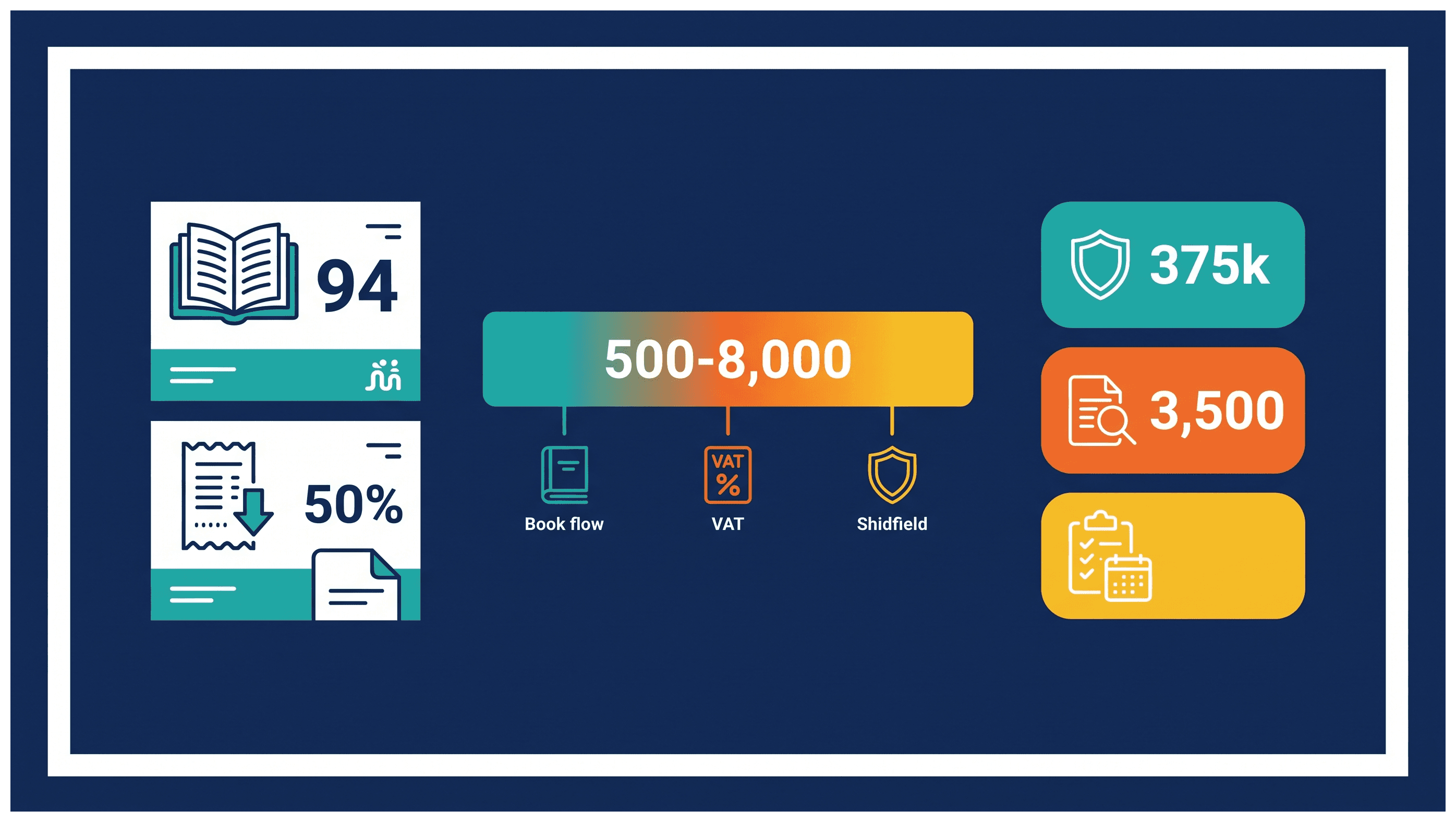
Hiring an accountant becomes mandatory once your company must register for corporate tax, file VAT returns, or submit audited financial statements. Free zone entities claiming Qualifying Free Zone Person status must maintain IFRS-compliant books regardless of revenue, making professional support a legal necessity rather than a choice.
Corporate Tax Filing Triggers
All licensed companies register with the Federal Tax Authority.
Annual return deadlines apply, even at zero profit.
Qualifying Free Zone Persons need audited accounts.
A free zone trading company typically registers for corporate tax within months of incorporation to avoid penalties (Federal Tax Authority, 2026).
VAT Registration Thresholds
Mandatory registration above AED 375,000 turnover.
Voluntary registration available above AED 187,500.
Quarterly filing needs accurate records.
An e-commerce seller crossing the mandatory threshold usually hires an accountant fast, since late filing fines start accumulating from the missed deadline, not the registration date.
Is an Audit Worth It Before It's Required?
Yes, for growing companies. Audit-ready books catch errors early. Many free zones and mainland license renewals will eventually demand audited financials, so preparing ahead saves cleanup costs later.
Many free zones require annual audited financials, and mainland LLCs often need audits tied to license renewal. See who must appoint an auditor and what the fee depends on for a breakdown by entity type.
What Drives Accountant UAE Company Cost Up or Down
Accountant UAE company cost rises with transaction volume, multi-currency operations, invoice count, and corporate tax filing complexity. Businesses with simple single-activity licenses pay closer to AED 500-1,500 monthly, while multi-entity or multi-currency companies pay AED 3,000 or more.
Transaction Volume and Invoice Count
More invoices mean more bookkeeping hours billed. E-commerce businesses generate heavier transaction counts than consultancies, and monthly reconciliation scales directly with that volume, so a shop processing 500 orders a month pays more than one processing 50.
Multi-Currency and Cross-Border Operations
Multiple currency accounts add reconciliation complexity, and cross-border invoicing requires exchange rate tracking that basic bookkeeping software doesn't automate well. A freight forwarding company handling USD and EUR invoices pays a premium for multi-currency reconciliation, a cost worth planning for if you run multiple currency corporate bank accounts in the UAE.
Steps to Choose the Right Accountant for Your Company
Choosing the right accountant involves verifying FTA registration experience, confirming IFRS familiarity, comparing fixed versus hourly pricing, and checking references from similarly sized companies. A structured evaluation process prevents costly compliance mistakes later.
Accountant Fees by Company Size and Service Scope
Feature | Company Size | Typical Monthly Fee Range |
|---|---|---|
Micro/startup bookkeeping | 1 owner, low invoice count | AED 500-1,500 |
Small business with VAT filing | 2-10 staff, quarterly VAT | AED 1,500-3,500 |
Mid-sized with payroll | 10-30 staff, payroll processing | AED 3,000-5,500 |
Multi-activity with audit prep | Multiple licensed activities | AED 4,000-8,000 |
Multi-currency operations | Cross-border trade, import/export | AED 3,500-8,000+ |
Step 1: Define Your Compliance Needs
List required filings: VAT, corporate tax, audit.
Identify license type and activity complexity.
Note deadlines before you even start quoting.
Step 2: Compare Pricing Models
Fixed retainer vs hourly billing.
Request itemized VAT and tax quotes.
Ask what's excluded from the base fee.
Step 3: Verify Credentials and Track Record
Check FTA-registered tax agent status.
Ask for references in your sector.
Confirm who actually handles your filings.
Step 4: Start With a Trial Period
Test responsiveness in the first filing cycle.
Review accuracy before a long contract.
Watch how fast questions get answered.
Typical Accountant Fees by Company Size
Typical accountant fees range from AED 500-1,500 monthly for micro businesses, AED 1,500-3,500 for small companies with regular VAT filing, and AED 3,500-8,000 or more for mid-sized firms requiring corporate tax reporting, audits, and multi-currency bookkeeping.
Micro and Startup Businesses
Minimal transaction volume keeps fees low. Basic bookkeeping plus annual filing covers most needs. A single-owner consulting license pays around AED 800 a month for basic bookkeeping, which is often all that's required at this stage.
Growing Small Businesses
Quarterly VAT filing adds recurring fees once turnover crosses AED 375,000. Payroll processing, once you hire your first employee, widens the scope further and usually adds AED 300-800 monthly to the retainer.
Mid-Sized and Multi-Activity Companies
Audit preparation adds significant cost at this tier, and corporate tax compliance across multiple licensed activities raises complexity sharply. Explore annual audit cost for a Dubai company to budget this line item before it hits your renewal cycle.
Common Mistakes That Increase Accountant UAE Company Cost
Common mistakes that inflate accountant UAE company cost include delaying bookkeeping until tax deadlines, mixing personal and business expenses, skipping VAT registration until forced, and switching accountants frequently. Each error adds cleanup hours billed at premium rates.
Delaying Bookkeeping Until Deadline Pressure
Backlogged records require rush-rate catch-up work, and missed deadlines trigger FTA fines on top of that. A founder who ignored books for six months ended up paying roughly double in catch-up accounting fees compared to staying current month by month.
Mixing Personal and Business Finances
Untangling mixed transactions adds reconciliation hours your accountant bills for. Separate accounts simplify audit trails considerably, and honestly, this is one of the cheapest fixes available to any founder reading this.
Building Reliable Financial Support for Your UAE Company
Building reliable financial support means pairing a qualified accountant with clear internal processes for invoicing, expense tracking, and deadline management. Companies formed through Dubai South Business Hub can structure licensing and accounting setup together from day one, reducing compliance gaps as the business scales.
Aligning Licensing and Accounting Setup
Choose a license activity that matches your expected accounting complexity, and set up accounting systems before the first invoice goes out. Waiting until month three to open a proper ledger just creates backdated work your accountant has to untangle later. See setting up accounting from day one in Dubai for a practical setup checklist.
Planning for Growth Without Cost Surprises
Review your accountant's scope annually as revenue grows, and budget for audit requirements before they become mandatory. This single habit, reviewing scope yearly, prevents most of the fee shocks founders complain about when they hit the VAT threshold unexpectedly.
Accountant UAE company cost depends on your license type, transaction volume, and compliance obligations, but skipping professional support almost always costs more in fines and cleanup work than it saves upfront. Start by mapping your filing requirements, then compare accountants against that checklist before signing a retainer.
References
Frequently Asked Questions