Topic Summary
What Is Opening a UAE Corporate Bank Account as a Tanzanian Entrepreneur and Why It Matters
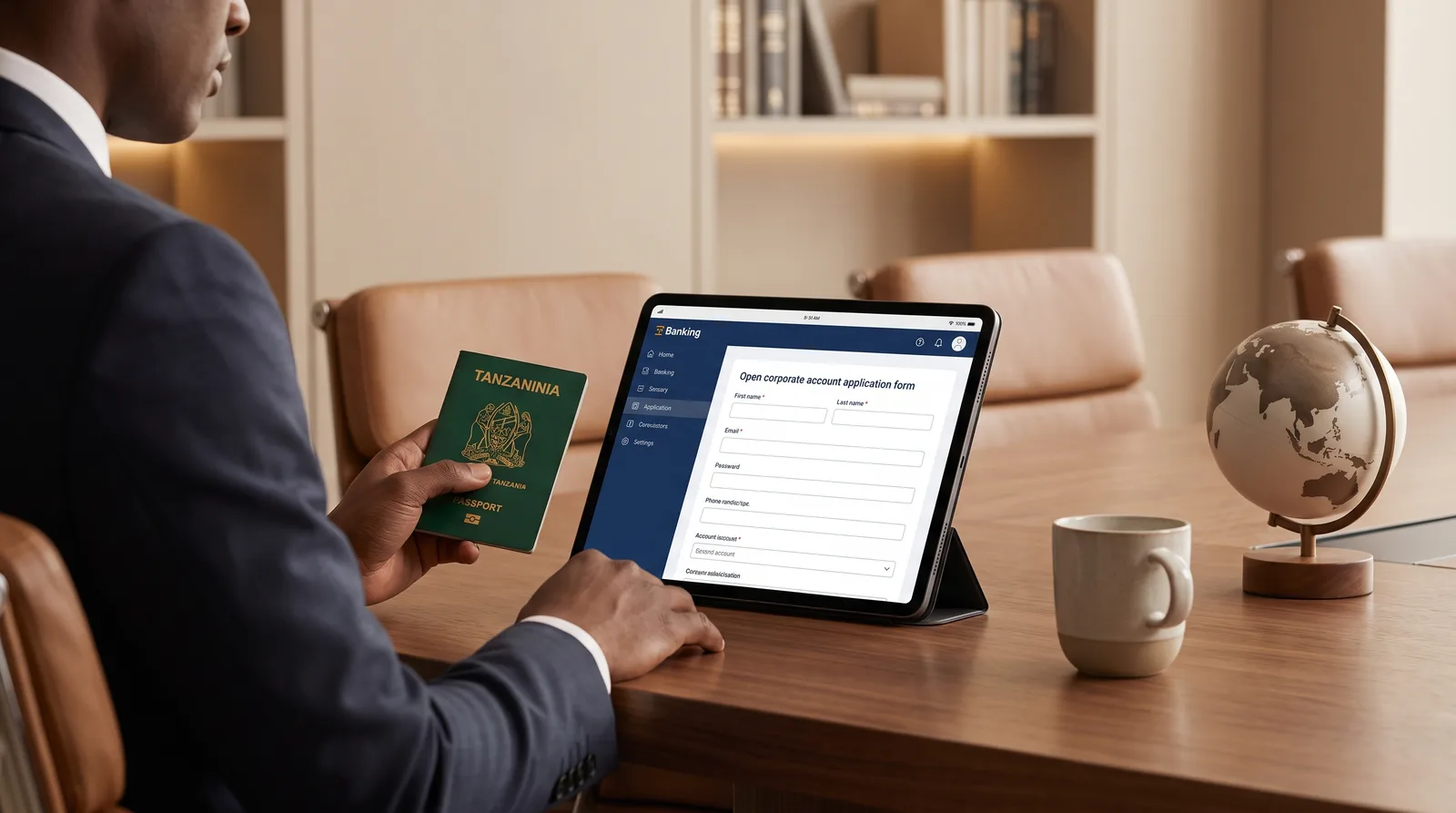
Opening a UAE corporate bank account as a Tanzanian entrepreneur means registering your licensed Dubai company with a bank regulated by the Central Bank of the UAE. You can then receive client payments, pay suppliers and staff, and keep business and personal money separate.
Licensing Foundations Banks Expect from Tanzanian Founders
Licensing Foundations Banks Expect from Tanzanian Founders
Documents and KYC Requirements for Tanzanian Nationals
Tanzanian applicants typically provide a passport, proof of address, a professional reference, a CV, source-of-funds evidence and supporting contracts. Consistent, organised paperwork shortens the review.
Step-by-Step Guide to Opening a UAE Corporate Bank Account as a Tanzanian Entrepreneur
Secure your license, shortlist banks, prepare documents, apply, attend the compliance interview, then fund the account. Allow several weeks from submission to activation.
Residency and Emirates ID Considerations
A residence visa isn't always required, because many banks accept a free zone license from non-resident owners. Still, a visa and Emirates ID, processed through the Federal Authority for Identity, Citizenship, Customs and Port Security (ICP) , strengthen your profile.
Compliance Obligations That Shape Your Banking Profile
Banks check Federal Tax Authority (FTA) registration, economic substance, UBO (ultimate beneficial owner) reporting and AML controls. The UAE isn't fully tax free: the corporate tax rate is 9%, with qualifying free zone treatment. VAT registration becomes mandatory above AED 375,000 in turnover ( Federal Tax Authority ).
Costs, Timelines and Practical Tips for Tanzanian Founders
Expect opening fees, minimum balances and monthly charges that vary by bank, with approvals often taking two to six weeks. Review minimum balance for a UAE business bank account before choosing.
The Central Bank of the UAE supervises more than 50 licensed banks, yet many founders find the account harder to secure than the license. This guide to opening a UAE corporate bank account as a Tanzanian entrepreneur covers documents, process, costs and common rejections.
What Is Opening a UAE Corporate Bank Account as a Tanzanian Entrepreneur and Why It Matters
Opening a UAE corporate bank account as a Tanzanian entrepreneur means registering your licensed Dubai company with a bank regulated by the Central Bank of the UAE. You can then receive client payments, pay suppliers and staff, and keep business and personal money separate.
How the UAE Banking System Treats Foreign-Owned Companies
Banks apply strict anti-money-laundering and KYC (Know Your Customer) rules under Central Bank of the UAE supervision. They assess substance, ownership transparency and expected transaction flows. Approval is the bank's commercial decision, not a promise attached to your license.
Picture a Dar es Salaam logistics founder with a Dubai South license. She brings a signed supplier contract and a clear East Africa trade corridor. That file gets read very differently from a vague one.
Why a Corporate Account Matters for Your Business
Receive client payments traceably.
Pay staff through the Wage Protection System (WPS).
Support visa quota use and license renewals.
Build a track record for trade finance.
A Tanzanian consultancy invoicing in USD while paying Dubai costs in AED needs this from day one. Over 40% of new free zone companies report banking delays, so start early. See our guide on a corporate bank account for non-residents in the UAE.
Licensing Foundations Banks Expect from Tanzanian Founders
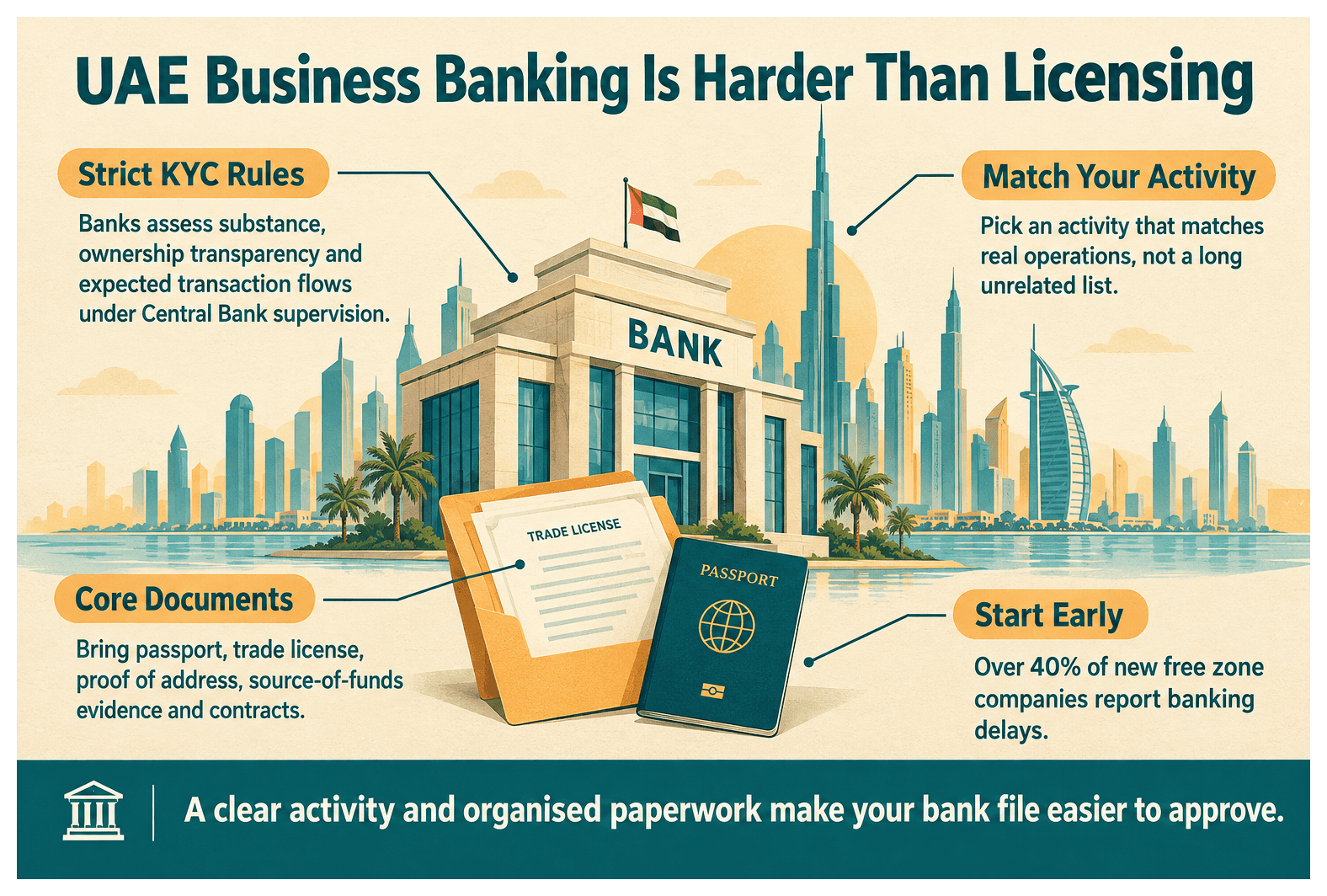
Banks expect a valid trade license, incorporation documents, a registered address and a defined activity. A Dubai South Business Hub Free Zone license with 100% foreign ownership and a realistic activity description is the strongest starting point.
Choosing an Activity Banks Can Understand
Pick an activity that matches real operations. A Tanzanian agri-commodity trader should choose general trading with named product categories, not a long list of unrelated activities. Banks check this alignment before approving a file.
Documents Typically Required for a Tanzanian-Owned Corporate Account
Document | Purpose |
|---|---|
Valid passport copy | Confirms identity of each shareholder and signatory |
Free zone trade license and incorporation certificate | Proves the company legally exists and its approved activity |
Proof of address and professional reference | Verifies residence and your standing with prior banks |
Source-of-funds evidence | Shows where your capital legitimately came from |
Contracts, invoices or business plan | Demonstrates real counterparties and expected turnover |
Documents Issued Through the Free Zone
Trade license and incorporation certificate.
Memorandum or articles of association.
Share certificate and lease or flexi-desk agreement.
Register of shareholders and directors.
More than 40 UAE banks accept a free zone license as the primary qualifying document. Read more on banking requirements for Dubai South Business Hub companies.
Documents and KYC Requirements for Tanzanian Nationals
Tanzanian applicants typically provide a passport, proof of address, a professional reference, a CV, source-of-funds evidence and supporting contracts. Consistent, organised paperwork shortens the review.
Personal Documents for Shareholders and Signatories
Passport and visa or entry page.
Proof of address in Tanzania or the UAE.
CV and bank reference letter.
Source-of-wealth narrative with evidence.
One founder proved funds with a Dar es Salaam property sale, backed by the sale deed and bank statements. Gaps here are a leading cause of delay.
Business Documents That Prove Substance
Share a business plan, 6-12 months of projected transactions, and signed purchase orders. A Tanzanian import-export firm with a Mombasa buyer's purchase order looks credible.
Why Applications Get Rejected
Details differ between application, license and website.
Ownership is unclear.
Stated turnover contradicts the contracts supplied.
Roughly 40% of first-time founders face a delay or decline. Learn why UAE banks reject corporate account applications.
Step-by-Step Guide to Opening a UAE Corporate Bank Account as a Tanzanian Entrepreneur
Secure your license, shortlist banks, prepare documents, apply, attend the compliance interview, then fund the account. Allow several weeks from submission to activation.
Step 1: Complete Licensing and Company Documents
Collect the license, certificate and lease. Check that names match your passport exactly. One founder fixed a name mismatch before submitting and avoided weeks of rework.
Step 2: Shortlist Banks and Account Types
Compare fees, minimum balance and onboarding speed. Digital banks can start at AED 0, while traditional banks ask for far more. Check for multi-currency support.
Step 3: Submit the Application and Attend the Compliance Review
Submit the full pack and explain your model and funding. Answer queries within 24 hours. Founders usually underestimate timelines by three weeks; see the UAE corporate bank account opening timeline.
Step 4: Activate, Fund and Set Up Online Banking
Make the initial deposit, set signatories and limits, then test a first supplier payment.
Residency and Emirates ID Considerations
A residence visa isn't always required, because many banks accept a free zone license from non-resident owners. Still, a visa and Emirates ID, processed through the Federal Authority for Identity, Citizenship, Customs and Port Security (ICP), strengthen your profile.
Non-resident files get deeper scrutiny. Some founders apply on license alone, then update the file once the Emirates ID arrives. Dubai South Business Hub offers residency visa packages tied to your license, and quota depends on license type and office arrangement. Compare options for opening a corporate bank account before your UAE residence visa.
Compliance Obligations That Shape Your Banking Profile
Banks check Federal Tax Authority (FTA) registration, economic substance, UBO (ultimate beneficial owner) reporting and AML controls. The UAE isn't fully tax free: the corporate tax rate is 9%, with qualifying free zone treatment. VAT registration becomes mandatory above AED 375,000 in turnover (Federal Tax Authority).
Register early so the bank sees an organised profile. Expect annual KYC refreshes, and keep activity aligned with your declared model. Dormant or inconsistent accounts can be restricted.
Costs, Timelines and Practical Tips for Tanzanian Founders
Expect opening fees, minimum balances and monthly charges that vary by bank, with approvals often taking two to six weeks. Review minimum balance for a UAE business bank account before choosing.
Budget for conversion and transfer charges.
Keep documents consistent, in English or certified translation.
Explain your Tanzanian trade corridors clearly.
Over 40% of UAE companies transact in two or more currencies, so a USD sub-account for East African receipts can cut conversion losses.
Your Next Step
Opening a UAE corporate bank account as a Tanzanian entrepreneur comes down to a credible license, clean KYC, a realistic business story and the right bank. Speak with the Dubai South Business Hub team to set up your company and license-linked residency package today.
References
Frequently Asked Questions