Topic Summary
What Is What Dutch Founders Need to Know Before Setting Up in Dubai and Why It Matters
What Dutch founders need to know before setting up in Dubai is the practical checklist covering licensing, ownership, costs, tax, banking and residency. Knowing it upfront helps you pick the right license, keep documents consistent and avoid rejections.
Choosing a Free Zone License and Legal Structure Before Setting Up in Dubai
Choosing a Free Zone License and Legal Structure Before Setting Up in Dubai
Step-by-Step Guide to Setting Up in Dubai From the Netherlands
Setting up from the Netherlands takes six steps: choose your activity, select a package, submit documents, sign digitally, pay and receive your license, then apply for visas. You can set up a company in Dubai remotely , with no flight before the license.
Budgeting for Fees, Corporate Tax and Banking When Setting Up in Dubai
Budget for the license, visas, Emirates ID, medical and annual renewals. Register for corporate tax, then open a corporate account with a Central Bank-licensed bank.
Securing Residency and Visas as a Netherlands Passport Holder
A Dubai South Business Hub license supports an investor or partner visa for Netherlands passport holders, plus employee and dependent visas within your quota. Applications involve the GDRFA Dubai and ICP.
Common Mistakes Dutch Founders Make Before Setting Up in Dubai
Frequent errors include the wrong license activity, underestimating bank due diligence, skipping corporate tax registration and ignoring Dutch tax residency. Take advice from a Dutch tax adviser as well as your UAE consultant. See also first-time founder mistakes .
Your Next Step
What Dutch founders need to know before setting up in Dubai comes down to four things: the right license, a clear formation sequence, a realistic budget with corporate tax, and parallel Dutch tax advice. German-speaking neighbours can compare notes in our trading company guide . Contact Dubai South Business Hub to get a tailored license and residency visa package for your Netherlands-based venture.
In 2026, more than 70% of new free zone applications at Dubai South Business Hub come from founders who never visit the UAE during formation. Dutch entrepreneurs are a growing share. This guide covers what Dutch founders need to know before setting up in Dubai, so you can plan licensing, tax, banking and residency without costly detours.
What Is What Dutch Founders Need to Know Before Setting Up in Dubai and Why It Matters
What Dutch founders need to know before setting up in Dubai is the practical checklist covering licensing, ownership, costs, tax, banking and residency. Knowing it upfront helps you pick the right license, keep documents consistent and avoid rejections.
Why Planning Before Applying Saves Time
Most delays come from mismatched documents or vague activity descriptions, not from regulators. Picture a Rotterdam consultant who states her activity and visa quota upfront. Her license arrives without a single amendment.
How the UAE Regulatory Landscape Fits Together
The free zone issues your license. Residency runs through the Federal Authority for Identity, Citizenship, Customs and Port Security and the General Directorate of Residency and Foreigners Affairs. Corporate tax sits with the Federal Tax Authority, and licensed banks answer to the Central Bank of the UAE.
Choosing a Free Zone License and Legal Structure Before Setting Up in Dubai
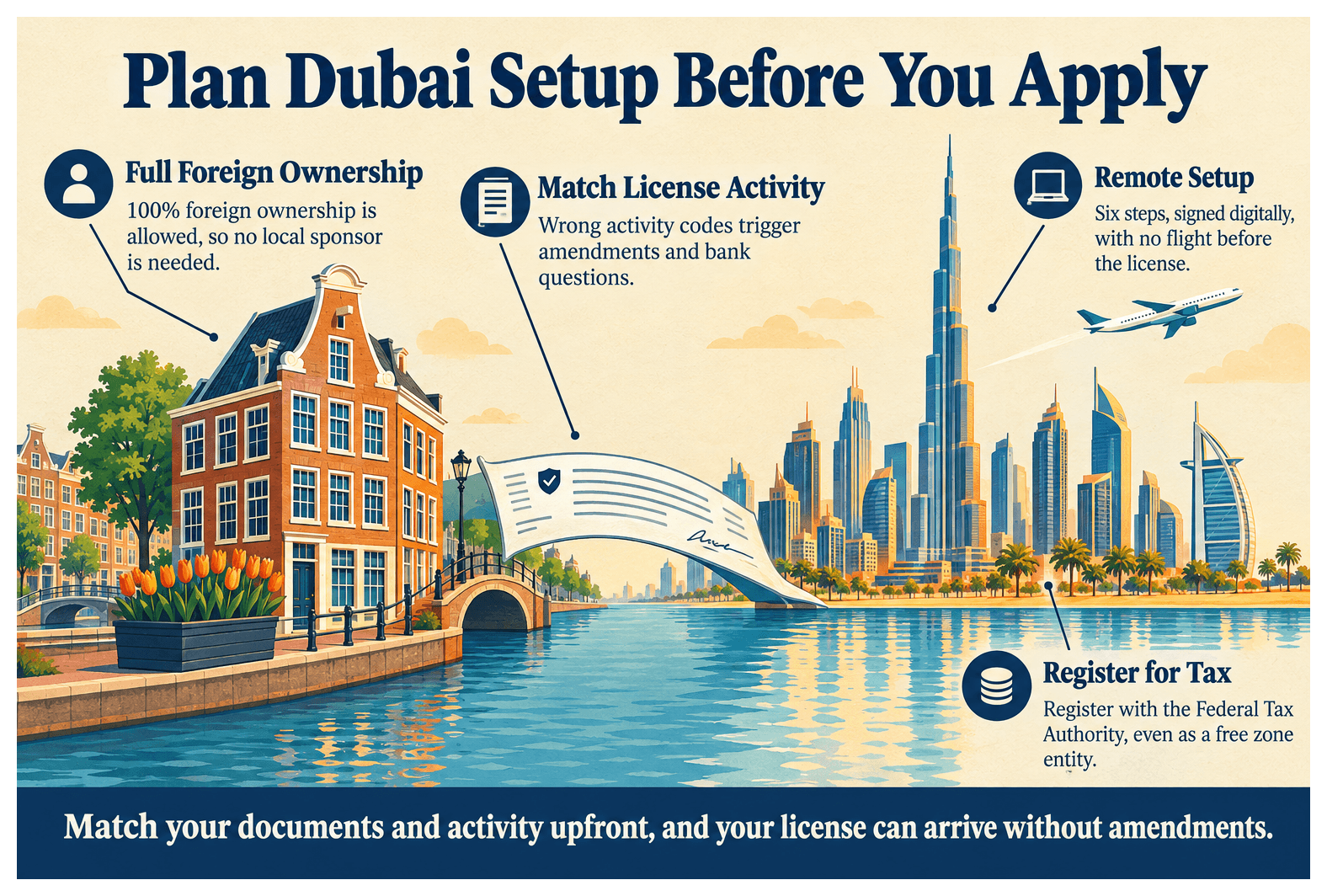
Dutch founders typically form a Free Zone Establishment (one shareholder) or a Free Zone Company (several). Full foreign ownership applies, so no local sponsor is needed. Your licensed activity must match what you actually do.
Full Foreign Ownership and No Local Sponsor
100% foreign ownership is allowed.
Core documents: passports and proof of address.
No Dutch-specific restrictions apply.
Two co-founders can hold equal shares.
Matching License Activity to Your Business Model
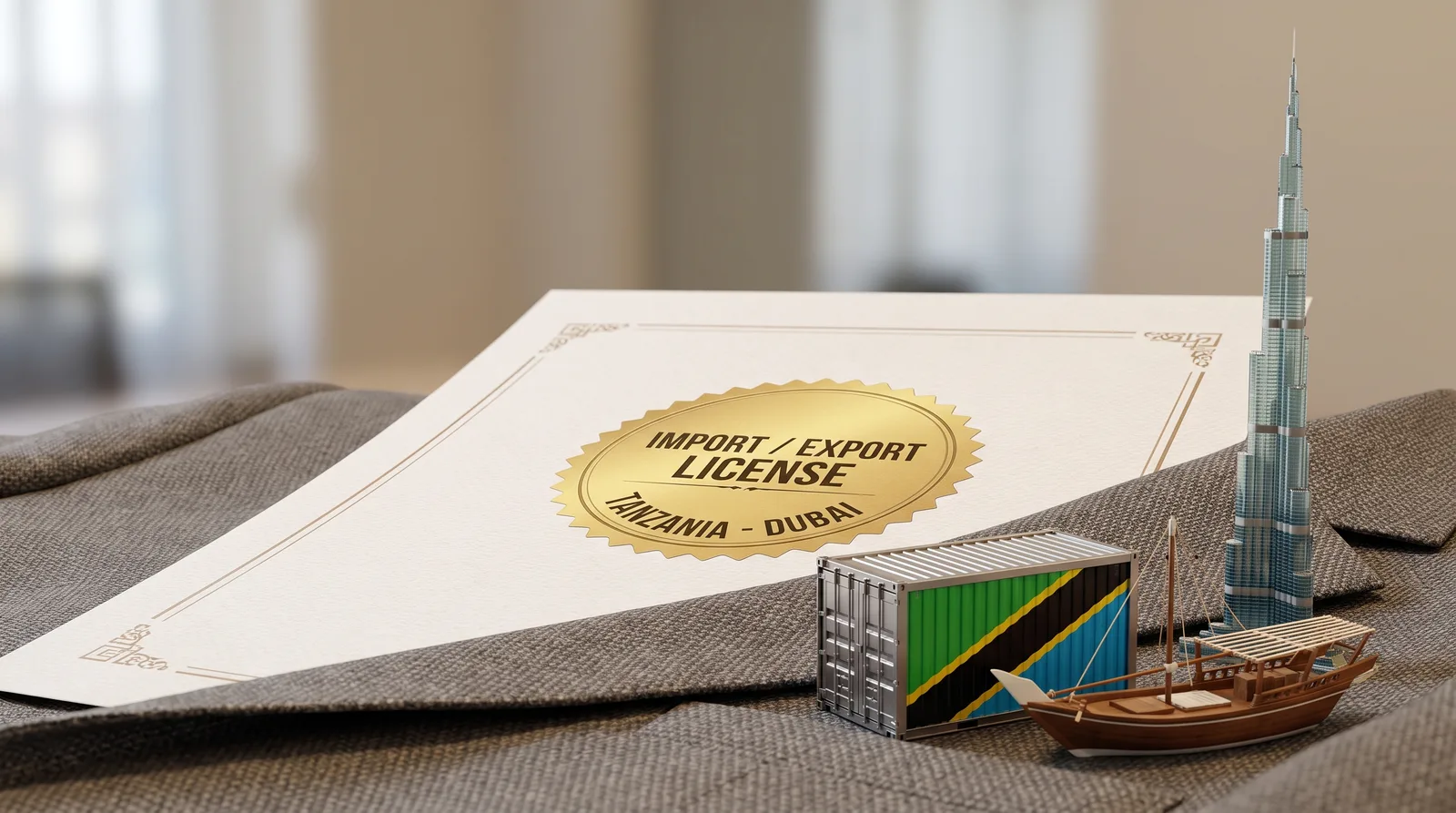
Activities are classified by what you sell, following the UN's ISIC standard, not by sales channel. A Dutch horticulture exporter, for example, would choose general trading tied to logistics near Al Maktoum International Airport. Wrong codes trigger amendments and bank questions. Our guide on company formation as a non-resident explains the options.
Step-by-Step Guide to Setting Up in Dubai From the Netherlands
Setting up from the Netherlands takes six steps: choose your activity, select a package, submit documents, sign digitally, pay and receive your license, then apply for visas. You can set up a company in Dubai remotely, with no flight before the license.
Step 1: Define Activity and Choose a License Package
Confirm activity, visa quota and office option.
Request a written quotation.
Example: two founder visas plus one hire.
Step 2: Submit Documents and Sign Digitally
Upload passports, photo, proof of address and application form.
Reserve the company name.
E-sign shareholder resolutions, even from home in Utrecht.
Key Setup Requirements at a Glance for Dutch Founders
Requirement | What Dutch Founders Need to Do |
|---|---|
License activity selection | Match the activity to your real revenue source. |
Shareholder documents | Provide passports, photo and proof of address. |
Corporate tax registration | Register with the Federal Tax Authority, even as a free zone entity. |
Bank account opening | Submit a business plan, contracts and source-of-funds evidence. |
Residency visa application | Complete entry permit, medical, Emirates ID and visa stamping. |
Step 3: Receive the License and Start Residency
Receive your license and incorporation certificate after payment.
Apply for the entry permit.
Complete status change on arrival.
For the full sequence, read the step-by-step business setup process.
Budgeting for Fees, Corporate Tax and Banking When Setting Up in Dubai
Budget for the license, visas, Emirates ID, medical and annual renewals. Register for corporate tax, then open a corporate account with a Central Bank-licensed bank.
Understanding Formation and Renewal Costs
Itemise license, visa, Emirates ID, medical and insurance.
Plan for annual renewals.
Get the fee schedule in writing.
Corporate Tax and VAT Registration Basics
Under Federal Decree-Law No. 47 of 2022, corporate tax is 9% on taxable profits above AED 375,000 (Federal Tax Authority, 2023). Qualifying Free Zone Persons can access 0% on qualifying income only. VAT is 5% where thresholds are met. It's not "tax free", so don't plan as if it were.
Opening a Corporate Bank Account
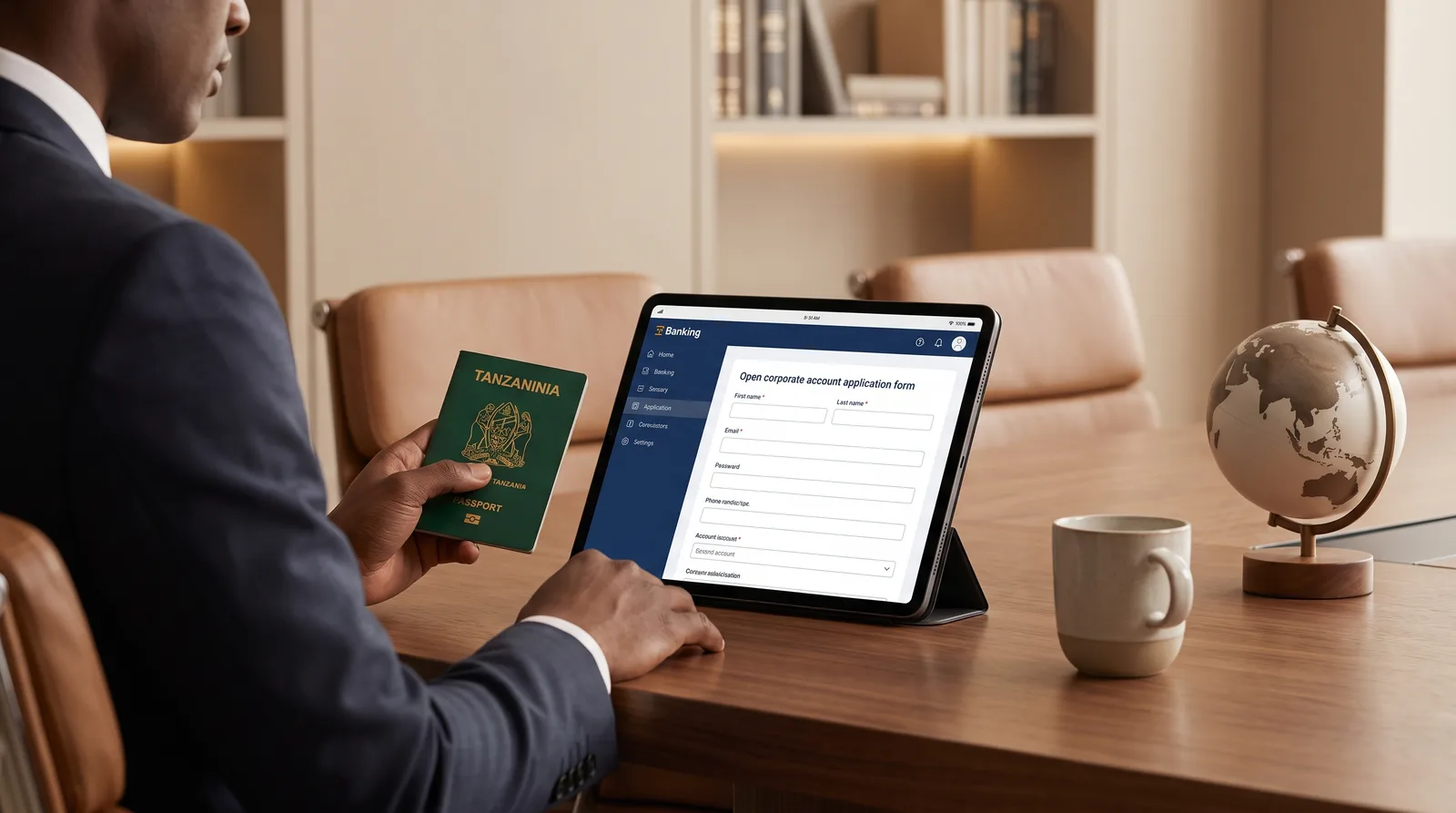
Banks review your activity, source of funds and shareholder profile. Keep license, website and bank forms consistent. Attaching a signed client contract usually speeds up due diligence.
Securing Residency and Visas as a Netherlands Passport Holder
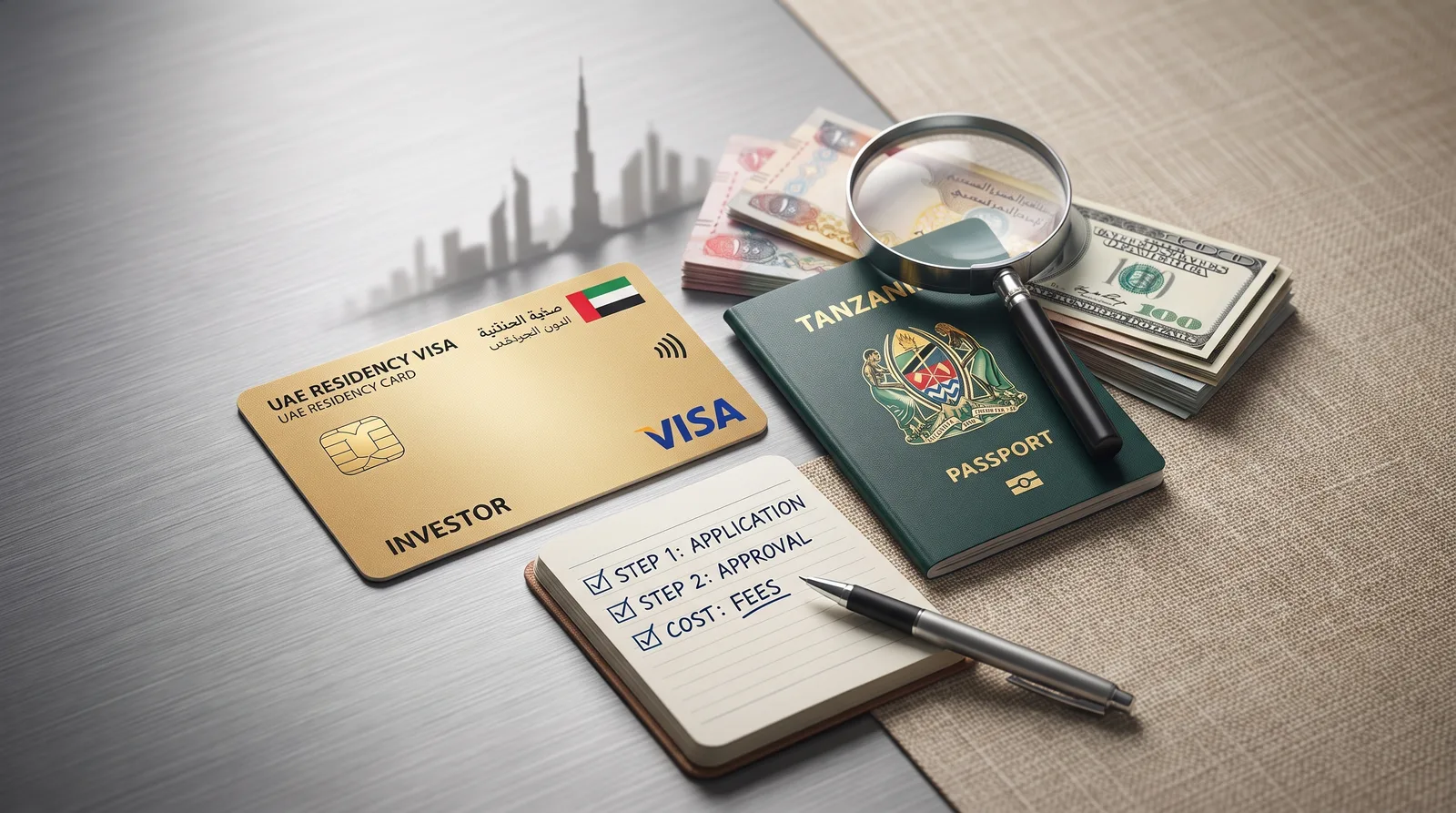
A Dubai South Business Hub license supports an investor or partner visa for Netherlands passport holders, plus employee and dependent visas within your quota. Applications involve the GDRFA Dubai and ICP.
Investor Visa Process and Timeline
Steps run entry permit, status change, medical, biometrics, then Emirates ID. A founder landing for biometrics can see residency completed within days. Validity and renewal stay tied to your license.
Employee and Family Visas Under Your Quota
Employee contracts must align with MOHRE rules.
Spouse and children need proof of relationship.
Many founders bring family after their own visa issues.
Common Mistakes Dutch Founders Make Before Setting Up in Dubai
Frequent errors include the wrong license activity, underestimating bank due diligence, skipping corporate tax registration and ignoring Dutch tax residency. Take advice from a Dutch tax adviser as well as your UAE consultant. See also first-time founder mistakes.
Overlooking Dutch Tax Residency and Substance
The Netherlands-UAE tax treaty and place of effective management matter. A founder who stays Dutch tax resident still files in the Netherlands. If you relocate, keep real decision-making evidence in the UAE.
Rushing the Setup Without a Clear Plan
Don't pay for unneeded visas.
Choose a flexible desk over a full office.
Check documents before submitting.
Working from abroad? Read about setting up while living abroad and the wider free zone business setup guide.
Your Next Step
What Dutch founders need to know before setting up in Dubai comes down to four things: the right license, a clear formation sequence, a realistic budget with corporate tax, and parallel Dutch tax advice. German-speaking neighbours can compare notes in our trading company guide. Contact Dubai South Business Hub to get a tailored license and residency visa package for your Netherlands-based venture.
References
Frequently Asked Questions