Topic Summary
Choose Between Free Zone and Mainland
Free zones offer 100% foreign ownership and remote setup, ideal for re-export and services. Mainland gives direct access to the local retail market but requires more approvals and usually leased premises.
Match Your License to Activities
Pick a trading, commercial or service license aligned with approved ISIC Rev.4 activity codes. Your license also determines your visa quota and permitted customers.
Prepare Your Ownership Documents Early
Have a valid Turkish passport, photos and proof of address ready. If a company is a shareholder, its corporate papers must be attested and translated.
Follow the Six-Stage Setup Process
Define your activity, choose a package, submit documents, receive your license, apply for visas and Emirates ID, then open a bank account. Compliant files typically finish in a few weeks.
Budget for Visas, Banking and Fees
Plan for license fees (trading licenses start from AED 12,500), visas, Emirates ID, medical testing, a flexi-desk and bank minimum balances. Partners should price the second visa when comparing packages.
Get a Customs Code for Trade
Importers and exporters need a Dubai Customs code in addition to their license. Free zone companies selling locally typically need a distributor.
Plan for Tax Registration and Compliance
The Federal Tax Authority handles tax registration, so build compliance duties into your plan after licensing. Getting the structure right first helps you avoid rejected applications and re-licensing costs.
Bilateral trade between Turkey and the UAE exceeded AED 55 billion in 2026, according to the UAE Ministry of Economy. This guide covers what Turkish founders need to know before setting up in Dubai: structure, licensing, visas, banking and tax. You'll finish it knowing what to prepare first.
What Is What Turkish Founders Need to Know Before Setting Up in Dubai and Why It Matters
What Turkish founders need to know before setting up in Dubai is the set of licensing, ownership, visa, banking and tax rules that decide whether your company launches smoothly. Pick the right structure and activity first, and you avoid rejected applications and re-licensing costs.
Why Dubai Attracts Turkish Entrepreneurs
Istanbul and Dubai share dense air and sea freight links, and Dubai opens doors to Gulf, African and South Asian buyers. Picture an Istanbul textile exporter re-exporting fabric to Gulf retailers through a Dubai company. For more background, read our guide for Turkish entrepreneurs in Dubai.
Who Regulates Company Formation
The free zone authority issues your license and registers the entity. The Dubai Chamber handles trade membership, while GDRFA, ICP and the Federal Tax Authority cover immigration, identity and tax.
Free Zone Versus Mainland Setup for Turkish Founders
Feature | Free Zone Company | Mainland Company |
|---|---|---|
Foreign ownership | 100% foreign ownership | Generally 100% for most activities, depending on the activity |
Market access | Re-export, trade and services; local sales via a distributor | Direct access to the local retail market |
Setup process | Simplified, can be completed remotely | More approvals across departments |
Office requirement | Flexi-desk or office package | Leased premises usually needed |
Visa eligibility | Quota tied to license and office space | Quota tied to office size |
Legal Structure and Licensing Rules: What Turkish Founders Need to Know Before Setting Up in Dubai
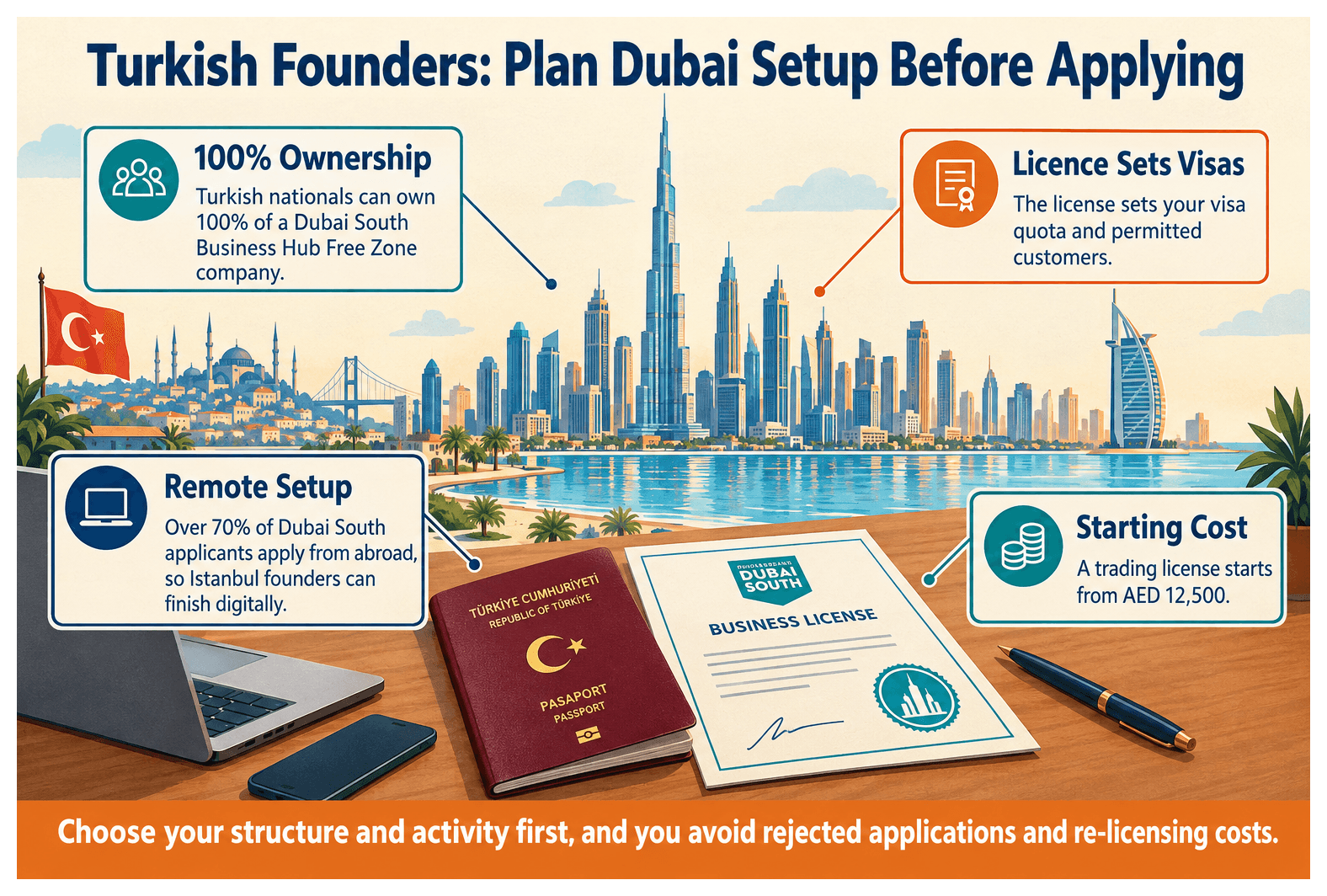
Turkish nationals can own 100% of a Dubai South Business Hub Free Zone company. You choose a trading, commercial or service license, match it to approved activities and register as an FZ-LLC. The license sets your visa quota and permitted customers.
Consider a Turkish furniture importer selling to Dubai retailers. Free zone re-export works well, but local retail sales need a distributor. Our Dubai free zone business setup guide explains the options.
Choosing the Right Trade License and Activity
Activity codes align with ISIC Rev.4, the UN classification.
General trading and specific commodity licenses differ.
Import and export need a Dubai Customs code.
Our general trading license guide covers this in detail.
Ownership Documents Turkish Nationals Must Prepare
Valid Turkish passport and photos.
Proof of address.
Attested, translated corporate papers if a company is a shareholder.
Stage-by-Stage Process for What Turkish Founders Need to Know Before Setting Up in Dubai
Setup runs through six stages: define your activity, choose a package, submit documents, receive your license, apply for visas and Emirates ID, then open a bank account. Compliant files typically finish in a few weeks. See also company setup for foreign entrepreneurs.
Define activity and package. List products, target markets, shareholders and visa quota. A trading license starts from AED 12,500.
Submit documents. Upload passports and forms, pay fees, receive your certificate and license. Over 70% of Dubai South applicants apply from abroad, so an Istanbul founder can finish digitally.
Complete visa, Emirates ID and bank account. You'll need an entry permit, status change, medical test and biometrics through ICP. Then submit bank KYC with your license and passport.
Costs, Residency Visas and Banking for Turkish Founders
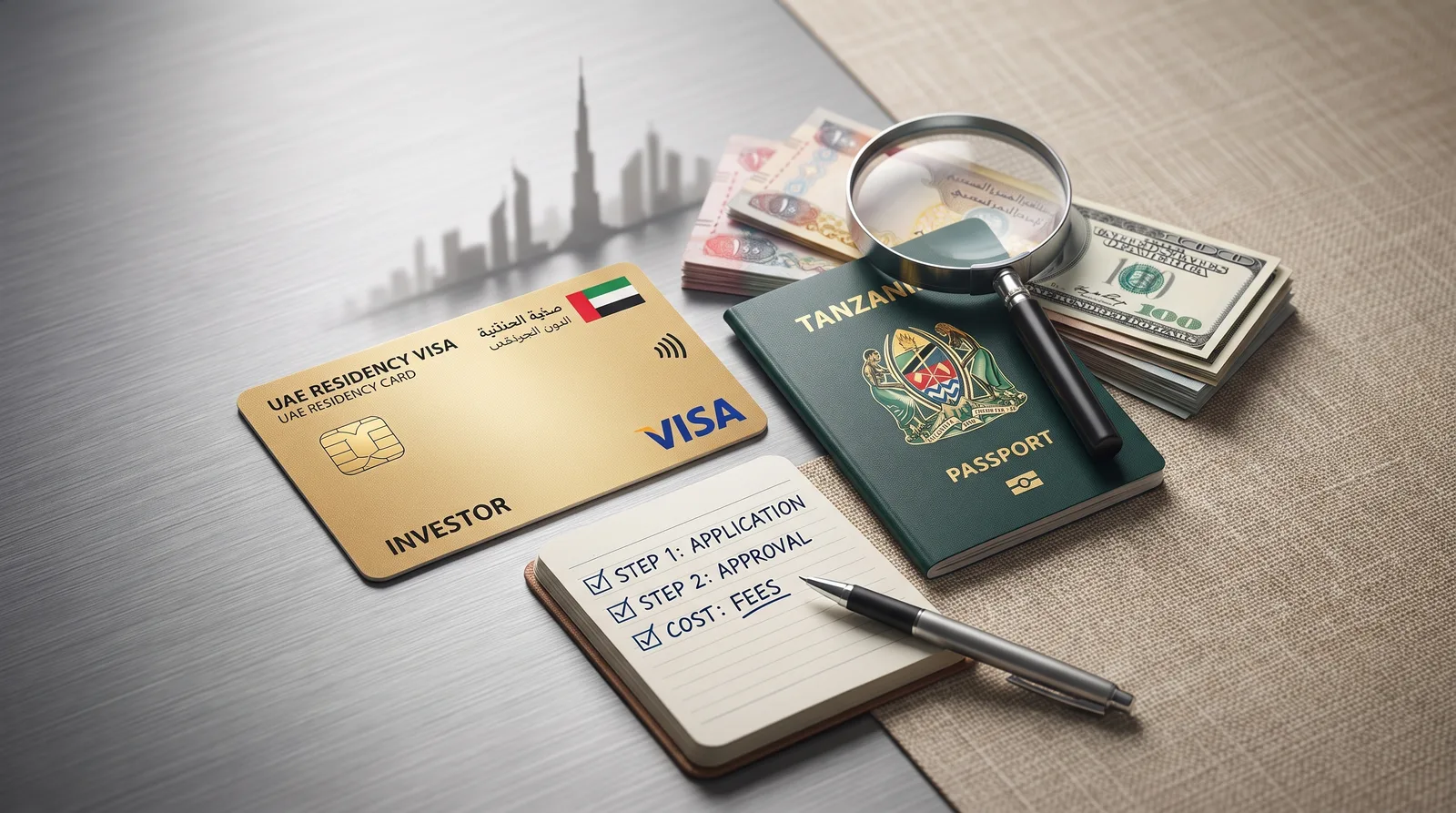
Budget for license fees, visas, Emirates ID, medical testing, a flexi-desk and bank minimum balances. Visas run through GDRFA and ICP, while banks supervised by the Central Bank of the UAE open accounts.
Two Turkish partners comparing one-visa and two-visa packages should price the second visa only when revenue justifies it. Investor visas typically run two years and renew with your license.
Banks apply enhanced due diligence to new companies. A Turkish exporter who shows supplier agreements, a business plan and Turkish bank statements gets fewer questions and fewer declines.
Tax Registration and Compliance Duties After Licensing
After licensing, you must register with the Federal Tax Authority for corporate tax and, past AED 375,000 in taxable supplies, VAT. Qualifying free zone income may be taxed at 0%, but only if conditions are met. It isn't a blanket exemption.
Corporate tax: 9% above AED 375,000 profit.
VAT: 5% standard rate.
Keep UAE books separate from any Turkish entity.
Check Turkish tax residency and controlled foreign company rules with an adviser.
Common Mistakes Turkish Founders Make and How to Avoid Them
The usual errors are the wrong activity, ignored visa and office rules, inconsistent bank documents and missed tax deadlines. Our first-time founders mistakes guide goes further.
A passport name spelled differently on the shareholder form delays approval.
Unattested or untranslated Turkish documents stall files.
Buying visas before revenue raises costs.
Late VAT registration triggers Federal Tax Authority penalties.
A free zone license alone doesn't grant mainland market access.
Your Next Step
Understanding what Turkish founders need to know before setting up in Dubai means settling structure, activity, visas, banking and tax early. Contact Dubai South Business Hub to review your activity, license package and visa options, then start your free zone company formation.
References
Frequently Asked Questions