Topic Summary
Two Authorities Issue Two Separate Documents
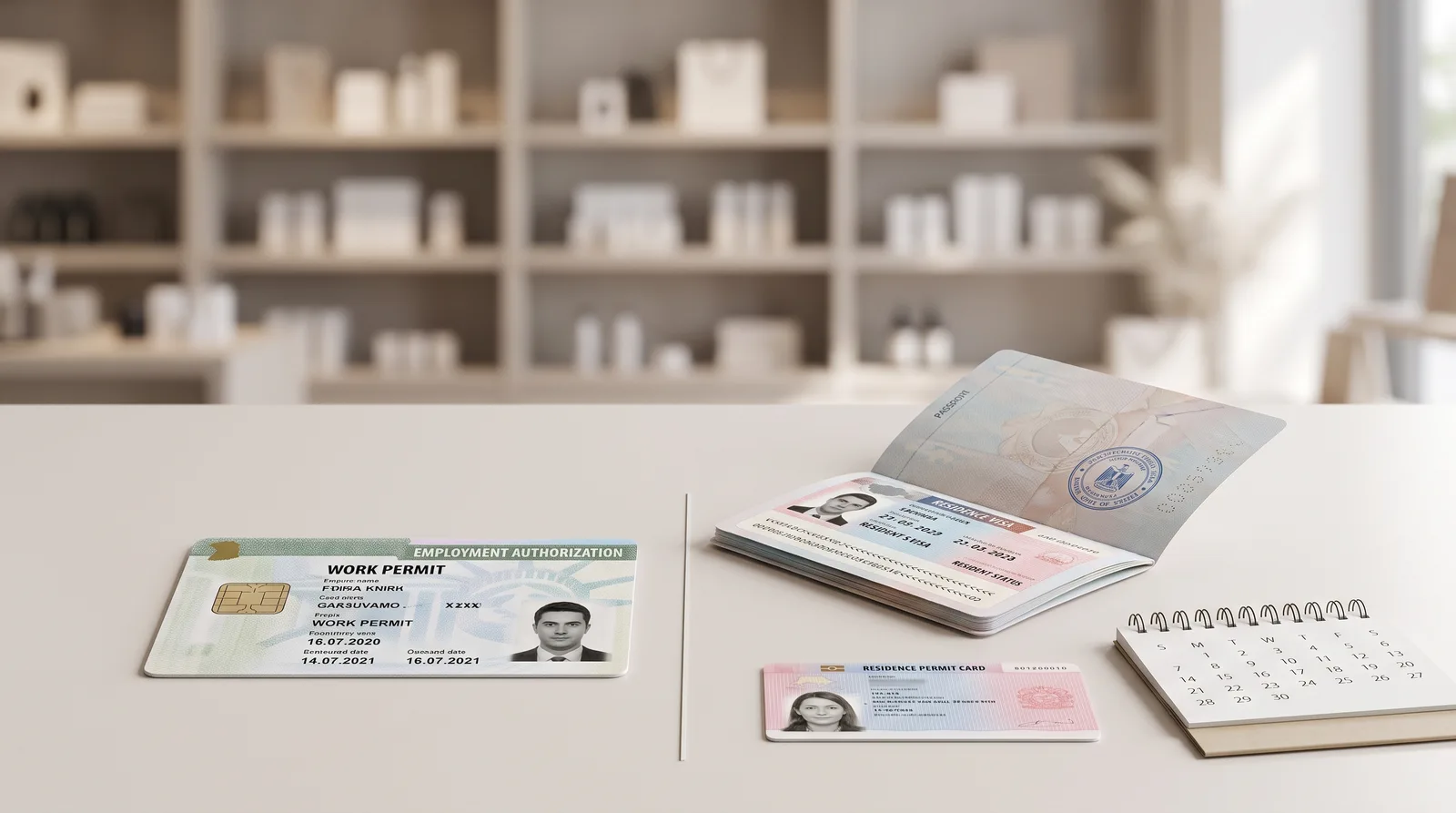
MOHRE issues work permits for mainland employment, while the GDRFA issues residence visas as immigration documents. Both are required before a foreign employee can legally live and work in the UAE, yet they come from entirely different government bodies.
Work Permits Are Tied to the Employer
A work permit links a specific worker's name and job title to a single licensed company and is not transferable. If an employee changes employers, the original permit must be cancelled and a new one issued from scratch.
A Work Permit Does Not Allow Someone to Stay
Work permits authorise employment only — they grant no right to live in the UAE. An employee can be legally cleared to work but simultaneously out of status on their stay if the residence visa is delayed.
Free Zone Employment Follows Different Rules
Companies incorporated in free zones like Dubai South Business Hub apply for employee work permits through the free zone authority, not MOHRE. However, if a free zone company hires someone on a mainland contract, full MOHRE rules apply.
Investor Visas and Employment Visas Are Not Interchangeable
A founder's investor or partner visa covers their own residency as a company owner and is tied to their ownership stake. It is entirely separate from any employment visa they must later obtain for hired staff.
Emirates ID Belongs to the Residence Visa Process
The Emirates ID application, along with the entry permit, medical test, and visa stamping, all fall under the residence visa process — not the work permit process. Founders who conflate the two risk missing key steps and delaying onboarding.
Non-Compliance Fines Start at AED 1,000 Per Worker
Employing a worker without a valid work permit triggers MOHRE fines beginning at AED 1,000 per worker. Planning both approvals before registering the company — rather than after — is the safest way to protect cash flow and avoid penalties.
Fewer than half of first-time founders who set up a company in Dubai realise they need two separate government approvals before a foreign employee can legally work on UAE soil. Confusing the two can trigger MOHRE fines starting at AED 1,000 per worker. The work permit vs Dubai distinction trips up even experienced HR managers, because both documents arrive close together yet come from entirely different authorities for entirely different purposes.
This guide separates the two documents clearly, covering what each one is, what it costs, who qualifies, and which Dubai South Business Hub Free Zone package covers what, so you can plan headcount and cash flow before you register, not after.
What a Work Permit Actually Is in Dubai
A work permit in Dubai is a labour approval issued by the Ministry of Human Resources and Emiratisation (MOHRE) that authorises a named individual to be employed by a specific company. It is tied to the employer, not the employee, and must be obtained before the residence visa process can begin for most employment categories.
The Issuing Authority and Legal Basis
MOHRE issues work permits under Federal Decree-Law No. 33 of 2021 on the Regulation of Labour Relations. The permit links a worker's name, passport number, and job title to a single licensed company, it is not transferable. If an employee changes employer, the original permit must be cancelled and a new one issued from scratch.
Free zone companies are a different story. A founder incorporating a professional services company at Dubai South Business Hub Free Zone and hiring one employee would apply for that employee's work permit through the free zone authority, not MOHRE, because the employment relationship sits inside the free zone. MOHRE only governs mainland employment contracts. Worth flagging: if a free zone company hires someone on a mainland contract, MOHRE rules apply in full (MOHRE, 2024). Fines for employing without a valid permit start at AED 1,000 per worker.
What the Work Permit Does and Does Not Cover
The work permit authorises employment. Full stop. It does not grant the right to live in the UAE, and this is where most founders get into trouble.
Consider an employee who enters on a 30-day visit visa, gets a work permit approved, but whose residence visa is delayed. That person is legally authorised to work but not to stay. Two separate problems, two separate fixes. A work permit alone does not entitle the holder to an Emirates ID, and the job title on the permit must match the company's licensed business activities, a mismatch is a compliance risk that can surface during a MOHRE inspection.
What a Residence Visa Actually Is in Dubai
A UAE residence visa is an immigration document issued by the General Directorate of Residency and Foreigners Affairs (GDRFA) that authorises a person to live in the UAE for a defined period, typically two or three years. It is separate from work authorisation and is linked to either an employment relationship or a company ownership stake.
The Issuing Authority and Residency Categories
The GDRFA (also accessible via gdrfad.gov.ae) issues and stamps residence visas for Dubai. Two categories matter most to founders: the investor or partner visa, which is tied to company ownership, and the employment visa, which is tied to a job offer. These are not interchangeable.
A founder taking the 1 Visa Package at Dubai South Business Hub Free Zone receives one investor visa allocation covering their own residency as the company owner. That is entirely distinct from any employment visa they would later apply for on behalf of a hired employee. Residence visas for employees in free zones are typically valid for two years. The entry permit, status change, medical test, Emirates ID application, and visa stamping all sit within the residence visa process, not the work permit process.
Emirates ID and Its Connection to the Residence Visa
Emirates ID is issued by the ICP (Federal Authority for Identity, Citizenship, Customs and Ports Security) and can only be applied for once the residence visa process is underway. It is not a standalone document. Think of it as confirmation that residency has been granted, not a separate approval in its own right.
Take a UK-based founder who relocates to Dubai after incorporating. She cannot apply for her Emirates ID the moment the company license is issued. She must first complete the investor visa process through GDRFA, then apply to ICP for the ID. A work permit does not trigger that eligibility, only an active residence visa does. Emirates ID is mandatory for all UAE residents regardless of nationality, and failure to obtain it after residency approval can attract ICP penalties.
Work Permit vs Dubai Residence Visa: Cost, Scope and Eligibility
Feature | Work Permit | Residence Visa |
|---|---|---|
Issuing authority | MOHRE (mainland) or free zone authority (free zone employees) | GDRFA for stamping; ICP for Emirates ID issuance |
Primary purpose | Authorises the named individual to be employed by a specific company | Authorises the named individual to live in the UAE for 2–3 years |
Who is eligible | Foreign nationals offered employment by a UAE-licensed company | Employees with a valid work permit; company owners with a visa allocation |
Linked document required | Approved work permit (employees) or investor visa allocation (owners) | |
Grants the right to work | Yes, for the specific employer and job title on the permit | No, residency and work authorisation are separate approvals |
Grants the right to live in the UAE | No, the holder must also hold a valid residence visa to remain legally | Yes, for the duration stated on the visa (typically 2 years in free zones) |
Triggers Emirates ID eligibility | No, a work permit alone does not trigger ICP Emirates ID application | Yes, Emirates ID application opens once the residence visa is in process |
Work Permit vs Dubai Residence Visa: Side-by-Side Comparison
A work permit authorises employment and is issued by a labour authority. A Dubai residence visa authorises living in the UAE and is issued by an immigration authority. They are applied for through different channels, carry different fees, and serve different legal purposes, both are required for a foreign employee to work and reside legally.
Cost, Scope, and Eligibility at a Glance
Work permit costs vary by worker category and are paid by the employer. Residence visa processing fees cover entry permit, status change, medical screening, Emirates ID, and visa stamping, each a separate government fee item. At Dubai South Business Hub Free Zone, visa processing is always quoted separately from the package price, regardless of which package you choose.
0 Visa Package: AED 12,500, license, Articles of Association, share register, flexi-desk, lease agreement
1 Visa Package: AED 16,350, adds one visa allocation and establishment card
2 Visa Package: AED 18,200, adds two visa allocations and establishment card
Maximum 2 visa allocations available; visa processing fees are always separate
A founder comparing the 1 Visa Package with the 2 Visa Package is comparing the number of visa allocations (investor or partner visas), not the number of employment visas. Employment visa processing is always a separate line item, this is the most common misunderstanding I see among first-time founders reviewing package pricing.
Which Authority to Contact for Each Document
For free zone employees, the free zone authority handles work authorisation internally through the establishment card and visa allocation system. GDRFA and ICP handle the residence visa side. For mainland employees, MOHRE inquiry and application processes govern the work permit, while GDRFA handles residence stamping.
Founders at Dubai South Business Hub Free Zone should confirm the exact submission channel with the free zone team at each stage, the sequence matters, and submitting to the wrong authority adds days to the process. Key portals: mohre.gov.ae for mainland labour matters and icp.gov.ae for Emirates ID and residence procedures.
How the Work Permit vs Dubai Residence Visa Processes Differ Step by Step
Getting a work permit and a residence visa in Dubai follow sequential but separate processes. The work permit is typically approved first, providing the basis for the residence visa application. Together the steps span entry permit, status change, medical screening, Emirates ID application, and visa stamping, each handled by a different authority.
Step 1: Secure the Work Permit or Visa Allocation
For a founder, this means selecting the correct visa package at Dubai South Business Hub Free Zone. The 1 Visa or 2 Visa Package includes the investor or partner visa allocation and the establishment card. The establishment card is required before any employee visa processing can begin, you can't skip it.
For a hired employee, the company submits the work authorisation application through the free zone authority or MOHRE, depending on where the employment contract is registered. The license at Dubai South Business Hub Free Zone is issued in 1 day, so the process moves quickly from that point. A UK-based founder incorporating remotely can have the license in hand on day one and immediately move to the establishment card stage.
Step 2: Process the Residence Visa
Once the work permit or visa allocation is confirmed, the UAE residency visa process begins: entry permit, status change (if the person is already in the UAE), medical fitness test, Emirates ID application, and visa stamping. Each sub-step carries its own government fee, always quoted separately from the package price.
Here's a scenario worth knowing: a co-founder already in Dubai on a visit visa, after the company license and 2 Visa Package are confirmed, undergoes status change inside the country rather than exiting for an entry permit. That single difference changes the sequence of fees paid and the timeline. The full process typically takes two to four weeks depending on medical appointment availability and ICP processing times (u.ae, 2024).
Is the visa allocation the same as an employment visa?
No. The visa allocation in the 1 Visa and 2 Visa packages is an investor or partner visa covering the company owner's residency. An employment visa for a hired employee is a separate application and a separate cost, processed after the establishment card is in place. The two are never interchangeable.
Which Package Covers What at Dubai South Business Hub Free Zone
Dubai South Business Hub Free Zone offers three packages. The 0 Visa Package at AED 12,500 includes the license and company documents only. The 1 Visa Package at AED 16,350 and 2 Visa Package at AED 18,200 each add visa allocations and an establishment card. Visa processing fees are always separate from all three packages.
What Every Package Includes
All three packages include the license (issued in 1 day), Articles of Association, share register, flexi-desk space, and lease agreement. These are company formation documents, none of them constitute a work permit or a residence visa. A founder who sees "1 Visa Package" and assumes the visa itself is included is reading the label incorrectly: the allocation is included, the processing fees are not.
0 Visa Package: AED 12,500, formation documents only, no visa allocation
1 Visa Package: AED 16,350, adds 1 investor visa allocation and establishment card
2 Visa Package: AED 18,200, adds 2 investor visa allocations and establishment card
A UK founder who already holds a valid UAE residence visa through a spouse or previous employer can incorporate on the 0 Visa Package at AED 12,500, saving the allocation cost until it's genuinely needed. That's a practical option that's easy to miss when comparing packages side by side.
The Visa Allocation Explained
The visa allocation in the 1 and 2 Visa packages is the investor or partner visa, it covers the company owner's own residency. The 2 Visa Package is not two separate visas for an owner and an employee. It covers two partners or co-founders, each receiving one investor visa allocation.
Two co-founders registering together select the 2 Visa Package at AED 18,200, each receiving one investor visa allocation. If they later hire a third person, say, a junior analyst six months post-incorporation, that employee's work authorisation and residence visa are processed and priced separately through the free zone's residency services team. Employee visa processing is always a separate cost line, regardless of which package you started with. Maximum 2 visa allocations are available at Dubai South Business Hub Free Zone.
Scenario-Based Recommendations for First-Time Founders
Solo founders who only need their own residency should choose the 1 Visa Package. Two co-founders each needing residency should choose the 2 Visa Package. Founders hiring employees but not needing personal residency yet can start with the 0 Visa Package and add employee visa processing separately. Match the package to your immediate residency need, not your headcount plan.
Solo Founder Setting Up Alone
Select the 1 Visa Package at AED 16,350 to secure the investor visa allocation and establishment card. Visa processing, entry permit, medical, Emirates ID, stamping, is quoted separately and paid on top. You'll need to budget for those government fees in addition to the package price.
If you don't need UAE residency immediately (for example, you hold an existing visa through another route), the 0 Visa Package at AED 12,500 covers license-only incorporation and keeps your upfront cost lower. You can add the visa allocation later when your situation changes. Check your business setup cost in Dubai using the cost calculator to model both scenarios before committing.
Two Co-Founders or a Founder Hiring One Employee
Two co-founders who both need UAE residency: the 2 Visa Package at AED 18,200 covers both investor visa allocations. That's the right starting point. Don't try to share one allocation, each person needs their own.
A solo founder who needs to hire one employee is a different situation entirely. Start with the 1 Visa Package for your own residency, then budget separately for the employee's work authorisation and residence visa. A founder in the consulting sector who hires a junior analyst six months after incorporation would apply for that analyst's employment visa and work authorisation separately through Dubai South Business Hub Free Zone's residency services team, at fees quoted at that time. Never assume the visa allocation covers an employee, it covers owners only.
Do I need to be in Dubai to start the visa process?
No.
References
Frequently Asked Questions