Astronomy, Earthquakes & Meteorology Monitoring Equipment Trading License in Dubai
Topic Summary
Understand What This License Covers
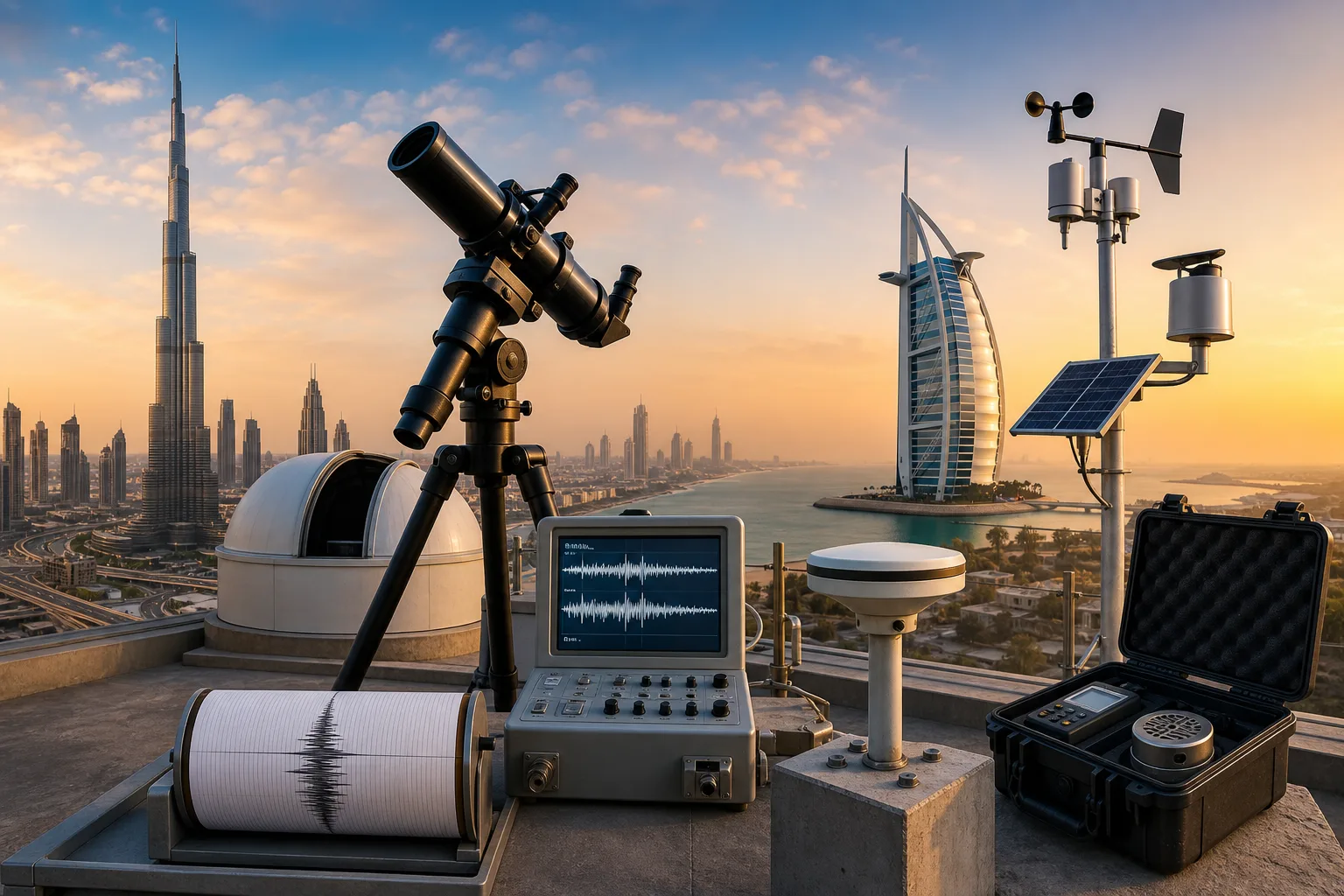
This trading license allows businesses to import, export, and distribute scientific monitoring equipment including telescopes, seismographs, meteorological stations, and related instruments. It applies to suppliers serving government agencies, research institutions, oil and gas companies, and aviation authorities.
Choose Between Mainland and Free Zone Setup
Mainland licenses let you trade directly with UAE government entities and the local market, while free zones like Dubai South are better suited for import, export, and re-export across GCC, African, and South Asian markets. Both structures now allow 100% foreign ownership under recent UAE reforms.
Follow a Clear Six-Step Application Process
The process runs from reserving a trade name to receiving your license, and most applications complete within 5 to 15 working days. Having complete documentation ready from the start helps avoid delays, especially if your equipment category requires additional regulatory approvals.
Prepare the Right Documents in Advance
Key documents include passport and visa copies for all shareholders, a Memorandum of Association, a tenancy contract or Ejari for mainland setups, and product brochures or technical specifications for your equipment. A business plan and No Objection Certificate may also be required depending on the licensing authority.
Budget Accurately for All License Costs
License fees typically range from AED 10,000 to AED 25,000, but total costs rise when you factor in visa fees, office space, customs registration, and import permits. If annual turnover exceeds AED 375,000, VAT registration with the Federal Tax Authority is also mandatory.
Plan for Annual Renewal and Ongoing Compliance
Your trading license must be renewed every year, and you must stay compliant with UAE customs regulations throughout your operations. Checking Dubai Trade regularly for customs and trade compliance updates helps you avoid penalties and keep your business running smoothly.
Leverage Dubai South for Regional Logistics
Dubai South Free Zone sits directly beside Al Maktoum International Airport, giving equipment traders fast and efficient access to regional and international shipping routes. This location makes it a strategic base for businesses looking to reach markets across the Middle East, Africa, and South Asia.
Dubai is becoming a regional hub for scientific equipment trading. Demand is growing for monitoring tools used in astronomy, seismic activity, and weather systems.
This guide explains how to get a trading license in Dubai for astronomy, earthquake, and meteorology monitoring equipment. It covers license types, costs, and key steps.
What This License Covers
This license allows you to import, export, and distribute scientific monitoring equipment in Dubai. It applies to businesses supplying instruments to government agencies, research institutions, oil and gas companies, aviation authorities, and construction firms.
If you trade in high-precision monitoring tools, this is the license you need.
Types of Equipment Included
Astronomical observation tools and optical instruments such as telescopes
Seismic sensors, seismographs, and earthquake early-warning systems
Meteorological stations, barometers, anemometers, and weather data loggers
Related scientific monitoring instruments and accessories
Choosing the Right Business Setup in Dubai
You can set up your business on the mainland or in a free zone. Each option suits different trading needs. Under recent UAE reforms, 100% foreign ownership is available in both structures. Learn more about UAE business setup options on u.ae.
Mainland Setup
Mainland licenses are issued by the Department of Economy and Tourism (DET). This setup lets you trade directly with UAE government entities and the local market. It is a good choice if your main customers are based in the UAE.
Free Zone Setup
Free zones are ideal for import, export, and re-export of monitoring equipment. Dubai South Free Zone sits next to Al Maktoum International Airport. This gives you strong logistics access for moving goods across the region.
You can explore trade facilitation services through Dubai Trade. Dubai South is a strategic base for reaching GCC, African, and South Asian markets.
If you want to explore your options before committing, you can browse business activities available under Dubai South free zone licenses.
Steps to Get Your Trading License
The process is straightforward. Most applications complete within 5 to 15 working days. This depends on the authority and how complete your documents are.
Reserve your trade name — Choose a unique business name and check availability.
Submit your initial application — Apply to the relevant licensing authority.
Prepare and submit documents — Provide all required paperwork.
Receive initial approval — Wait for confirmation before proceeding.
Complete payment — Pay the applicable license fees.
Receive your trade license — Begin trading legally in Dubai.
Some equipment categories may require additional approvals from UAE scientific or regulatory bodies. Check this early to avoid delays.
You can check your business name availability before starting the application.
Key Documents Required
Passport and visa copies of all shareholders and managers
Memorandum of Association (MOA) or equivalent incorporation document
Tenancy contract or Ejari for office space (required for mainland applications)
Product brochures or technical specifications for the monitoring equipment you plan to trade
No Objection Certificate (NOC) if applicable
Business plan (may be required depending on the authority)
Costs and Ongoing Compliance
License fees typically range from AED 10,000 to AED 25,000. The exact cost depends on the licensing authority and your chosen business activity.
You should also budget for additional costs. These include visa fees, office space, customs registration, and import permits. Use the business setup cost calculator to estimate your total expenses.
If your annual turnover exceeds AED 375,000, you must register for VAT. Visit the Federal Tax Authority for full VAT registration guidance.
Your license must be renewed annually. You must also comply with UAE customs regulations. Check Dubai Trade for customs and trade compliance requirements.
Import and Customs Considerations
Register with UAE Customs before importing scientific instruments
Some equipment may require technical clearance or standards certification
Certain instruments may be subject to import permit requirements
Membership with the Dubai Chamber of Commerce can strengthen your trade credibility and support market access
Why Dubai Is a Strong Market for This Equipment
The UAE government is investing heavily in space, climate monitoring, and disaster management. These programs create consistent demand for high-quality scientific instruments.
The UAE's National Centre of Meteorology runs active weather and seismic monitoring programs. Government procurement in these areas is ongoing and growing.
Dubai's location makes it an ideal re-export hub. Traders can efficiently reach the GCC, East Africa, and South Asia from a single base.
UAE Vision 2031 places science and technology at the centre of national development. This creates long-term business opportunity for companies in the scientific equipment sector.
The growing number of infrastructure and construction projects across the UAE also drives demand for seismic and meteorological monitoring tools. Developers and engineers rely on accurate data to meet safety and regulatory standards.
Conclusion
Getting a trading license for astronomy, earthquake, and meteorology monitoring equipment in Dubai is straightforward. You need the right setup, the correct documents, and the appropriate authority approvals.
Speak to a business setup consultant today. Choose the best license structure and start trading in Dubai's growing scientific equipment market.
References
Frequently Asked Questions