Insecticides Trading License in Dubai: Cost and Requirements
Topic Summary
Dubai South Free Zone Offers 100% Foreign Ownership
Unlike mainland UAE business setups, the Dubai South Business Hub Free Zone allows foreign investors to own their insecticides trading company outright with no local partner required. This makes it especially attractive for international entrepreneurs and established chemical trading firms expanding into the region.
Activity Code 4773.21 Covers a Broad Product Range
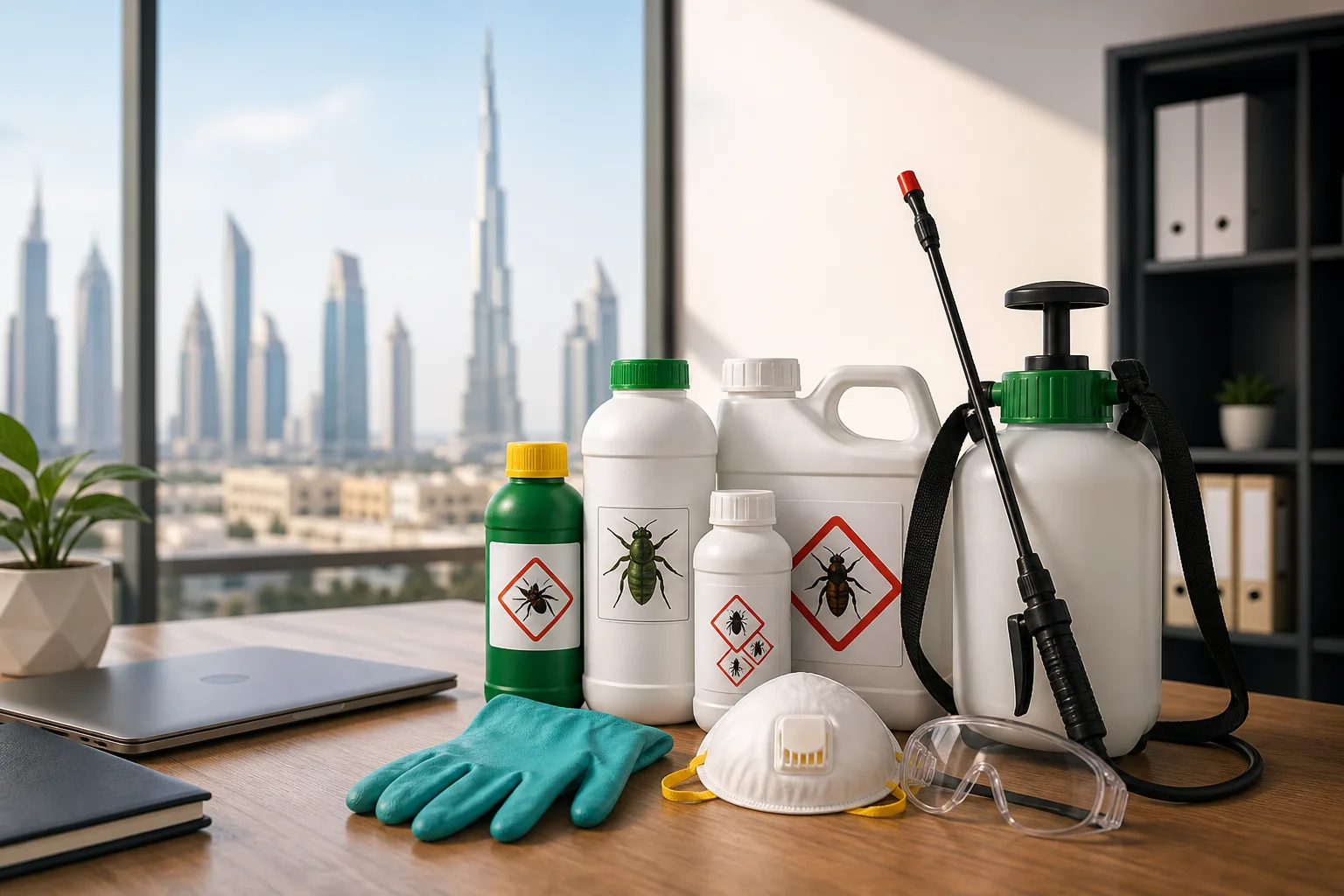
The insecticides trading license permits import, export, storage, and distribution of household insecticides, agricultural pesticides, industrial formulations, and public health vector control products. This wide scope gives license holders flexibility to serve multiple market segments simultaneously.
Ministry Approval Is Mandatory Before Trading
All applicants must obtain approval from the UAE Ministry of Climate Change and Environment (MOCCAE), which regulates pesticide registration and import permits. Each individual product formulation intended for trade must also be separately registered in compliance with UAE pesticide regulations.
Strategic Location Connects Three Major Trade Regions
Dubai South sits adjacent to Al Maktoum International Airport and near Jebel Ali Port, the largest port in the Middle East, giving license holders dual air and sea freight access. This positions businesses to efficiently supply markets across the GCC, Africa, and South Asia from a single hub.
Setup Can Be Completed in as Few as Three Days
The typical license setup timeline at Dubai South Business Hub Free Zone ranges from three to seven working days, subject to regulatory approvals. This relatively fast turnaround makes it a practical option for businesses looking to enter the market quickly.
GCC Unified Regulations Add a Compliance Layer
Beyond UAE-specific rules, traders must also comply with Gulf Cooperation Council unified pesticide regulations where applicable, as well as bilingual Arabic and English labelling standards. Proper hazardous material storage facilities are an additional mandatory requirement before operations can begin.
Re-Export Rights Make This License Commercially Powerful
The license explicitly permits re-export activity, allowing businesses to source insecticides from manufacturers in Asia or Europe and redistribute them across multiple international markets. Combined with Dubai's world-class customs infrastructure, this makes the license particularly valuable for regional distribution strategies.
Global demand for pest control products continues to rise, driven by agriculture, public health programmes, and urban development across emerging markets. Dubai sits at the centre of this trade corridor, connecting manufacturers in Asia and Europe with buyers across the Middle East, Africa, and South Asia. For entrepreneurs and established businesses looking to enter this sector, obtaining an insecticides trading license in Dubai is a structured, transparent process that opens access to one of the world's most active re-export hubs.
This guide covers everything you need to know about the insecticides trading license under activity code 4773.21 at Dubai South Business Hub Free Zone, including costs, requirements, approvals, and why this jurisdiction makes commercial sense.
What the Insecticides Trading License Covers
The insecticides trading license (activity code 4773.21) falls under the Trading category and is classified as a Trading License. It permits the holder to import, export, store, and distribute insecticides and related pest control chemical products. This includes household insecticides, agricultural pesticides, industrial-grade formulations, and vector control products used in public health applications.
License holders can trade across borders, supply to wholesalers and retailers, and engage in re-export activity, making this license particularly valuable for businesses operating within Dubai's free zone ecosystem.
Who This License Suits
This license is well-suited to a range of business profiles, including:
International manufacturers seeking a regional distribution hub
Trading companies sourcing insecticides from Asia or Europe for resale across the GCC and Africa
Entrepreneurs entering the agricultural supply chain
Public health product distributors supplying government and municipal contracts
Chemical trading firms looking to diversify their product portfolio
The free zone model is especially attractive to foreign investors who want full ownership of their business without the need for a local partner.
Dubai South Business Hub Free Zone: Why This Location
Dubai South Business Hub Free Zone is strategically located adjacent to Al Maktoum International Airport and in close proximity to Jebel Ali Port, the largest port in the Middle East. This dual access to air and sea freight infrastructure makes it one of the most logistically efficient locations in the world for chemical and agricultural product trading.
The UAE handles a significant volume of global pesticide and agrochemical trade, supported by world-class customs infrastructure and a well-established re-export framework. Dubai's position as a logistics gateway means license holders benefit from reduced transit times, competitive warehousing costs, and access to a broad network of freight forwarders and customs brokers.
Key Stats at a Glance
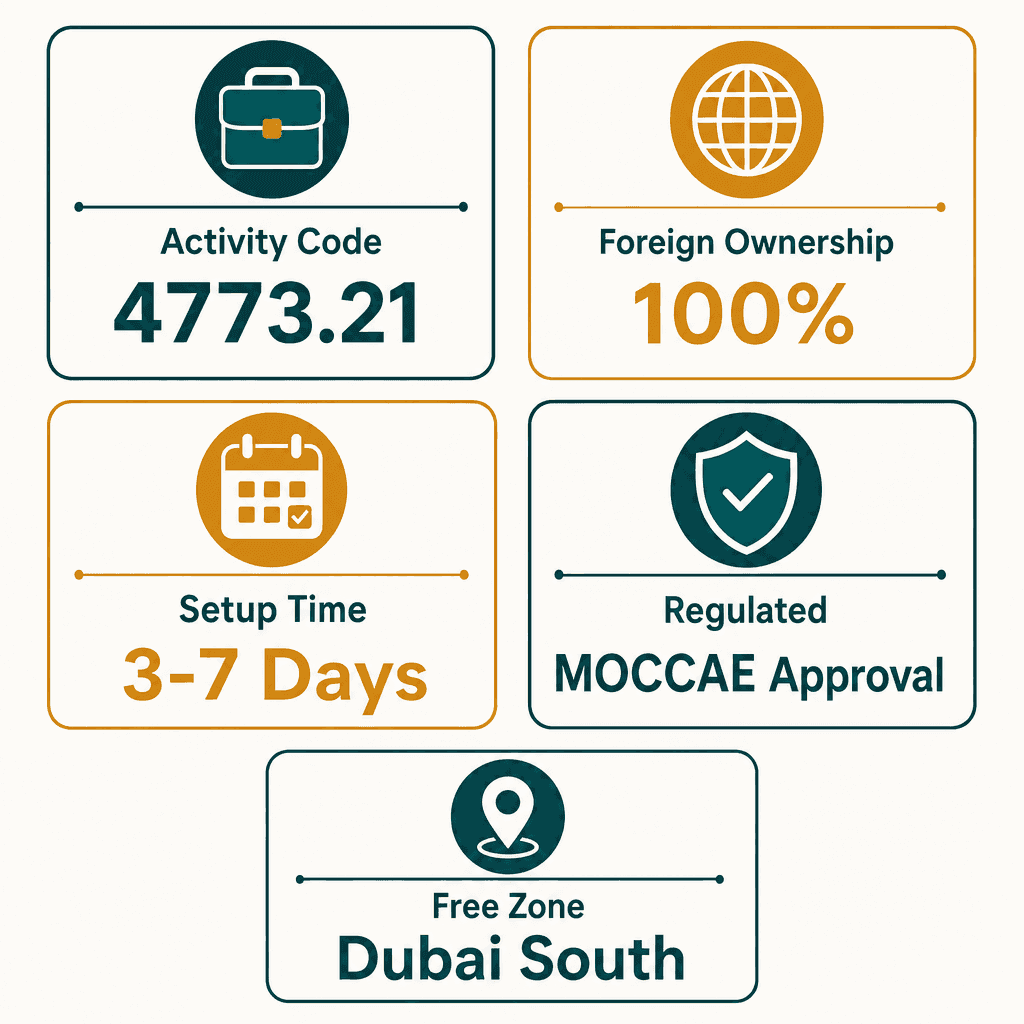
Activity Code: 4773.21
License Type: Trading License
Category: Trading
Free Zone: Dubai South Business Hub
Foreign Ownership: 100% permitted
Typical License Setup Timeline: 3 to 7 working days (subject to approvals)
Regulatory Approvals Required: Yes (Ministry of Climate Change and Environment)
Re-export Permitted: Yes
Licensing and Compliance Requirements
Trading in insecticides in the UAE is a regulated activity. License applicants must meet specific compliance requirements beyond standard free zone registration. Key requirements include:
Approval from the UAE Ministry of Climate Change and Environment (MOCCAE), which oversees pesticide registration and import permits
Product registration for each insecticide formulation intended for trade, in line with UAE pesticide regulations
Compliance with the Gulf Cooperation Council (GCC) unified pesticide regulations where applicable
Proper labelling in Arabic and English, meeting UAE standards
Appropriate storage facilities that meet hazardous material handling requirements
Businesses must ensure that each product they trade has received the necessary regulatory clearance before it can be imported or distributed within the UAE market.
Setup Steps and Costs
Setting up an insecticides trading company at Dubai South Business Hub Free Zone follows a clear process:
Choose your business activity and confirm activity code 4773.21 applies to your intended trade
Select a company name and submit for approval
Prepare and submit incorporation documents, including passport copies, business plan, and shareholder details
Apply for the trading license through the free zone authority
Obtain regulatory approvals from MOCCAE for pesticide trading
Arrange office or flexi-desk space within the free zone
Open a corporate bank account
License costs vary depending on the package selected, the number of activities included, and whether physical office space or a flexi-desk arrangement is chosen. Typically, free zone trading licenses in Dubai range from AED 10,000 to AED 25,000 per year, with additional costs for visa allocations, regulatory approvals, and facility requirements. It is advisable to request a tailored quote from the free zone authority to get an accurate breakdown based on your specific business structure.
Profit Margins and Market Opportunity
The global pesticides market is projected to grow steadily through the remainder of this decade, driven by food security concerns, climate-related pest pressures, and expanding agricultural output across Africa and South Asia. Dubai-based traders benefit from competitive import pricing, low or zero customs duties within the free zone, and strong demand from regional buyers. Gross margins in chemical trading typically range from 10% to 30%, depending on product type, supplier relationships, and market positioning.
Get Started
Use the cost calculator for a tailored quote.
Verify your business name with the company name check.
Browse the full business activities directory.
Get in touch to start your application.
Frequently Asked Questions