How to Get a Passenger Transport for Non Emergency Cases Business License in Dubai

Topic Summary
Understand What the License Actually Covers
Activity Code 4922.92 authorizes scheduled and unscheduled non-emergency passenger transport, including medical transfers, corporate shuttles, airport runs, hotel guest transport, and assisted mobility services. It is issued as a Business License under the Services category at Dubai South Business Hub Free Zone.
100% Foreign Ownership Is Fully Permitted
Operators setting up under this license at Dubai South Business Hub Free Zone can retain complete foreign ownership of their business. This makes the pathway attractive to international entrepreneurs and established transport companies expanding into the UAE market.
Zero Corporate Tax on Qualifying Free Zone Income
Businesses licensed through Dubai South Business Hub Free Zone benefit from a 0% corporate tax rate on qualifying free zone income. This significantly improves the commercial viability of operating a non-emergency transport business in Dubai.
Dubai South's Location Is a Strategic Advantage
Situated next to Al Maktoum International Airport and Expo City Dubai, Dubai South places transport operators at the center of major passenger demand corridors. Government investment in smart mobility and last-mile connectivity further strengthens the long-term growth outlook.
Strong Market Demand Across Multiple Sectors
Healthcare providers, hotels, multinational corporations, and mobility-impaired passengers all generate consistent demand for non-emergency transport services. Dubai's growing medical tourism sector and ageing expatriate population are particularly reliable sources of ongoing business.
Choose the Right Legal Structure Before Applying
Most service operators choose between a Free Zone Establishment for a single shareholder or a Free Zone Company for two or more shareholders. Selecting the correct structure early streamlines the setup process and avoids costly amendments later.
The RTA Is the Key Regulatory Authority
The Roads and Transport Authority oversees compliance for passenger transport operations in Dubai, making it the primary regulator to engage with during and after the licensing process. Understanding RTA requirements upfront helps operators avoid delays and maintain ongoing compliance.
Dubai's rapidly expanding healthcare, corporate, and tourism sectors are driving strong demand for reliable, non-emergency passenger transport services, creating a timely opportunity for entrepreneurs and investors. Whether you are planning medical transfers, corporate shuttles, or assisted mobility solutions, the UAE market offers a well-regulated and commercially attractive environment to build a sustainable operation.
This guide explains how to obtain a Passenger Transport for Non-Emergency Cases Business License (Activity Code 4922.92) at Dubai South Business Hub Free Zone, covering costs, steps, compliance requirements, and why Dubai is an ideal base for this activity.
What the License Covers and Who It Suits
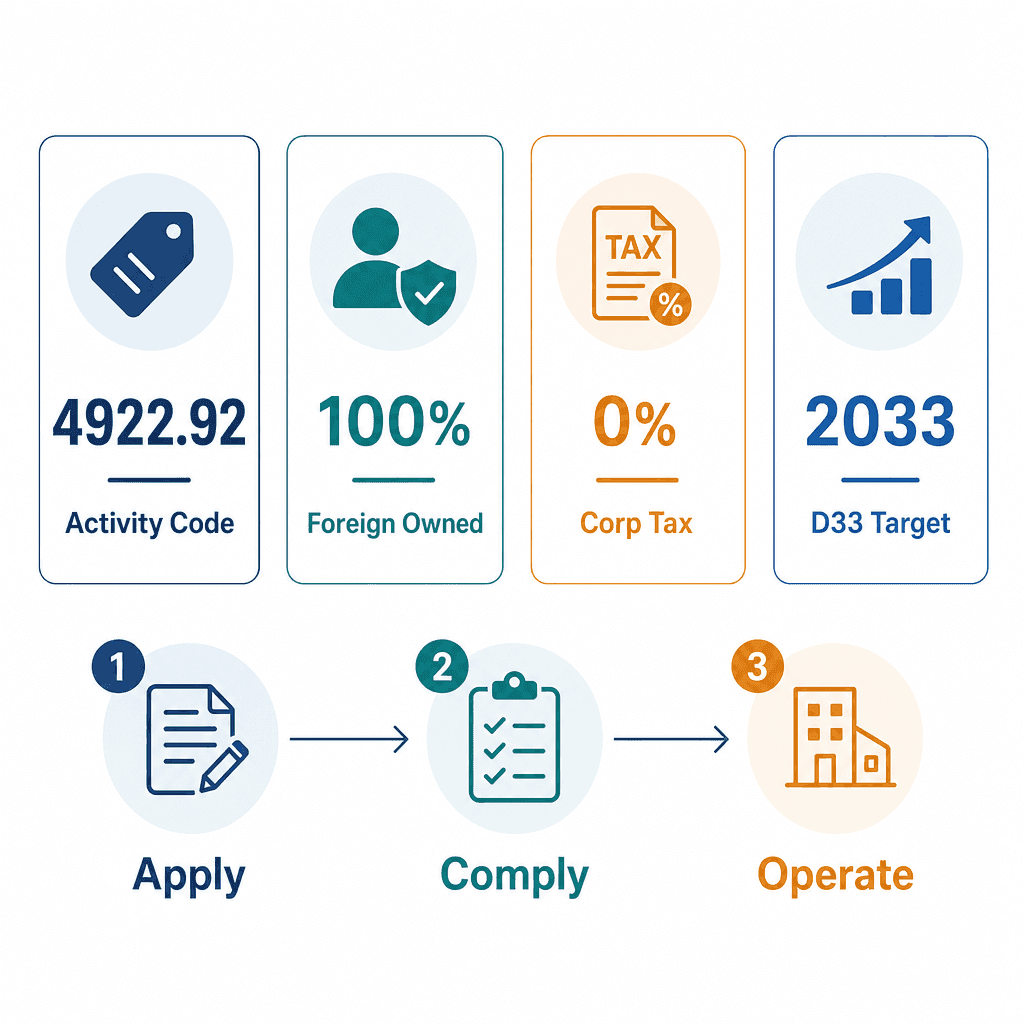
Activity Code 4922.92 covers the provision of scheduled and unscheduled passenger transport services that fall outside emergency response operations. In practical terms, this includes non-emergency medical transfers, corporate employee shuttles, airport transfers, hotel guest transport, and assisted mobility services for elderly or mobility-impaired passengers.
The license is categorised under Services and is issued as a Business License through Dubai South Business Hub Free Zone. This classification makes it accessible to a wide range of operators, from first-time entrepreneurs entering the transport sector to established companies seeking a regulated UAE presence.
The license is particularly well-suited to businesses targeting healthcare providers requiring patient transfer solutions, hotels and resorts needing guest transport, corporates managing workforce mobility, and operators specialising in accessible transport for passengers with reduced mobility. Both startups and existing transport operators looking to expand into the UAE market will find this licensing pathway straightforward and commercially relevant.
Key Facts at a Glance
Activity Code: 4922.92
License Type: Business License
Category: Services
Free Zone: Dubai South Business Hub Free Zone
Foreign Ownership: 100% permitted
Corporate Tax: 0% on qualifying free zone income
Key Regulator: Roads and Transport Authority (RTA)
Ideal For: Medical transfers, corporate shuttles, airport transfers, assisted mobility
UAE and Dubai Market Context
The UAE transport and logistics sector is a significant contributor to national GDP, underpinned by long-term policy frameworks including Vision 2031 and the Dubai Economic Agenda D33, which targets doubling the size of Dubai's economy by 2033. These agendas place considerable emphasis on mobility infrastructure, smart transport solutions, and service sector diversification.
Several structural trends are reinforcing demand for non-emergency passenger transport specifically. The UAE has an ageing expatriate population with growing assisted mobility requirements. Medical tourism continues to expand, with Dubai positioning itself as a regional healthcare destination, generating consistent demand for patient and visitor transfer services. Corporate mobility needs are also rising as multinational firms establish regional headquarters in Dubai.
Dubai South's geographic position is a particular advantage. Located adjacent to Al Maktoum International Airport and Expo City Dubai, operators based here are positioned at the heart of key passenger demand corridors. Government investment in smart mobility, last-mile connectivity, and integrated transport infrastructure further reinforces the long-term growth outlook for this sector.
Setup Costs and Steps at Dubai South Business Hub Free Zone
Setting up a Passenger Transport for Non-Emergency Cases business at Dubai South Business Hub Free Zone follows a structured process that can be completed efficiently with the right preparation.
The first step is selecting the appropriate legal structure. Most service operators opt for a Free Zone Establishment (FZE), which suits a single shareholder, or a Free Zone Company (FZCO) where two or more shareholders are involved. Both structures benefit from full foreign ownership rights.
Once the structure is confirmed, you will need to reserve a trade name and submit an initial application. Required documentation typically includes passport copies of shareholders and directors, a business plan, and relevant supporting documents. The free zone authority reviews the application and, upon preliminary approval, issues payment instructions for license and registration fees.
Operators must also arrange a registered office address within Dubai South. A flexi-desk option is generally available for service businesses that do not require a large physical footprint, though a dedicated office can be taken if operational needs demand it. Upon payment and document verification, the Business License is issued, after which you can proceed to open a corporate bank account in the UAE.
Key Cost Components
Understanding the full cost picture from the outset is essential for accurate business planning. The primary costs include:
License fee and registration fee, which vary depending on the package tier selected
Visa allocation costs for employees and shareholders, charged per visa
Vehicle registration fees with the Roads and Transport Authority (RTA)
Public liability and passenger insurance premiums
Flexi-desk or office lease costs within the free zone
Annual license renewal fees, which should be built into the business plan from year one
It is advisable to confirm current fee structures directly with Dubai South Business Hub Free Zone, as package pricing is subject to periodic revision.
Licensing and Compliance Requirements
The Business License issued under Activity Code 4922.92 by Dubai South Business Hub Free Zone is the primary regulatory instrument for this activity. However, operators must also satisfy a number of additional compliance requirements before commencing operations.
All vehicles used in the business must be registered with the Roads and Transport Authority (RTA) and must meet UAE roadworthiness and safety standards. The RTA may also require operator-level permits depending on the scale and nature of the transport service provided.
Drivers must hold valid UAE driving licenses and, where the service involves transporting medical patients or mobility-impaired passengers, additional sector-specific permits or training certifications may be required. If the business involves transporting patients to or from healthcare facilities, relevant health authority approvals should be obtained from the Dubai Health Authority (DHA) or the applicable emirate-level body.
Operators are required to maintain adequate public liability insurance and passenger insurance in line with UAE regulatory standards. Employment of drivers and support staff must comply with UAE labour law, and visa sponsorship for employees is managed through the free zone authority. Maintaining accurate records of vehicle inspections, driver certifications, and insurance renewals is essential for ongoing compliance.
Why Dubai South Is Well-Positioned for This Activity
Dubai South Business Hub Free Zone offers a compelling combination of regulatory, geographic, and commercial advantages for operators in the non-emergency passenger transport sector.
100% foreign ownership is permitted within the free zone, meaning entrepreneurs and international investors can establish and control their business without requiring a local sponsor or Emirati partner. This is a significant advantage compared to mainland business structures, where ownership arrangements can be more complex.
The free zone operates a streamlined, single-window licensing process that reduces the administrative burden on new operators and accelerates the time from application to trading. The tax environment is also highly favourable: there is no personal income tax in the UAE, and qualifying free zone businesses benefit from a 0% corporate tax rate on eligible income under current UAE legislation.
From a market access perspective, Dubai South's location adjacent to Al Maktoum International Airport, major healthcare clusters, and the Expo City district places operators within immediate reach of high-demand passenger corridors. The large expatriate and tourist population in Dubai generates consistent, year-round demand for reliable non-emergency transport services, providing a stable commercial foundation for new entrants.
Related Activities
Non emergency Transport of Patients & Elders Business License
On-Demand Passenger Transport Services Business
Smart App Transport Services Business License
Frequently Asked Questions