Passenger Air Transport Business License in Dubai

Topic Summary
Dubai's Aviation Scale Is Hard to Ignore
Dubai International Airport handled over 86 million international passengers in 2023, ranking among the world's busiest airports. Al Maktoum International Airport is being expanded to an eventual capacity of 260 million passengers per year, making Dubai a uniquely high-opportunity market.
Understand What Activity Code 5110 Covers
The Passenger Air Transport license (Activity Code 5110) authorises scheduled and non-scheduled passenger flights, including charter services, regional airline routes, air taxis, and helicopter operations. Ancillary services like ticketing and ground handling coordination may also be permitted, subject to additional civil aviation approvals.
100% Foreign Ownership Is Available in Free Zones
Entrepreneurs and international corporations can retain full ownership of their Dubai-based aviation business by setting up within a free zone. This, combined with a zero corporate tax environment for qualifying entities, creates a strong commercial case for foreign operators.
Dubai South Is the Ideal Aviation Base
Dubai South Business Hub Free Zone sits directly adjacent to Al Maktoum International Airport, offering purpose-built infrastructure tailored to aviation businesses. Its location gives operators immediate proximity to one of the fastest-growing airports in the world.
A Wide Range of Operators Can Qualify
The license suits airline operators, luxury charter companies, air taxi startups, aviation holding groups, and tourism businesses expanding into direct air transport. International carriers looking to establish a UAE operating entity are also well-positioned to benefit.
The Setup Timeline Is Relatively Fast
Businesses can typically obtain a Passenger Air Transport license within three to eight weeks, depending on legal structure and documentation. Applicants generally choose between a Free Zone Establishment for a single shareholder or a Free Zone Company for multiple shareholders.
UAE's Global Air Agreements Open Doors Worldwide
The UAE holds bilateral air service agreements with more than 160 countries, giving licensed operators broad international market access from day one. This extensive treaty network significantly reduces the regulatory barriers for airlines and charter operators targeting global routes.
Aviation is one of the most dynamic sectors shaping the global economy, and Dubai sits at the very centre of it. With more than 90 airlines operating out of its airports and a strategic location connecting East and West, the emirate has become one of the world's most important aviation hubs. For entrepreneurs and corporations looking to enter the passenger air transport market, securing the right license in Dubai is the critical first step towards operating legally, competitively, and at scale.
This guide covers everything you need to know about obtaining a Passenger Air Transport Business License (Activity Code: 5110) in Dubai, with a particular focus on setting up at Dubai South Business Hub Free Zone, one of the region's most aviation-centric business environments.
Why Dubai for Passenger Air Transport?
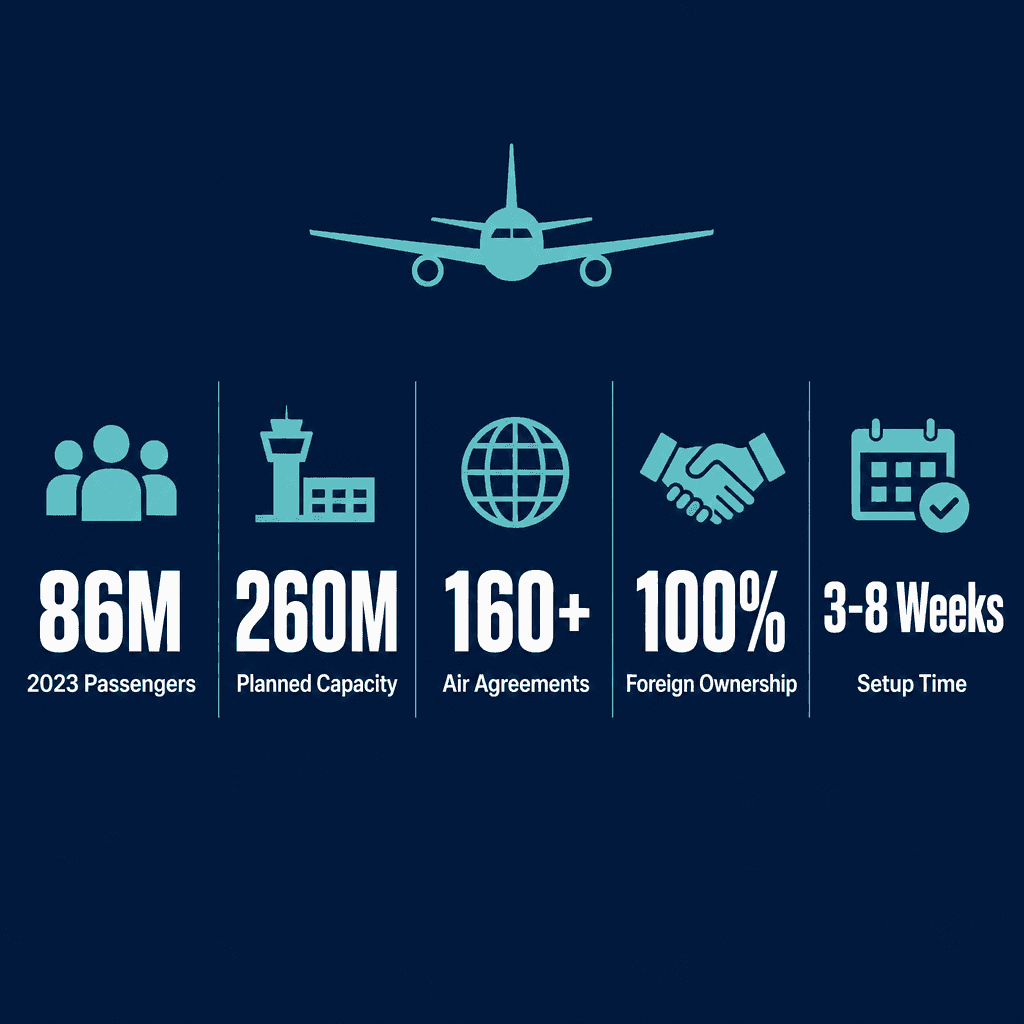
Dubai's position as a global aviation powerhouse is backed by hard data. Dubai International Airport consistently ranks among the world's busiest airports by international passenger traffic, handling over 86 million passengers in 2023. Al Maktoum International Airport, located within Dubai South, is being expanded to eventually become the world's largest airport, with a planned capacity of 260 million passengers per year.
The UAE government has invested heavily in aviation infrastructure, regulatory frameworks, and bilateral air service agreements with more than 160 countries. This makes the market exceptionally accessible for international operators. Combined with a zero corporate tax environment for qualifying free zone entities, Dubai offers a compelling commercial case for passenger air transport businesses.
Key Stats at a Glance
Activity Code: 5110 - Passenger Air Transport
License Type: Business License (Services Category)
Dubai International Airport passengers in 2023: over 86 million
Al Maktoum International Airport planned capacity: 260 million passengers per year
UAE bilateral air service agreements: over 160 countries
Typical license setup timeline: 3 to 8 weeks
What Does the Passenger Air Transport License Cover?
The Passenger Air Transport license under Activity Code 5110 authorises businesses to engage in the scheduled and non-scheduled transport of passengers by air. This includes operations such as charter flights, regional airline services, air taxi operations, and related passenger-carrying activities conducted via fixed-wing aircraft or helicopters.
Businesses holding this license may also engage in ancillary services directly connected to passenger transport, such as ground handling coordination, ticketing, and passenger logistics management, subject to obtaining any additional approvals required by the relevant civil aviation authority.
Who Is This License Suited To?
The Passenger Air Transport license is suitable for a wide range of operators and investors, including:
Airline operators seeking a regional hub for Middle East and Africa routes
Charter flight companies targeting luxury, corporate, or leisure travel segments
Air taxi and urban air mobility startups
Aviation holding companies and investment groups
International carriers looking to establish a UAE-based operating entity
Tourism and travel groups expanding into direct air transport services
Setting Up at Dubai South Business Hub Free Zone
Dubai South Business Hub Free Zone is one of the most strategically relevant locations for aviation-related businesses. Situated adjacent to Al Maktoum International Airport, it offers direct proximity to one of the world's fastest-growing airports, purpose-built infrastructure, and a business-friendly regulatory environment.
Steps to Obtain Your License
Step 1 - Choose your business activity: Confirm that Passenger Air Transport (Activity Code 5110) aligns with your intended operations.
Step 2 - Select your legal structure: Options typically include a Free Zone Establishment (FZE) or Free Zone Company (FZCO), depending on the number of shareholders.
Step 3 - Submit your application: Provide required documentation including passport copies, business plan, and proof of address.
Step 4 - Obtain external approvals: Passenger air transport activities require approval from the General Civil Aviation Authority (GCAA) of the UAE. This is a mandatory regulatory step.
Step 5 - Secure your office or facility: Choose from flexi-desk, serviced office, or dedicated facility options within the free zone.
Step 6 - Receive your license: Once all approvals are in place, your Business License is issued and you may commence operations.
Setup Costs
License fees at Dubai South Business Hub Free Zone vary depending on the legal structure, office space selected, and the number of visas required. As a general guide, initial setup costs including license registration and a basic workspace can start from approximately AED 15,000 to AED 25,000 per year. Businesses requiring larger facilities, multiple visas, or additional regulatory approvals should budget accordingly. It is advisable to request a tailored quote directly from the free zone authority to obtain accurate current pricing.
Licensing and Compliance Requirements
Operating a passenger air transport business in Dubai requires adherence to both free zone regulations and UAE federal aviation law. Key compliance considerations include:
Registration and approval from the General Civil Aviation Authority (GCAA)
Compliance with the UAE Civil Aviation Regulations (UCARs)
Maintenance of valid Air Operator Certificates (AOC) where applicable
Adherence to safety, crew training, and airworthiness standards
Annual license renewal with the free zone authority
Corporate tax registration with the Federal Tax Authority if applicable
Related Activities
Urban Passenger Land Transport Business
On-Demand Passenger Transport Services Business
Passenger Transport for non emergency cases Business License
Frequently Asked Questions