Apply for a Snack Food Trading License in Dubai

Topic Summary
What Products This License Lets You Trade
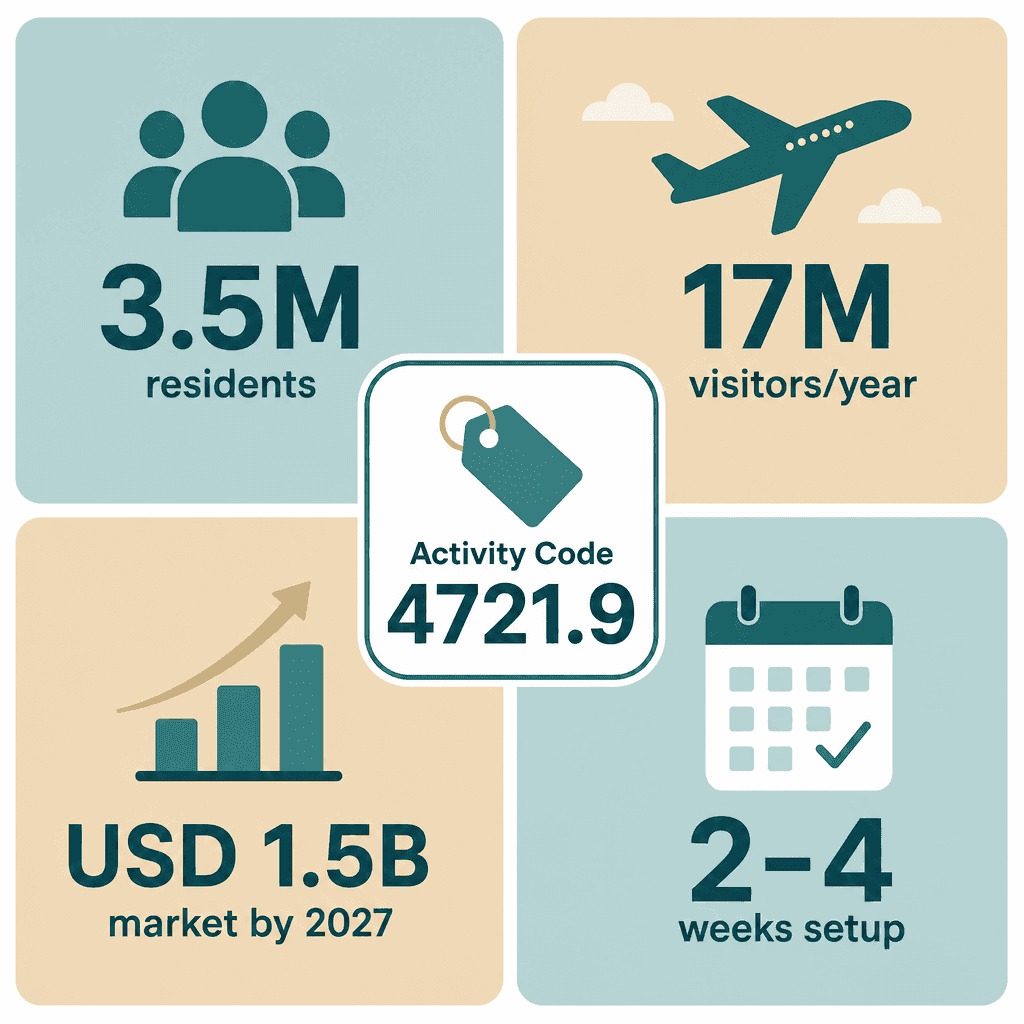
Activity Code 4721.9 covers a wide range of packaged snack goods, from crisps and popcorn to protein bars and confectionery. It also authorises import, export, re-export, and wholesale distribution, though food manufacturing and food service require separate licenses.
Why Dubai South Free Zone Is Ideal
Dubai South sits next to Al Maktoum International Airport and roughly 15 km from Jebel Ali Port, giving snack food traders fast access to both air and sea freight. This dual logistics advantage is especially valuable for fast-moving consumer goods with tight shelf-life requirements.
Key Ownership and Tax Benefits
Businesses licensed at Dubai South enjoy 100 per cent foreign ownership and zero corporate tax on qualifying income. Full repatriation of profits and capital, plus no import or export duties within the free zone, further reduce the cost of doing business.
Realistic Setup Costs to Budget For
A basic setup with a virtual office and one visa allocation typically starts between AED 12,000 and AED 20,000 per year, covering the license fee, office package, and government processing charges. Businesses needing physical warehouse space will face additional facility rental costs on top of this.
How Quickly You Can Be Operational
The typical timeline from application to an active snack food trading license is just two to four weeks. This fast turnaround makes Dubai South an attractive option for entrepreneurs and brands looking to enter the market without lengthy delays.
Who Benefits Most From This License
The license suits international snack brands seeking a GCC distribution hub, importers supplying supermarkets and hypermarkets, and e-commerce businesses selling across the Middle East and North Africa. Entrepreneurs building private-label snack brands sourced from global manufacturers are also well served.
The Market Opportunity Behind the License
The UAE snack food market is projected to exceed USD 1.5 billion by 2027, supported by a cosmopolitan population of 3.5 million and over 17 million annual tourists. Dubai's position as a logistics bridge between Asia, Europe, and Africa amplifies the growth potential for licensed traders.
The global snack food market is expanding rapidly, and Dubai sits at the centre of one of the most dynamic consumer economies in the world. With a cosmopolitan population of over 3.5 million residents, a thriving tourism sector welcoming more than 17 million visitors annually, and world-class logistics infrastructure connecting East and West, the emirate offers snack food traders an unmatched commercial platform. Whether you are sourcing products from Asia, Europe, or the Americas and distributing across the GCC, Africa, or South Asia, establishing a snack food trading license in Dubai is a strategic move that opens doors to high-growth markets.
This guide covers everything you need to know about obtaining a snack food trading license under Activity Code 4721.9 at Dubai South Business Hub Free Zone, including costs, compliance requirements, and the steps to get your business operational.
What the Snack Food Trading License Covers
A snack food trading license under Activity Code 4721.9 is classified as a Trading License within the Trading category. It authorises the holder to buy and sell a broad range of packaged and processed snack food products, including:
Crisps, chips, and extruded snacks
Nuts, seeds, and dried fruits
Popcorn and puffed grain products
Biscuits, crackers, and cereal bars
Confectionery and chocolate snacks
Health and protein snack products
Imported and locally sourced packaged snack goods
The license permits trading activities including import, export, re-export, and wholesale distribution. It does not cover on-site food manufacturing or food service operations, which require separate activity classifications.
Why Dubai South Business Hub Free Zone
Dubai South is one of the UAE's most strategically located free zones, positioned adjacent to Al Maktoum International Airport and within close proximity to Jebel Ali Port, the largest port in the Middle East. This dual access to air and sea freight makes it particularly well suited for perishable and fast-moving consumer goods such as snack foods.
Businesses licensed at Dubai South benefit from 100 per cent foreign ownership, zero corporate tax on qualifying income, full repatriation of profits and capital, and no import or export duties within the free zone. The business hub offers flexible office solutions, including virtual offices and flexi-desks, making it accessible for start-ups and SMEs looking to minimise overheads while maintaining a credible corporate presence.
Key Facts at a Glance
Activity Code: 4721.9
License Type: Trading License
Free Zone: Dubai South Business Hub
Foreign Ownership: 100 per cent permitted
Corporate Tax: 0 per cent on qualifying income
Proximity to Al Maktoum International Airport: On-site
Proximity to Jebel Ali Port: Approximately 15 km
UAE Snack Food Market Value: Projected to exceed USD 1.5 billion by 2027
Typical License Setup Timeline: 2 to 4 weeks
Who This License Suits
The snack food trading license is ideal for a wide range of business profiles, including international snack food brands seeking a regional distribution hub, importers looking to supply hypermarkets, supermarkets, and convenience stores across the UAE and GCC, entrepreneurs building private-label snack brands sourced from global manufacturers, and e-commerce businesses selling snack products to consumers across the Middle East and North Africa region.
Setup Costs and What to Expect
The cost of establishing a snack food trading license at Dubai South Business Hub Free Zone varies depending on the office package selected and the number of visa allocations required. Typical costs include the license registration fee, office or flexi-desk package, and government processing fees. Indicative annual costs for a basic setup with a virtual office and one visa allocation generally start from approximately AED 12,000 to AED 20,000. Businesses requiring physical warehouse or storage space within the free zone will incur additional facility rental costs.
It is advisable to work with a registered business setup consultant to obtain a precise cost breakdown tailored to your specific requirements and visa needs.
Step 1: Choose Your Business Structure
Most applicants register as a Free Zone Limited Liability Company (FZ-LLC). Single-shareholder and multi-shareholder structures are both permitted.
Step 2: Reserve Your Trade Name
Submit two to three preferred trade name options to Dubai South for approval. Names must comply with UAE naming conventions and must not conflict with existing registered entities.
Step 3: Submit Your Application
Complete the license application form and submit it along with the required documentation, which typically includes passport copies of all shareholders and directors, a business plan or activity description, and a no-objection letter if the applicant is currently employed in the UAE.
Step 4: Regulatory Approvals
Snack food trading activities may require additional approvals from the Dubai Municipality Food Safety Department or the UAE Ministry of Climate Change and Environment, particularly for imported food products. Ensure all products comply with UAE food labelling regulations and Gulf Standards Organisation (GSO) requirements.
Step 5: Sign Your License Agreement and Pay Fees
Once approved, sign the license agreement, pay the applicable fees, and collect your trade license and establishment card.
Step 6: Open a Corporate Bank Account
With your license issued, you can apply for a UAE corporate bank account. Several local and international banks operate in the UAE and support free zone businesses.
Compliance and Ongoing Requirements
Snack food traders operating from Dubai South must adhere to UAE food safety regulations, including proper labelling in Arabic and English, halal certification where applicable, and compliance with shelf-life and storage requirements. Annual license renewal is required, and businesses must maintain valid establishment cards and employee visas. Import consignments may be subject to inspection by Dubai Municipality upon entry into the UAE.
Why Dubai Is Well Positioned for Snack Food Trade
Dubai's geographic position places it within an eight-hour flight of approximately two-thirds of the world's population. The UAE's zero-tariff free zone environment, combined with a network of more than 100 double taxation treaties and free trade agreements under negotiation with major economies, makes it a compelling base for international snack food distribution. Consumer demand for premium, healthy, and international snack products continues to grow, driven by a young, affluent, and multicultural population with diverse tastes.
Related Activities
Food Supplements Trading Business
Baby Food Trading Trading License
Canned & Preserved Food Trading Trading License
Frequently Asked Questions