Topic Summary
What Is the Process to Set Up an Agricultural Trading Business in Dubai South?
To set up an agricultural trading business in Dubai South, you form a free zone company and obtain a trade license to import, sell, or re-export produce, grains, seeds, and agri inputs. You get full foreign ownership, a legal entity for contracts, and a residency visa package tied to the license.
Choosing the Right Agri Trading License in Dubai South
Choosing the Right Agri Trading License in Dubai South
Setup Roadmap: How to Set Up Agricultural Trading Business Dubai South
Here's how to set up an agricultural trading business in Dubai South. Choose activities, apply, register for customs, secure approvals and storage, then file visas. Core licensing can finish in days, and approvals run in parallel.
MOCCAE Approval Requirements for Food and Agriculture Import in Dubai
The Ministry of Climate Change and Environment (MOCCAE) regulates plants, seeds, pesticides, fertilizers, and animal-origin products. For food and agriculture import in Dubai, expect an import permit plus phytosanitary or health certificates per consignment. Confirm product rules before ordering.
Handling Perishables and Cold Storage for Food and Agriculture Import in Dubai
Perishables need an unbroken cold chain from origin to buyer. Plan transit time, temperature and humidity specs, and clearance windows before committing to fresh lines.
Next Steps
Knowing how to set up an agricultural trading business in Dubai South comes down to sequence: match license activities to your products, secure MOCCAE and customs approvals, budget for storage, and plan the cold chain. Contact Dubai South Business Hub to confirm your activities and license cost from AED 12,500.
Over 25,000 businesses operate in Dubai South Business Hub Free Zone, and licenses start from AED 12,500. This guide shows traders how to set up an agricultural trading business in Dubai South, from license to first shipment.
What Is the Process to Set Up an Agricultural Trading Business in Dubai South?
To set up an agricultural trading business in Dubai South, you form a free zone company and obtain a trade license to import, sell, or re-export produce, grains, seeds, and agri inputs. You get full foreign ownership, a legal entity for contracts, and a residency visa package tied to the license.
Picture a Southeast Asian rice and pulses trader re-exporting to East Africa. One company holds the contracts, the license, and the visas. That's the whole appeal.
Location matters too. Dubai's ports handle over 14 million TEUs a year (DP World, 2024), and air cargo sits close by, so a fresh produce trader can fly short shelf-life lines while bulk grain moves by sea.
Choosing the Right Agri Trading License in Dubai South
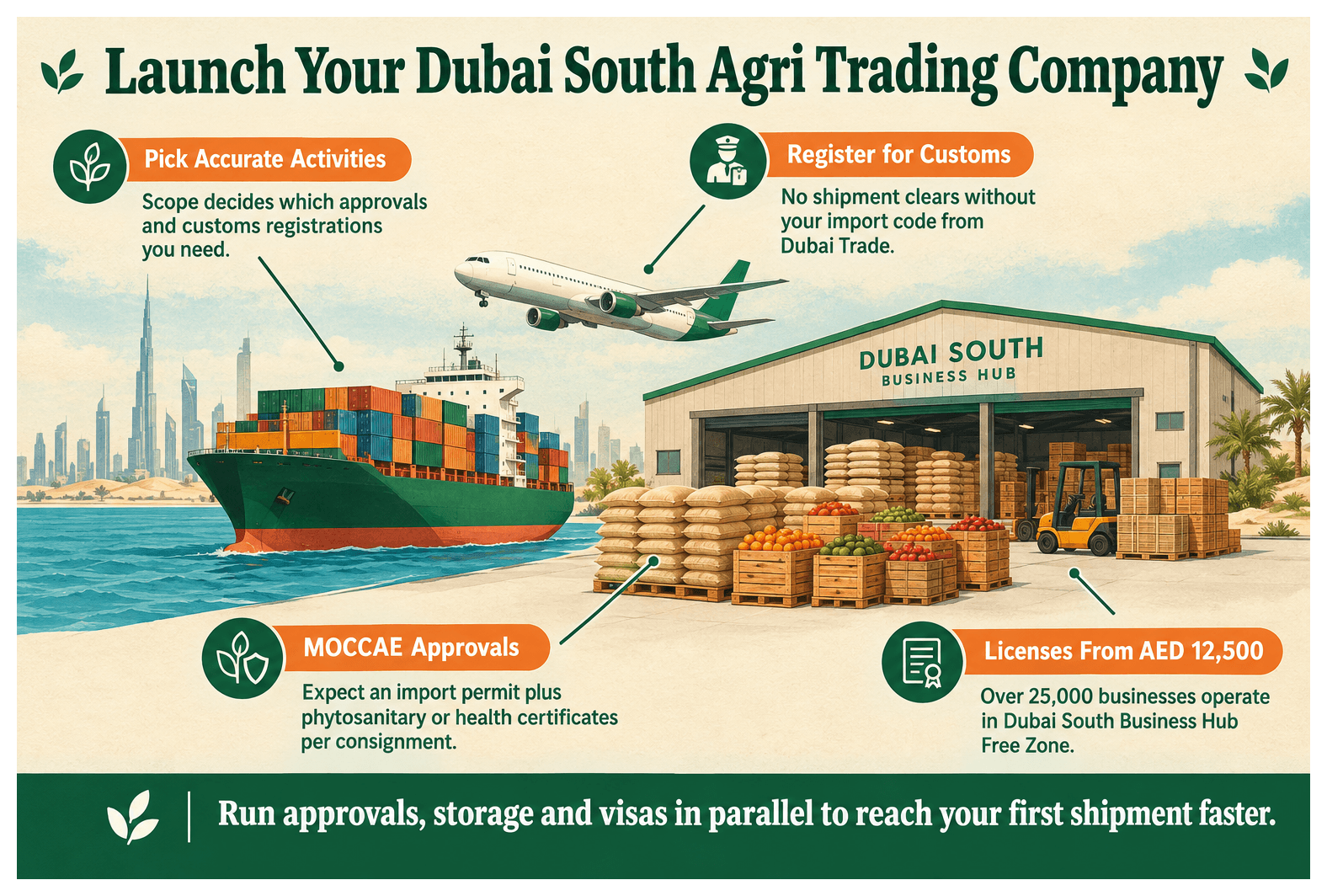
An agri trading license in Dubai South lists your exact activities. Match them to what you actually import and sell, because scope decides which approvals and customs registrations you need.
List broad but accurate activities to avoid amendments later.
Bundle related lines, such as vegetables fruit trading license Dubai activities with foodstuff wholesale.
Seed traders should review the seeds trading license Dubai scope.
Check agricultural by-products wholesale trading license options for residues and feed inputs.
Workspace is separate from storage. A two-person start-up can take a lean desk package, but visa quota follows the workspace type. Warehouses are leased separately.
Setup Roadmap: How to Set Up Agricultural Trading Business Dubai South
Here's how to set up an agricultural trading business in Dubai South. Choose activities, apply, register for customs, secure approvals and storage, then file visas. Core licensing can finish in days, and approvals run in parallel.
Define activities and apply. Pick activities, a company name, and shareholders. Prepare passport copies and a short business plan. A grain trader would list cereals and pulses trading.
Get licensed and register for customs. Receive your trade license and establishment card. Then obtain your import code through Dubai Trade. No shipment clears without it, so register before booking the first container.
Secure approvals, storage, and visas. Apply for MOCCAE permits, lease a warehouse or cold room, and file visas and bank account paperwork together.
Running these in parallel is the single biggest time-saver I'd point to.
MOCCAE Approval Requirements for Food and Agriculture Import in Dubai
The Ministry of Climate Change and Environment (MOCCAE) regulates plants, seeds, pesticides, fertilizers, and animal-origin products. For food and agriculture import in Dubai, expect an import permit plus phytosanitary or health certificates per consignment. Confirm product rules before ordering.
Which Documents Keep Consignments Moving?
You'll need a phytosanitary certificate, certificate of origin, and commercial invoice. Accurate HS codes prevent delays. A fruit consignment missing one certificate can sit at the port while storage fees pile up.
Estimated Cost Items for an Agricultural Trading Setup in Dubai South
Feature | Cost Item | Indicative Amount or Note |
|---|---|---|
Free zone trade license | One-time setup, renewed annually | From AED 12,500 |
Residency visa package | Per visa, tied to license | Varies by quota and workspace type |
MOCCAE import permits | Per product and consignment | Required for seeds, plants, fertilizers, pesticides |
Customs registration and import code | One-time registration | Needed before the first shipment clears |
Warehouse or cold storage rental | Recurring, main variable cost | Varies by volume and temperature needs |
Where do traders overspend? Oversized warehouses and permit rejections from sloppy paperwork. Start with pay-per-pallet third-party storage and lease only when volumes justify it.
Handling Perishables and Cold Storage for Food and Agriculture Import in Dubai
Perishables need an unbroken cold chain from origin to buyer. Plan transit time, temperature and humidity specs, and clearance windows before committing to fresh lines.
Shelf life decides air versus sea freight.
Pre-book clearance slots.
Put data loggers in each pallet.
Insure against cold-chain failure.
Say berries land by air and reach a cold room within hours. If a buyer disputes quality, logger records settle it fast and strengthen insurance claims. Traders handling packaged goods can also explore a foodstuff import export business Dubai or a foodstuff beverages trading business Dubai setup.
Do I Need My Own Cold Storage at Launch?
No. Third-party cold rooms keep fixed costs low. Rent first, then lease once volumes justify it.
Next Steps
Knowing how to set up an agricultural trading business in Dubai South comes down to sequence: match license activities to your products, secure MOCCAE and customs approvals, budget for storage, and plan the cold chain. Contact Dubai South Business Hub to confirm your activities and license cost from AED 12,500.
References
Frequently Asked Questions