Vegetables & Fruit Trading License in Dubai

Topic Summary
Dubai's Import Dependency Creates Big Opportunity
The UAE imports approximately 85 to 90 per cent of its food supply, making it one of the most import-dependent nations in the world. This reliance on foreign produce means consistent, high-volume demand for licensed fruit and vegetable traders.
Activity Code 4721.67 Covers Wide Trading Scope
A Vegetables and Fruit Trading License under Activity Code 4721.67 authorises importing, distributing, re-exporting, and storing fresh, dried, and processed produce. Basic sorting, grading, and packaging are also generally permissible, giving traders operational flexibility.
Dubai South Offers Unmatched Logistics Access
Dubai South Business Hub Free Zone sits adjacent to Al Maktoum International Airport, planned to become the world's largest cargo airport, and connects directly to Jebel Ali Port. This dual air and sea access is especially valuable for perishable goods with short shelf lives.
100 Per Cent Foreign Ownership Is Permitted
Businesses licensed at Dubai South Free Zone can be fully foreign-owned, with no requirement for a local partner or sponsor. Traders also benefit from zero corporate and personal income tax and full repatriation of profits and capital.
Setup Can Be Completed in Under a Week
The typical timeline for establishing a vegetables and fruit trading company at Dubai South Business Hub Free Zone is just three to seven working days. This fast-track process allows entrepreneurs to begin trading operations quickly and capitalise on time-sensitive market opportunities.
Re-Export Potential Extends Far Beyond the UAE
Produce entering Dubai regularly travels onward to Gulf Cooperation Council countries, East Africa, and South Asia, making the emirate a powerful regional distribution hub. Licensed traders can structure their operations to capture both local retail demand and lucrative re-export volumes.
Growing Population Sustains Long-Term Demand
Dubai's resident population exceeds 3.5 million, with a large and diverse expatriate community driving strong consumer appetite for fresh, healthy food. Combined with expanding cold-chain infrastructure at Al Aweer Central Fruit and Vegetable Market, this creates a stable commercial foundation for new entrants.
Dubai sits at the crossroads of global trade routes, connecting producers in Asia, Africa, and Europe with consumers across the Middle East, South Asia, and beyond. For entrepreneurs looking to capitalise on this strategic position, the vegetables and fruit trading sector offers compelling opportunities. Whether you are importing fresh produce for local distribution or building a re-export operation, obtaining the correct license is the essential first step.
This guide covers everything you need to know about securing a Vegetables & Fruit Trading License (Activity Code: 4721.67) at Dubai South Business Hub Free Zone, including costs, compliance requirements, and why this jurisdiction is ideally suited for produce traders.
The UAE Fresh Produce Market: Why Now
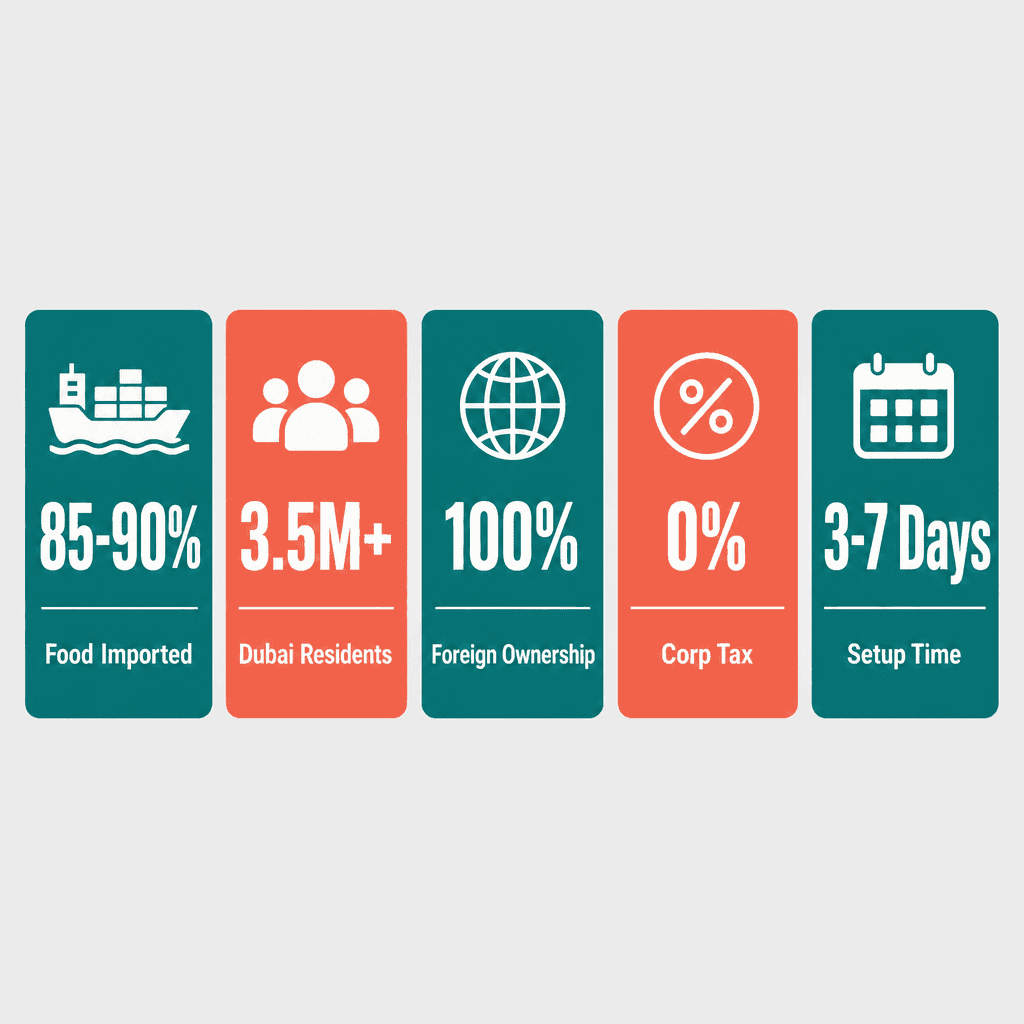
The UAE imports approximately 85 to 90 per cent of its food supply, making it one of the most import-dependent nations in the world. Fresh fruit and vegetables represent a significant share of that import bill. According to the Food and Agriculture Organisation, global food trade continues to grow, and the UAE's position as a re-export hub means that goods entering Dubai often travel onward to markets across the Gulf Cooperation Council, East Africa, and South Asia.
Dubai's Al Aweer Central Fruit and Vegetable Market handles millions of tonnes of produce annually, and the emirate's cold-chain infrastructure continues to expand. Rising consumer demand for fresh, healthy food, combined with a growing expatriate population of over 3.5 million residents in Dubai alone, creates sustained commercial opportunity for licensed traders.
Key Stats at a Glance
Activity Code: 4721.67 - Retail sale of fruit and vegetables in specialised stores
License Type: Trading License
Category: Trading
UAE food import dependency: approximately 85 to 90 per cent
Dubai population: over 3.5 million residents
Free zone jurisdiction: Dubai South Business Hub
Foreign ownership permitted: 100 per cent
Typical setup timeline: 3 to 7 working days
What the Vegetables & Fruit Trading License Covers
Activity Code 4721.67 falls under the retail sale of fruit and vegetables in specialised stores, as classified within the International Standard Industrial Classification (ISIC) framework. Under this license, the holder is authorised to:
Import fresh, dried, and processed fruit and vegetables
Trade and distribute produce within the free zone and to approved markets
Re-export consignments to regional and international destinations
Store produce in approved cold-chain or ambient facilities
Enter into wholesale and retail supply agreements
The license does not cover manufacturing or processing activities, which require separate permits. However, basic sorting, grading, and packaging of produce is generally permissible under a trading license, subject to free zone authority confirmation.
Dubai South Business Hub Free Zone: An Ideal Base
Dubai South is home to Al Maktoum International Airport, which is planned to become the world's largest airport by cargo capacity. This proximity gives license holders direct access to air freight infrastructure, making it straightforward to handle perishable goods with short shelf lives. The free zone also connects to Jebel Ali Port via a dedicated logistics corridor, providing sea freight options for bulk shipments.
Businesses operating within Dubai South benefit from 100 per cent foreign ownership, zero corporate and personal income tax, full repatriation of profits and capital, and streamlined customs procedures. These advantages make it particularly attractive for international traders seeking a cost-efficient regional hub.
Setup Costs and Steps
The cost of establishing a vegetables and fruit trading company at Dubai South Business Hub Free Zone varies depending on office configuration, visa requirements, and the scope of the operation. Indicative costs include:
Cost Component | Indicative Range (AED) |
|---|---|
License fee (annual) | 12,500 to 20,000 |
Registration and admin fees | 2,000 to 5,000 |
Flexi-desk or office space | 8,000 to 25,000 per year |
Visa allocation (per visa) | 3,000 to 5,000 |
The general process for obtaining the license involves the following steps:
Select your business activity and confirm Activity Code 4721.67 with the free zone authority
Choose a company name and submit for approval
Complete the application form and provide required documentation
Select your workspace package (flexi-desk, serviced office, or warehouse unit)
Pay the applicable fees and receive your trading license
Open a corporate bank account and apply for residence visas as needed
Licensing and Compliance Requirements
Beyond the core trading license, vegetables and fruit traders must be aware of several compliance obligations:
All imported produce must comply with UAE food safety standards set by the Emirates Authority for Standardisation and Metrology (ESMA) and the Dubai Municipality Food Safety Department
Phytosanitary certificates are required for most fresh produce imports, issued by the competent authority in the country of origin
Cold-chain storage and transport must meet temperature requirements for specific commodities
Labelling must comply with UAE regulations, including country of origin, batch number, and expiry information
Traders re-exporting to GCC countries must comply with GCC customs union regulations
Who This License Suits
The Vegetables & Fruit Trading License at Dubai South is well suited to a broad range of business profiles, including:
International produce exporters seeking a UAE distribution hub
Regional wholesalers supplying supermarkets, hotels, and food service operators
Entrepreneurs establishing online or direct-to-consumer fresh produce businesses
Logistics and trading companies looking to add fresh produce to their portfolio
Related Activities
Fresh, Chilled & Frozen Meat Trading Trading License
Fresh Fish & Marine Animals Trading Trading License
Frequently Asked Questions