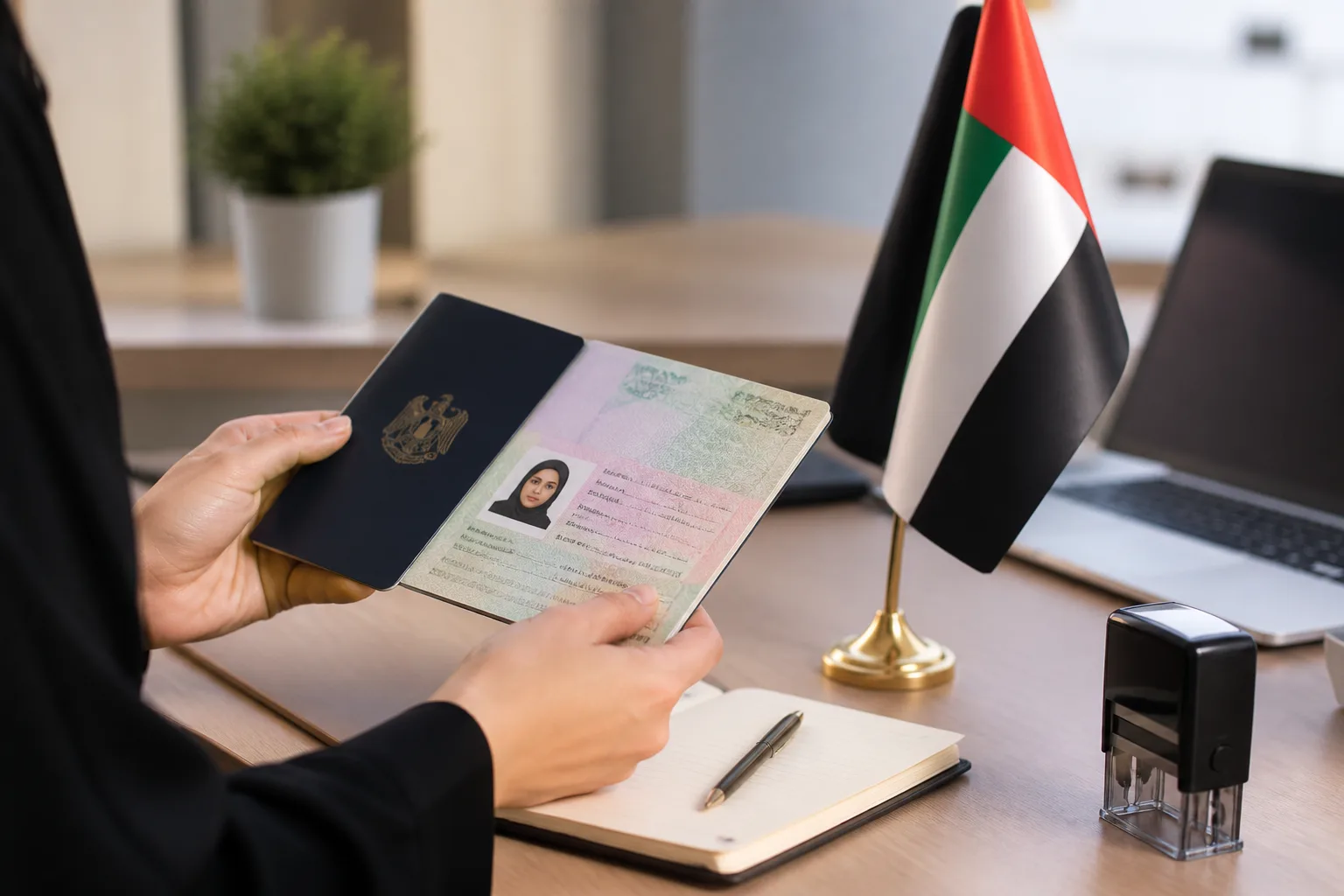
Topic Summary
Visit Visa vs. Residence Visa: Know the Difference
A visit visa is a temporary entry permit lasting 30 to 90 days, while a residence visa grants long-term legal status tied to a sponsor such as an employer or free zone company. Confusing the two is one of the most common and costly mistakes first-time founders make in the UAE.
Who Qualifies for a UAE Visit Visa
Nationals of around 50 countries, including the UK, US, Australia, Canada, and EU member states, receive a free 90-day visit visa on arrival. Other nationalities must apply in advance through the ICP portal or via an airline or hotel sponsor.
Extending Your Visit Visa Costs AED 600
The standard government fee for a visit visa extension is AED 600. Extensions are typically available once for standard 30-day visit visas, so planning your timeline carefully is essential.
Overstay Fines Start at AED 50 Per Day
GDRFA Dubai begins charging AED 50 per day from the day after your visa expires, and these fines accumulate quickly. A single missed deadline can also trigger a forced exit from the country.
Two Authorities Handle UAE Visa Processing
The ICP governs visa categories at the federal level, while GDRFA Dubai handles day-to-day processing, extensions, and status changes specifically in Dubai. Knowing which authority manages your request saves significant time and avoids misdirected applications.
Property Investment Unlocks Long-Term Residency
Investors who purchase UAE property valued at a minimum of AED 2 million can qualify for a long-term residence visa. The Golden Visa offers even longer protection, running for either 5 or 10 years depending on the category.
The Founder Playbook: Arrive, Incorporate, Convert
Many founders arrive on a visit visa, incorporate their company at a free zone within the first few weeks, then apply for a residence visa through that company before their visit visa expires. Getting this sequence right avoids fines and keeps your company setup timeline on track.
In 2026, the UAE hosts over 3.5 million active residence visa holders, and the GDRFA Dubai processes hundreds of thousands of visit and residency visa extension requests each year. The standard visit visa extension costs AED 600 in government fees. Overstay fines start at AED 50 per day from the day after expiry. A property investor visa requires a minimum property value of AED 2 million. The Golden Visa runs for 5 or 10 years. And a free zone license at Dubai South Business Hub Free Zone is issued in one business day. Many founders and investors arrive without realising their visa status directly affects their company setup timeline, and that a single missed deadline can trigger fines or a forced exit.
This guide explains who qualifies for a residency visit visa in the UAE, how extensions work, what documents and costs are involved, and which situations disqualify you, so you can plan your move to Dubai without administrative surprises.
What Is a Residency Visit Visa in the UAE and Why It Matters
A UAE residency visit visa is a short-stay entry permit allowing foreign nationals to remain in the country legally for a defined period, typically 30 to 90 days. It differs from a residence visa, which grants long-term legal status. Founders often arrive on a visit visa before converting to a residence visa through a licensed company.
Visit Visa vs. Residence Visa: The Core Difference
The two are legally distinct statuses, and confusing them is one of the most common mistakes first-time founders make. A visit visa gets you into the country. A residence visa lets you stay, open a bank account, get an Emirates ID, and operate as a legal resident.
A visit visa is a temporary entry permit. Standard durations are 30 days (extendable once) or 90 days for nationals of select countries.
A residence visa is a long-term status tied to a sponsor: an employer, a free zone company, or an immediate family member.
Founders who arrive on a visit visa must convert to a residence visa after incorporating their company.
Overstaying accrues daily fines via GDRFA Dubai at AED 50 per day for a visit visa overstay.
Take a practical example: a British founder arrives on a 90-day visit visa, incorporates at a Dubai free zone in week two, then applies for a residence visa through that company before day 90 to avoid any overstay fine. That sequencing, arrive, incorporate, convert, is the standard playbook.
Who Issues UAE Visas and Who Manages Extensions
Two authorities handle most of what you'll deal with. The Federal Authority for Identity, Citizenship, Customs and Ports Security (ICP) is the federal body governing all visa categories nationwide. GDRFA Dubai executes day-to-day visa processing, extensions, and status changes in Dubai specifically.
Free zones act as licensed sponsors for investor and partner residence visas, they do not issue visit visas. Knowing which authority handles your specific request prevents wasted time at the wrong counter. An extension request goes to ICP or GDRFAD. A residence visa application goes through your free zone, then GDRFAD.
Who Qualifies for a Residency Visit Visa in the UAE
Eligibility for a UAE residency visit visa depends on nationality, purpose of visit, and sponsorship. Most nationalities receive a visa on arrival or an electronic visa for tourism or business exploration. Long-term residence visa eligibility is tied to company ownership, employment, property investment of at least AED 750,000, or family sponsorship.
Nationalities Eligible for Visa on Arrival or e-Visa
GCC nationals do not require a visa to enter or reside in the UAE under bilateral agreements.
Nationals of approximately 50 countries, including the UK, US, EU member states, Australia, and Canada, receive a free 90-day visit visa on arrival.
Other nationalities must apply for an e-visa through the ICP portal or via an airline or hotel sponsor before travel.
Always verify your nationality's entitlement on the ICP portal before booking, as the list is updated periodically.
A German national landing at Dubai International Airport, for instance, receives a 90-day visit visa stamp automatically at immigration at no cost. That 90-day window is enough time to incorporate a company and initiate a residence visa application, if you move quickly.
Qualifying Grounds for a UAE Residence Visa
Company ownership: holding shares in a UAE-licensed company (free zone or mainland) qualifies you for an investor or partner residence visa.
Employment: a valid UAE employment contract from a licensed entity sponsors a work residence visa.
Property investment: owning property valued at AED 750,000 or above qualifies for a property investor visa (u.ae, 2026).
Family sponsorship: a UAE resident earning above GDRFA Dubai's minimum salary threshold can sponsor a spouse, children, and in some cases parents.
Golden Visa: a 5 or 10-year visa available to investors, entrepreneurs, and specialised talent meeting criteria set by the UAE Cabinet.
For founders specifically, company ownership is the most accessible route. A founder who holds 100% of shares in a Dubai South Business Hub Free Zone company qualifies for an investor residence visa through that company, no employer required.
How to Extend a Residency Visit Visa in the UAE: Step-by-Step
To extend a UAE visit visa, apply through the ICP smart app or GDRFA Dubai portal before the current visa expires. The standard 30-day visit visa can be extended once for another 30 days at a government fee of AED 600 plus service charges. Extensions must be applied for while you are legally inside the UAE.
UAE Visit Visa Extension vs. Residence Visa: Key Comparison
Feature | Visit Visa Extension | Investor Residence Visa (Free Zone) |
|---|---|---|
Duration granted | 30 additional days (one extension only) | 2 or 3 years, renewable |
Government fee | AED 600 plus AED 100 to 170 service charges | Multiple steps billed separately (entry permit, status change) |
Processing time | 1 to 3 working days | 10 to 20 working days (all documents in order) |
Sponsorship required | No sponsor needed for self-service extension | Licensed UAE company required as sponsor |
Medical fitness test required | No | Yes, at a DHA-approved centre |
Emirates ID issued | No | Yes, issued as part of the residence visa process |
Step 1: Confirm Your Current Visa Status and Expiry Date
Log in to the ICP smart app or visit the GDRFA Dubai website to check your exact visa expiry date. Do not rely on your passport stamp alone, system records are the legal reference, and discrepancies do occur.
Worth flagging here: 90-day on-arrival visas for eligible nationalities are typically not extendable. They require an exit and re-entry or a status change to a residence visa. If you're on a 90-day visa and want to stay longer, your only real option is to complete your company setup and convert to a residence visa before day 90.
Step 2: Gather the Required Documents
Valid passport with at least six months of remaining validity.
A recent passport photograph meeting GDRFA Dubai specifications: white background, 35mm x 45mm.
Current UAE entry stamp or e-visa printout.
Payment method for government fees, credit card accepted via the ICP portal.
If extending through a sponsor (hotel, employer, or company), a sponsorship letter on official letterhead.
Step 3: Submit the Application and Pay Fees
Apply online via the ICP portal or the ICP smart app. In-person applications can be submitted at GDRFA Dubai service centres in Dubai. The government extension fee for a 30-day visit visa extension is AED 600; service charges of approximately AED 100 to AED 170 apply on top depending on the channel used. Confirm the current fee schedule on the ICP portal before submitting, as fees are updated periodically.
Processing typically takes one to three working days. An SMS or email confirmation is sent to the contact number on file. Keep a digital copy of the approved extension, airlines and border officers may request proof.
A practical scenario: a founder applies for a 30-day extension via the ICP smart app on day 25 of a 30-day visit visa, pays AED 600 plus service charges, and receives approval within 48 hours, without leaving the UAE. That's the cleanest outcome when you plan ahead.
Costs and Timeline for UAE Visa Extensions and Residence Visa Processing
A UAE visit visa extension costs AED 600 in government fees plus service charges, processed in one to three working days. Converting a visit visa to a residence visa through a free zone company involves additional steps, entry permit, status change, medical fitness test, Emirates ID, each billed separately from the company package.
Visit Visa Extension Fees at a Glance
Government fee for a 30-day extension: AED 600.
Typing and service charges: approximately AED 100 to AED 170 depending on the application channel.
Overstay fines if you miss the deadline: AED 50 per day, charged from the day after expiry.
Second extension: not available on the same visit visa entry. You must exit or change status.
Residence Visa Processing Costs Through a Free Zone Company
Visa processing for an investor or partner visa covers five distinct government steps, each billed separately: entry permit, status change (inside-country), medical fitness test at a DHA-approved centre, Emirates ID application. These processing costs are separate from the free zone license package price.
The Dubai South Business Hub Free Zone 1 Visa Package (AED 16,350) includes the visa allocation, but processing fees are quoted and invoiced separately. A founder who buys the 1 Visa Package receives the license (issued in one day), Articles of Association, share register, flexi-desk space, establishment card, and one investor visa allocation. She then pays separately for each visa processing step. The 2 Visa Package is priced at AED 18,200 and covers two investor or partner visa allocations.
Total processing timeline from entry permit application to stamped visa is typically 10 to 20 working days when all documents are in order. You can check the business setup cost calculator to model your full setup investment before committing.
How a Free Zone License Gets You a UAE Residency Visa
A UAE free zone trade license makes you eligible to sponsor your own investor or partner residence visa. The license acts as the legal entity that holds shares for the visa holder. For founders, this is the most direct route from a short-term residency visit visa in the UAE to a long-term investor visa UAE status.
What the Dubai South Business Hub Free Zone Visa Packages Include
0 Visa Package (AED 12,500): license, Articles of Association, share register, flexi-desk space, and lease agreement. No visa allocation.
1 Visa Package (AED 16,350): everything in the 0 Visa Package, plus one investor or partner visa allocation and the establishment card.
2 Visa Package (AED 18,200): everything in the 0 Visa Package, plus two investor or partner visa allocations and the establishment card.
up to six visa allocations, with published packages offering 0, 1 or 2 available across all packages.
Visa processing fees are always quoted separately from the package price.
The license is issued in one business day once documentation is approved.
A solo founder setting up a consulting company selects the 1 Visa Package at AED 16,350, receives the license the next day, and then initiates visa processing, entry permit first, then status change, medical, Emirates ID. That's the standard sequence. You can explore the full range of business activities available under a Dubai South Business Hub license before deciding on your package.
Converting Your Visit Visa to a Residence Visa Inside the UAE
If you're already in the UAE on a valid visit visa, you can apply for a status change rather than exiting and re-entering. That saves the cost of an exit flight and the disruption of leaving mid-setup.
The status change application is submitted through GDRFA Dubai after the entry permit for the residence visa is approved. Critically, the status change must be completed before your visit visa expires. Applying while overstaying is not permitted and will incur fines. Once the status change is approved, you proceed to medical fitness testing, Emirates ID biometrics, and final visa stamping. For full support through each of these steps, the business support services team can handle government transactions on your behalf.
What happens if my visit visa expires before my residence visa is processed?
If your visit visa expires before the status change is approved, you'll accrue AED 50 per day in overstay fines from GDRFAD. You may also be required to exit the UAE and re-enter on a new entry permit before the residence visa process can continue. Start the status change application as early as possible, ideally within the first week of your visit visa period.
Situations That Disqualify You from a UAE Visa Extension or Residence Visa
You cannot extend a UAE visit visa if you are already overstaying, if the visa type is non-extendable, or if you have an unresolved immigration ban or criminal record flag. Residence visa applications are rejected if the sponsoring entity's license is expired, if medical fitness results are adverse, or if submitted documents are fraudulent.
Visit Visa Extension Disqualifiers
You are already in overstay status. Extensions cannot be backdated; you must pay the outstanding fine and may need to exit first.
Your visa type is non-extendable (transit visas or certain single-entry tourist visas fall into this category).
The visa has already been extended once on the same entry. A second extension is not available for standard visit visas.
An active immigration ban registered with ICP or GDRFA Dubai blocks any extension or new application until the ban is lifted through the issuing authority.
Residence Visa Application Disqualifiers
The sponsoring company's trade license has expired. GDRFA Dubai will not process a visa linked to an inactive entity.
The applicant fails the mandatory medical fitness test. Screening covers tuberculosis, HIV, hepatitis B, and hepatitis C. A failed result triggers a mandatory exit order (DHA, 2026).
Documents submitted are incomplete, inconsistent, or suspected of being altered. Applications are suspended pending investigation.
Criminal record flags or an active travel ban in the UAE system prevent processing. These must be resolved through the relevant UAE authority before reapplying.
Here's a real scenario worth flagging: a founder whose free zone license lapsed before the visa stamping appointment will find the visa application suspended until the license is renewed and confirmed active in GDRFA Dubai's system. Renewing a lapsed license takes time and adds cost, don't let it happen.
Documents Required for a UAE Residency or Visit Visa Extension
For a visit visa extension you need a valid passport, a recent photograph, and payment for government fees. For a residence visa through a free zone company you also need the trade license, establishment card, tenancy contract or flexi-desk agreement, entry permit approval, medical fitness certificate, and Emirates ID application form.
References
Frequently Asked Questions