Cutlery & Silverware Trading License in Dubai: Cost and Requirements

Topic Summary
100% Foreign Ownership With No Share Capital
The Cutlery and Silverware Trading License at Dubai South Business Hub Free Zone allows full foreign ownership with no minimum share capital requirement. This makes market entry straightforward for international entrepreneurs and manufacturers alike.
Affordable Setup Cost Between AED 10K–20K
Estimated setup costs range from AED 10,000 to AED 20,000, making this one of the more accessible free zone licenses in Dubai. This low barrier to entry is especially attractive for first-time entrants into the GCC market.
Zero Corporate Tax on Free Zone Income
Qualifying income generated within the free zone is subject to 0% corporate tax, a significant financial advantage for trading businesses. VAT registration is only required once annual turnover exceeds AED 375,000.
Broad Trading Scope Across Multiple Channels
License holders can import, export, re-export, and conduct both wholesale and retail distribution of cutlery, silverware, flatware, and related metal utensils. This versatility suits businesses operating across hospitality, retail, and commercial supply chains.
Strategic Location Near World-Class Logistics Hubs
Dubai South Business Hub Free Zone sits adjacent to Al Maktoum International Airport and is close to Jebel Ali Port, two of the region's most important trade gateways. This infrastructure enables efficient sourcing and distribution across Asia, Europe, and Africa.
Strong Demand From Dubai's Hospitality Sector
Dubai's thousands of hotels, restaurants, and catering operations create consistent B2B demand for commercial-grade cutlery and silverware. The luxury hospitality segment in particular sources premium flatware at scale, supporting reliable purchasing cycles.
Re-Export Advantage Unlocks Regional Market Access
Dubai's position as a global trade corridor allows licensed traders to source products internationally and redistribute them across the GCC and beyond with streamlined customs procedures. Growing UAE non-oil trade volumes and free zone activity make this re-export model highly viable.
Dubai's position as a global trade corridor makes it one of the most strategic locations in the world to establish a cutlery and silverware trading business. Whether you are an established manufacturer seeking a regional distribution hub or an entrepreneur entering the GCC market for the first time, the UAE's free zone ecosystem offers a compelling launchpad. This guide covers everything you need to know about obtaining a Cutlery and Silverware Trading License (Activity Code 4759.87) at Dubai South Business Hub Free Zone, including costs, requirements, and the steps to get started.
Dubai's Market Opportunity for Cutlery and Silverware Trade
The UAE's retail and hospitality sectors continue to generate sustained demand for cutlery, silverware, and flatware products. With Dubai alone hosting thousands of hotels, restaurants, and catering operations, the B2B procurement market for commercial-grade cutlery and silverware is both large and consistent. The city's luxury hospitality segment, in particular, sources premium flatware and silverware at scale, creating reliable purchasing cycles for licensed traders.
Beyond domestic consumption, Dubai's re-export advantage is a defining factor. The emirate sits at the crossroads of Asia, Europe, and Africa, served by world-class logistics infrastructure that enables traders to source globally and distribute regionally with minimal friction. The UAE's non-oil trade volumes have grown significantly in recent years, with free zone activity contributing substantially to export and re-export totals. For cutlery and silverware traders, this translates into a business environment where supply chains are efficient, customs procedures are streamlined, and market access is genuinely global.
The continued expansion of the UAE's food and beverage industry, including a growing number of franchise brands, cloud kitchens, and fine dining establishments, further supports demand across multiple price points and product categories.
What the Cutlery and Silverware Trading License Covers
The Cutlery and Silverware Trading License is classified under Activity Code 4759.87 within the ISIC framework and is categorised as a Trading License. It is issued by the Dubai South Business Hub Free Zone authority and permits the holder to conduct a defined range of commercial activities related to cutlery and silverware products.
Permitted goods under this license include cutlery, silverware, flatware, and related household or commercial metal utensils. The scope of trade covers import, export, re-export, and both wholesale and retail distribution, making it a versatile license suitable for businesses operating across multiple channels.
Operating from Dubai South Business Hub Free Zone gives license holders access to a regulated, internationally recognised trade environment. The free zone serves as the issuing authority and operational base, providing the legal framework within which the business functions. Traders benefit from the zone's proximity to major logistics infrastructure and its established reputation as a hub for international commerce.
Key Facts at a Glance
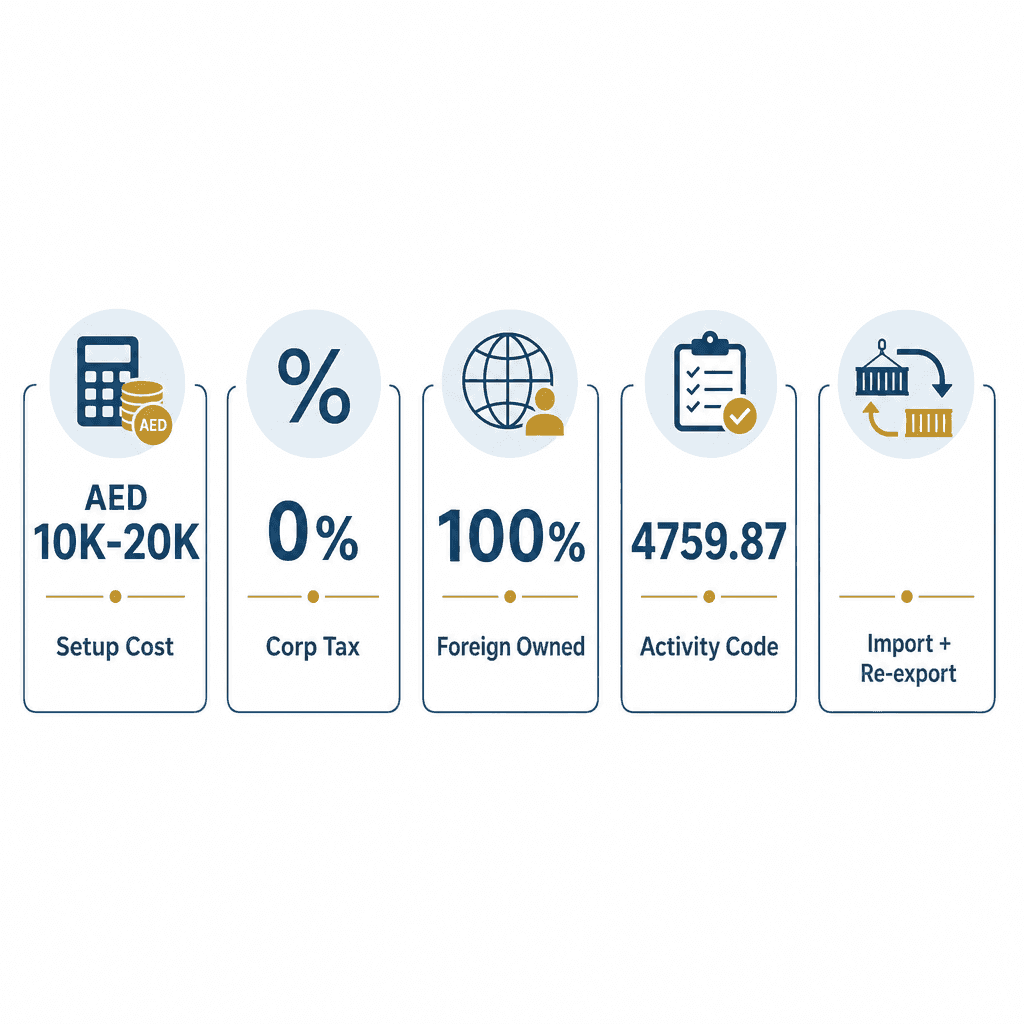
Activity Code: 4759.87
License Type: Trading License
Issuing Authority: Dubai South Business Hub Free Zone
Foreign Ownership: 100% permitted
Minimum Share Capital: None required
Corporate Tax on Qualifying Free Zone Income: 0%
VAT Registration Threshold: AED 375,000 annual turnover
Key Infrastructure: Al Maktoum International Airport and Jebel Ali Port
Who Should Apply for This License
This license is well suited to a broad range of business profiles. Importers and wholesalers supplying hotels, restaurants, and catering companies across the GCC will find the trading scope and free zone location particularly advantageous. International manufacturers looking to establish a UAE distribution hub for their silverware and cutlery product lines can use this license to manage regional fulfilment efficiently.
Entrepreneurs targeting e-commerce and retail channels for household cutlery will also benefit from the free zone's flexible facility options and straightforward regulatory environment. For re-exporters, Dubai South's direct proximity to Al Maktoum International Airport and Jebel Ali Port, one of the largest container ports in the world, provides logistical advantages that few other locations can match. If your business model depends on fast turnaround, competitive freight costs, and reliable customs processing, this is a strong operational base.
License Requirements and Setup Steps at Dubai South Business Hub
One of the most attractive features of establishing a business in a UAE free zone is the regulatory framework. Under free zone regulations, 100% foreign ownership is permitted, meaning international investors retain full control of their business without requiring a local partner or sponsor. There is no minimum share capital requirement for trading license applicants, which lowers the barrier to entry considerably.
The documentation required to apply is straightforward. Applicants will typically need to provide passport copies for all shareholders and directors, a completed application form, a basic business plan, and proof of address. Additional documents may be requested depending on the applicant's nationality or business structure.
Facility options at Dubai South Business Hub range from flexi-desk arrangements and shared office spaces to dedicated warehouse units. The appropriate choice depends on the operational scale of the business and whether physical storage of goods is required within the free zone.
Step-by-Step Setup Process
Step 1:Choose your trade activity and confirm Activity Code 4759.87 as the applicable classification for your business.
Step 2: Submit your application form and supporting documents to the Dubai South Business Hub Free Zone authority for review and approval.
Step 3: Select your preferred office or facility package and sign the tenancy agreement to secure your registered address within the free zone.
Step 4: Pay the applicable license and registration fees upon approval and receive your trade license.
Step 5:Open a corporate bank account with a UAE-based bank and commence trading operations.
Costs, Compliance, and Why Dubai South Stands Out
The estimated cost of obtaining a Cutlery and Silverware Trading License at Dubai South Business Hub Free Zone ranges from AED 10,000 to AED 20,000, depending on the package selected and any additional services required. This figure typically includes license and registration fees. Annual renewal fees apply and should be factored into ongoing business budgeting, along with the cost of any visa allocations for employees or shareholders.
From a tax perspective, businesses operating within the free zone benefit from zero corporate tax on qualifying free zone income under the UAE's current tax framework. Customs duty exemptions also apply within the free zone, and re-export procedures are streamlined to support efficient outbound trade. If your annual turnover exceeds AED 375,000, VAT registration with the Federal Tax Authority becomes a compliance obligation. Businesses are also required to maintain accurate trade records and renew their license annually to remain in good standing.
Dubai South's strategic location is a significant differentiator. Situated adjacent to Al Maktoum International Airport and within close reach of Jebel Ali Port, the free zone offers direct access to two of the region's most important trade gateways. This infrastructure advantage reduces lead times, lowers logistics costs, and gives traders the flexibility to respond quickly to market demand across the GCC and beyond.
Related Activities
Musical Instruments & Requisites Trading Trading License
Chandeliers Trading Trading License
Light Fitting & Fixtures Trading Business
Frequently Asked Questions