Second Company Setup in Dubai from India: Cost of Adding an Entity

Topic Summary
Know What a Second Entity Means
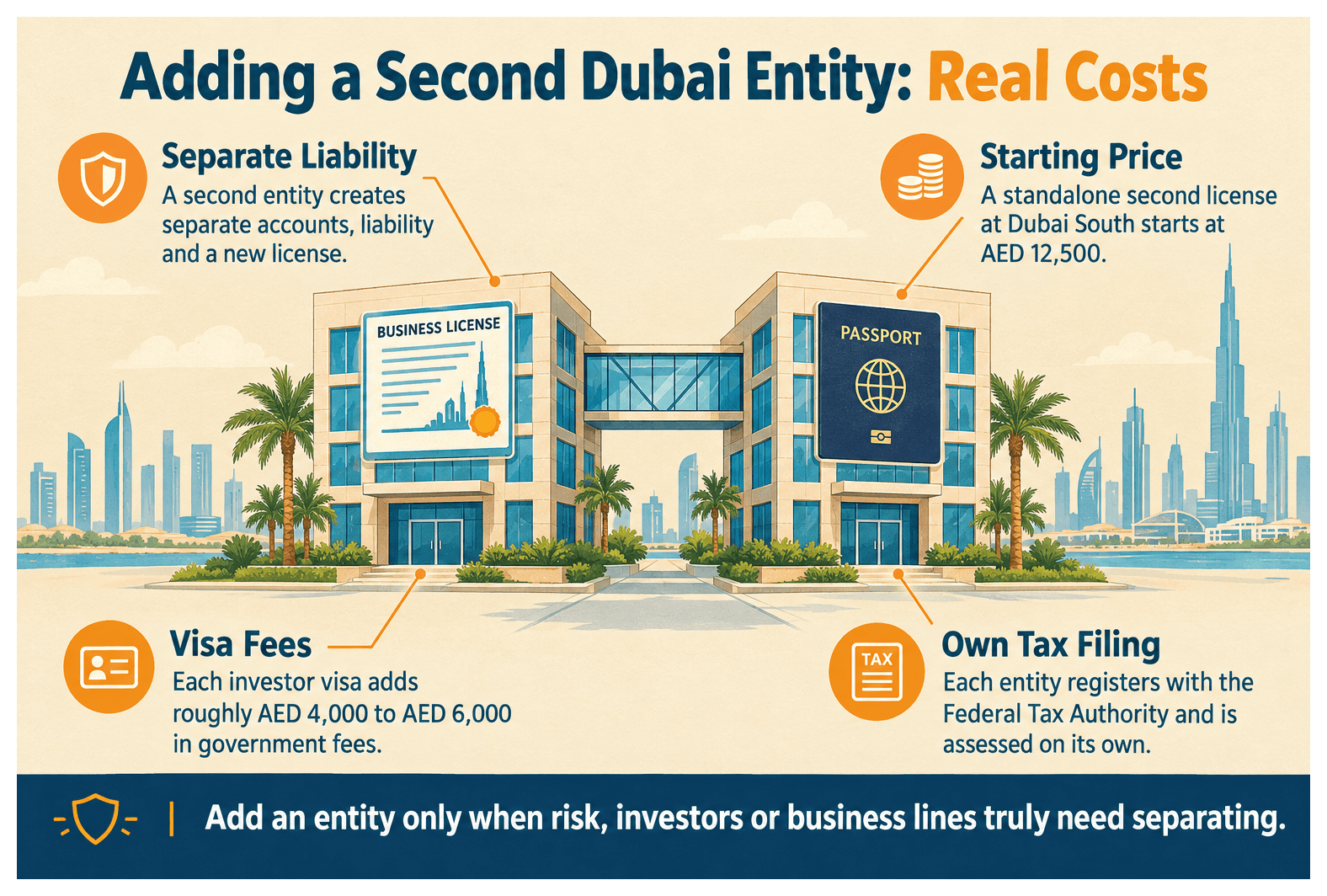
A second entity is a separate legal company with its own license, activity and visas. It creates separate liability and accounts, unlike adding an activity to your existing license.
Add an Entity to Ring-Fence Risk
A separate company makes sense when you need to isolate liability, hold IP apart from trading, or bring partners into one venture only. If one license covers your activities cleanly, adding an activity usually costs less.
Spot Signs a Single License Works
If your activities fall within one license scope and volumes are low, two sets of books are just overhead. A closely related service can often be added without a new entity.
Budget for License and Visa Costs
A standalone second license at Dubai South Business Hub Free Zone starts at AED 12,500. Each investor visa adds roughly AED 4,000 to AED 6,000 in government fees.
Plan for Hidden Ongoing Expenses
Costs also include medicals, Emirates ID processing, banking and annual renewal for each entity. Itemize these separately so the total budget is realistic.
Choose Concurrent or Staged Setup
Setting up two companies at once cuts admin time. Staging lets you test demand first and add the second entity after your first-year revenue.
Prepare for Tax and Capital Transfers
Each entity registers with the Federal Tax Authority and is assessed on its own. Plan how you will fund and remit capital from India for the new company.
More than 100,000 Indian nationals hold active UAE business licenses (Dubai Chamber of Commerce, 2024). Many return to add a second entity. This guide is for owners weighing second company setup in Dubai from India, and it covers when to do it, what it costs and how the steps run.
What Is Second Company Setup in Dubai from India and Why It Matters
Second company setup in Dubai from India means an Indian founder who already owns a Dubai entity registers another, separate legal entity with its own license, activity and visas. It suits owners who need to ring-fence risk, add a business line, or separate clients, assets or investors.
How a Second Entity Differs from a Second Activity
Adding an activity keeps one balance sheet. A second entity creates separate liability, separate accounts and a new license. Each entity registers with the Federal Tax Authority (FTA) and is assessed on its own.
Picture a Mumbai exporter holding a trading license. She adds a consultancy entity so service income and stock risk never share a balance sheet. At Dubai South Business Hub Free Zone, an existing owner can hold more than one license under separate company names.
Why Indian Founders Add Entities Often
A dubai company for indian founders often starts as a trading vehicle. Triggers for a second one include a new product line, an investor structure, or moving IP away from trading risk. For first-entity basics, read moving from India to Dubai.
When Adding a Second Entity Makes Sense for Indian Founders
A second entity makes sense when you need to separate liability, run an unrelated business line, hold intellectual property apart from trading, or onboard partners in one venture only. If one license covers your activities and risks cleanly, adding an activity usually costs less. That's the honest rule for business setup in Dubai from India.
Clear Signals You Need a Separate Entity
Risk profiles differ, such as stock versus consulting.
A new venture has different shareholders.
A client or lender wants a standalone contracting party.
A Gujarat manufacturer, for example, opens a sales-arm entity and keeps its holding company separate.
Signals That a Single License Is Enough
If activities sit within one license scope, stay put. A consultant adding a closely related training service doesn't need new accounts. Low volumes make two sets of books pure overhead. The India-UAE CEPA (Comprehensive Economic Partnership Agreement) can favor a goods-trading entity, though don't overstate its benefits.
Setting Up Two Companies at Once Versus Adding One Later
Concurrent incorporation cuts admin time, as covered in setting up two Dubai companies at the same time. Staging lets you test demand first. One founder launched trading first, then added services after year-one revenue.
Cost of Adding an Entity: Second Company Setup in Dubai from India
The cost of a second company setup in Dubai from India depends on license package, visa count and activity. A standalone second license at Dubai South Business Hub Free Zone starts at AED 12,500, and each investor visa adds government fees of roughly AED 4,000 to AED 6,000 on top.
Where the Money Actually Goes
You pay for the license, visa and Emirates ID processing through ICP (Federal Authority for Identity, Citizenship, Customs and Port Security) and GDRFA (General Directorate of Residency and Foreign Affairs), banking, and annual renewal for each entity. A one-visa budget would itemize license, visa, medical and Emirates ID separately. See what a second Dubai license costs an existing owner for detail.
Key Facts Table: Cost Components of a Second Entity
Key Facts: Cost Components of Adding a Second Entity
Cost Component | What to Expect |
|---|---|
Standalone second license (from AED 12,500) | Paid upfront; covers a separate legal entity and its own activity. |
Investor visa government fees (about AED 4,000 to AED 6,000) | Paid per visa after license issuance. |
Medical test and Emirates ID | Per-person charges, due after visa approval. |
Corporate tax registration with the FTA | Separate registration for each entity, done online. |
Bank account opening and annual renewal | Bank terms vary; renewal recurs yearly for every entity. |
Treat these as starting points and confirm a live quote.
Ways to Keep the Total Down
Match visa count to real staffing.
Start with zero visas, then add one after first contracts.
Run the Cost Calculator before committing.
Step-by-Step Guide to Second Company Setup in Dubai from India
To add a second entity, you check the company name, choose the license activity, submit shareholder documents, receive the license, then apply for visas through ICP and GDRFA, complete medicals and Emirates ID, register for corporate tax with the FTA, and open a bank account.
Check the name and choose the activity. Run it through Name Check. Pick activities you'll actually invoice for, and keep the name distinct from entity one.
Submit documents and receive the license. Send passport copies, existing UAE documents and proof of address. A founder in Bengaluru can sign digitally, and the license can issue in 1 business day.
Apply for visas and Emirates ID.ICP processes the visa, with GDRFA handling Dubai residency. Medical, biometrics and Emirates ID follow approval. Existing residents may need a status change.
Register for tax and open a bank account. Register with the FTA, then open a separate account so each entity's cash stays distinct.
Tax and Compliance Rules for a Second Entity Owned from India
Each Dubai entity registers separately with the FTA and falls under Federal Decree-Law No. 47 of 2022, which sets corporate tax rules. As an Indian resident you still report foreign income and assets to India's Income Tax Department, so plan both filings from day one.
UAE Corporate Tax for Each Entity
Each entity files its own return. The law applies a 9% rate above AED 375,000 of taxable profit, and qualifying free zone treatment has conditions. The UAE is a low-tax regime, not a tax-free one.
Reporting to India's Income Tax Department
Your Indian residency status drives what you declare. Foreign company holdings and assets need disclosure. Read whether Indian founders pay tax twice on Dubai profits, then confirm specifics with a tax professional.
Funding and Remitting Capital from India for the New Entity
Indian resident individuals typically fund overseas activity through the RBI Liberalised Remittance Scheme (LRS), which sets an annual per-person limit, though overseas direct investment rules differ. Confirm the route with your bank or adviser before sending share capital or loans to the second entity. This isn't legal advice.
How RBI LRS Fits In
The limit has been USD 250,000 per person per financial year (verify the current figure). Purpose codes and bank paperwork matter. A founder might remit share capital through an authorized dealer bank.
Moving Money Between Your Two Dubai Entities
Document intercompany invoices and loans.
Keep transfer pricing records.
Use separate bank accounts for clean audit trails.
Second Company Setup in Dubai from India: Common Mistakes to Avoid
Common mistakes include opening a second entity without a clear purpose, mixing funds between entities, skipping FTA registration, and ignoring Indian disclosure rules. Plan structure, banking and tax before you apply, and check your name early.
Structural and Banking Errors
Duplicate entities with no commercial reason add cost.
Pooled cash blurs liability separation. One founder struggled at audit for exactly this reason.
Skipped bookkeeping per entity creates filing trouble.
Where Ongoing Support Helps
Outsourcing accounting, tax filings and renewals saves time. Explore our business support services to handle both entities.
Next Steps for Your Second Entity
Second company setup in Dubai from India works best with a clear purpose, a realistic cost view and a plan for FTA and Income Tax Department filings. Handled in order, it adds capacity without confusion. Run the numbers in the Cost Calculator, then confirm your entity name with Name Check to set up a new license or buy one.
References
Frequently Asked Questions