Topic Summary
What Is the Process to Choose UAE E-Invoicing Software for Your Free Zone Business and Why It Matters
To choose UAE e-invoicing software for your free zone business means picking a platform that creates structured digital invoices, connects through an accredited provider, and keeps VAT and Corporate Tax records accurate. It matters because non-compliant invoices can trigger penalties and delay input tax recovery.
Compliance Rules Your Free Zone Software Must Meet
Compliance Rules Your Free Zone Software Must Meet
Features That Matter Most When You Choose UAE E-Invoicing Software for Your Free Zone Business
The features that matter are accredited provider connectivity, Peppol e-invoicing UAE compatibility, configurable VAT codes, accounting integration, audit trails, multi-currency billing and local support. Skip analytics or payroll modules unless you need them in year one.
Step-by-Step Process to Select and Implement Your Platform
First confirm your tax status, map your invoicing needs, shortlist vendors tied to an accredited service provider in the UAE, trial them, check contracts, then migrate and train. Allow several weeks, and verify deadlines with the Ministry of Finance and FTA.
Costs, Vendor Checks, and Red Flags Before You Sign
Expect pricing by invoice volume, users and integrations, plus onboarding or per-document fees. Verify accreditation, data hosting, export rights and support terms before signing any UAE e-invoicing software contract.
Getting Invoicing Right From Day One in Dubai South
Set up invoicing alongside your trade license and residency visa package. Decide your VAT status early and choose software before your first invoice, so you don't retrofit systems later. That's the smartest way to choose UAE e-invoicing software for your free zone business.
Next Steps for Your Dubai South Setup
To choose UAE e-invoicing software for your free zone business, confirm your VAT and Corporate Tax status, insist on accredited provider connectivity, compare total costs, and test first. Review your invoicing against FTA guidance, shortlist two or three platforms, and speak with the Dubai South Business Hub team about company formation, your trade license and residency visa package.
More than 350,000 UAE businesses are VAT-registered (Federal Tax Authority, 2025), and each will eventually need structured, government-compatible invoices. This guide helps Dubai South founders choose UAE e-invoicing software for your free zone business without overpaying for features you won't use.
What Is the Process to Choose UAE E-Invoicing Software for Your Free Zone Business and Why It Matters
To choose UAE e-invoicing software for your free zone business means picking a platform that creates structured digital invoices, connects through an accredited provider, and keeps VAT and Corporate Tax records accurate. It matters because non-compliant invoices can trigger penalties and delay input tax recovery.
How UAE E-Invoicing Differs From a PDF Invoice
A PDF emailed to a client isn't an e-invoice. The UAE framework relies on structured, XML-based data exchanged through accredited service providers on a Peppol-based model. Picture a Dubai South trading company that emails PDFs today: under the framework, that same invoice must be generated as structured data and transmitted through a provider. Rollout dates are set by the Ministry of Finance, so confirm current timelines on the Ministry of Finance site. For background, read e-invoicing UAE preparation.
Why Free Zone Companies Are Not Exempt
A free zone license doesn't switch off VAT duties. Registration is mandatory above AED 375,000 in taxable supplies, voluntary from AED 187,500, and late registration costs AED 10,000 (Federal Tax Authority, 2025). A Dubai South consultancy billing mainland clients charges 5% VAT once registered and needs compliant invoices. Our guide explains how a free zone company invoices mainland clients.
Compliance Rules Your Free Zone Software Must Meet

Your software must produce tax invoices meeting UAE VAT Law requirements, store records for the legal period, and support the e-invoicing data format. It should separate taxable, zero-rated and exempt supplies so VAT returns and Corporate Tax records reconcile. That's the core of free zone e-invoicing compliance with the FTA.
VAT Invoice Content and Record Retention
Show the words "Tax Invoice".
Include supplier and customer details, TRN, date, description.
State VAT in AED.
Keep records five years generally (longer for real estate).
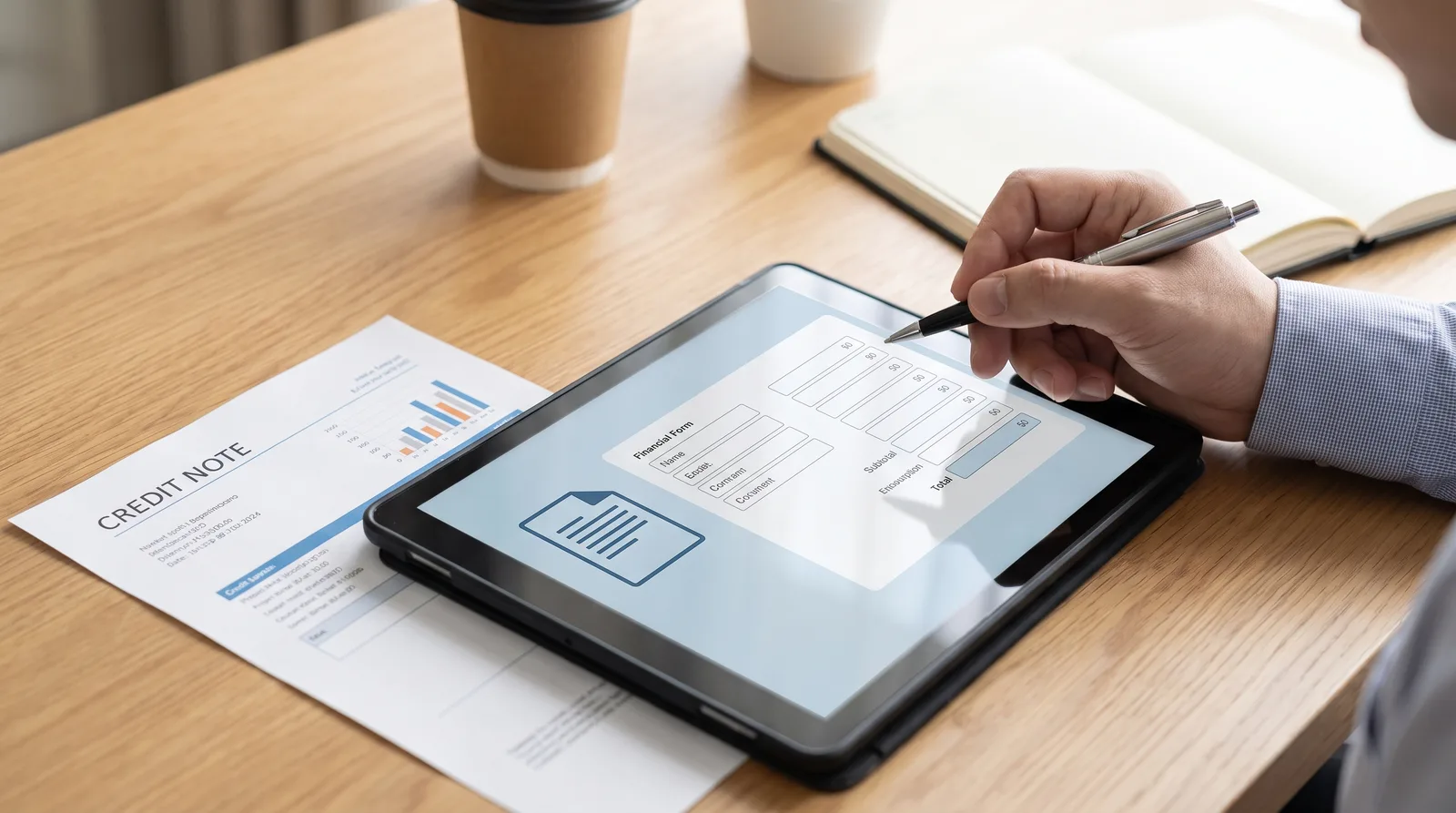
Lock issued invoices and link credit notes.
A missing TRN can lead to rejected input tax recovery for your customer, and that damages relationships fast. Returns are filed through the FTA's EmaraTax portal.
Features to Compare Across UAE E-Invoicing Software Options
Feature | Must-Have Feature | Why It Matters |
|---|---|---|
Accredited service provider connectivity | Direct or partnered link to an accredited provider | Invoices reach buyers through the official exchange |
Peppol-compatible structured invoices | XML output with validation before sending | Catches missing fields, cutting rejected invoices |
Configurable VAT and tax codes | Standard, zero, exempt and out-of-scope codes | VAT returns and Corporate Tax income splits stay accurate |
Accounting software integration | Sync with your ledger and bank feeds | No double entry; returns draw from one ledger |
Audit trail and record retention | Locked invoices, exportable five-year archive | Supports FTA audits and data portability |
Designated Zones, Qualifying Free Zone Persons and Tax Coding
Designated zone treatment of goods is a VAT concept. Qualifying Free Zone Person status is a Corporate Tax concept under the UAE CT Law. Your tool needs separate codes, because a trading firm selling to mainland and free zone customers must split income correctly. The rate is 9% above AED 375,000 of taxable income, and the return is due within nine months of year-end. Confirm your status with a tax adviser, and track deadlines in a compliance calendar.
Invoicing Across Borders and Mainland Clients
VAT amounts must appear in AED. A Dubai South e-commerce seller billing a UK client in GBP needs the AED VAT equivalent shown where relevant. See invoicing clients from a Dubai company for more.
Features That Matter Most When You Choose UAE E-Invoicing Software for Your Free Zone Business
The features that matter are accredited provider connectivity, Peppol e-invoicing UAE compatibility, configurable VAT codes, accounting integration, audit trails, multi-currency billing and local support. Skip analytics or payroll modules unless you need them in year one.
Must-Have Technical Capabilities
Accredited provider connection
Structured XML, not PDF
Automatic TRN and field validation
Secure cloud storage with export
Integration With Accounting and Banking Tools
A small trading company that runs invoices through its accounting package draws VAT returns from the same ledger. Fewer manual re-entries mean fewer filing errors. Compare options in our free zone accounting packages guide.
Usability, Language and Local Customer Service
Look for Arabic and English templates and UAE-based support in local hours. A founder with no accounting background will value guided templates. Put support response times in the service agreement.
Step-by-Step Process to Select and Implement Your Platform
First confirm your tax status, map your invoicing needs, shortlist vendors tied to an accredited service provider in the UAE, trial them, check contracts, then migrate and train. Allow several weeks, and verify deadlines with the Ministry of Finance and FTA.
Confirm tax status. Check your TRN on the FTA portal and your Corporate Tax registration. A December year-end means a return due nine months later.
Map your needs. Count monthly invoices, currencies and customer types. At 40 mixed-client invoices a month, multi-code VAT matters more than analytics.
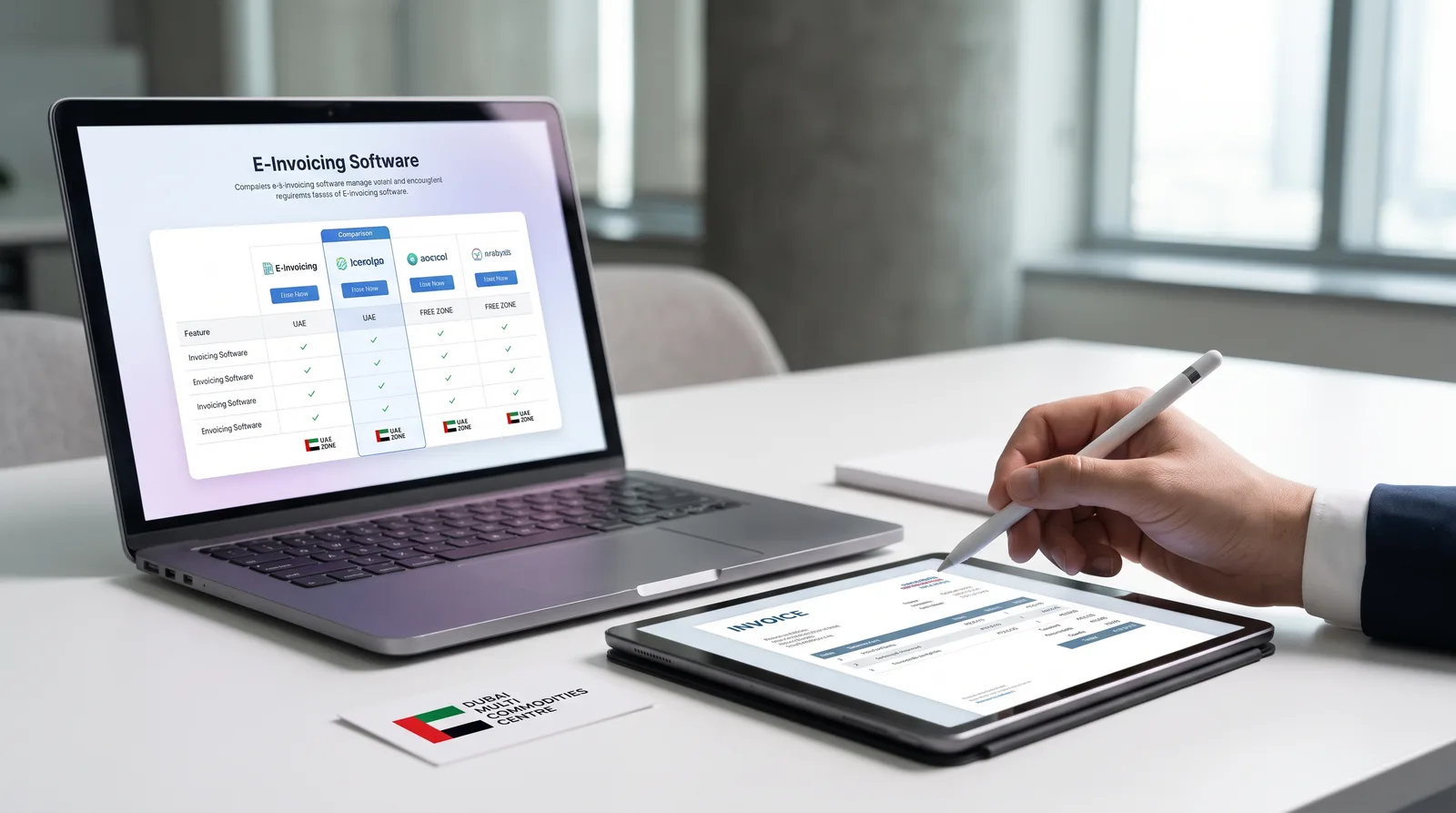
Shortlist and trial. Pick two or three vendors, ask which accredited provider each uses, and run the same five invoices, including a credit note, through both.
Review contract and migrate. Check data ownership and exit terms, move customer masters first, then run parallel invoicing for one billing cycle.
Costs, Vendor Checks, and Red Flags Before You Sign
Expect pricing by invoice volume, users and integrations, plus onboarding or per-document fees. Verify accreditation, data hosting, export rights and support terms before signing any UAE e-invoicing software contract.
Pricing and Due Diligence
Compare first-year cost across three quotes.
At 200 invoices monthly, a flat plan can beat a cheap per-invoice plan.
Get written proof of provider accreditation before paying a deposit.
Ask where data is hosted and backed up.
Red Flags That Signal Trouble
Compliance guarantees with no documentation
Refusal to share an export sample
Contracts beyond twelve months while rules settle
No UAE-based support
Getting Invoicing Right From Day One in Dubai South
Set up invoicing alongside your trade license and residency visa package. Decide your VAT status early and choose software before your first invoice, so you don't retrofit systems later. That's the smartest way to choose UAE e-invoicing software for your free zone business.
Invoice descriptions should match your license activities, and your company name, license number and TRN should stay consistent. A logistics firm licensed through Dubai South Business Hub does exactly this. Learn why Dubai South Business Hub suits growing companies. Pick a plan that scales from ten invoices to 150, and review it yearly against FTA updates.
Next Steps for Your Dubai South Setup
To choose UAE e-invoicing software for your free zone business, confirm your VAT and Corporate Tax status, insist on accredited provider connectivity, compare total costs, and test first. Review your invoicing against FTA guidance, shortlist two or three platforms, and speak with the Dubai South Business Hub team about company formation, your trade license and residency visa package.
References
Frequently Asked Questions